Episode Transcript
[00:00:06] Kate Winn: Hello to all you travelers out there on the road to evidence-based literacy instruction. I'm Kate Winn, classroom teacher and host of Reading Road Trip, brought to you by the Ontario branch of the International Dyslexia Association.
Our work at IDA Ontario, which is a registered charity, depends on the generosity of people like you.
If you find the podcast helpful, please consider supporting our organization.
[00:00:31] Kate Winn: And now, welcome to a special between-seasons bonus episode of Reading Road Trip. Before we get started, we would like to acknowledge that we are recording this podcast from the traditional land of the Mississauga Anishinaabeg. We are grateful to live here and thank the generations of First Nations people for their care for and teachings about the Earth. We also recognize the contributions of Metis, Inuit and other Indigenous peoples in shaping our community and country.
Along with this acknowledgement and in the spirit of truth and reconciliation, we'd like to amplify the work of Indigenous artists. And today we are sharing the picture book We All Love, written and illustrated by Julie Flett.
Join baby bears, little ducklings, curious foxes, and many more adorable creatures as they remind us of all the ways, big and small, that we show love and care. We All Love is a poetic and beautifully illustrated reminder of the interconnectedness of the natural world, demonstrating how care, protection and love are experienced by all living things.
We All Love features a glossary of Cree animal names used throughout the text and a letter to the reader from Julie Flett. Part of the We Do Too series following We All Play, We All Love is a celebration of the love that connects us all, big and small, near and far. Add this beautiful early years title to your home or classroom library today.
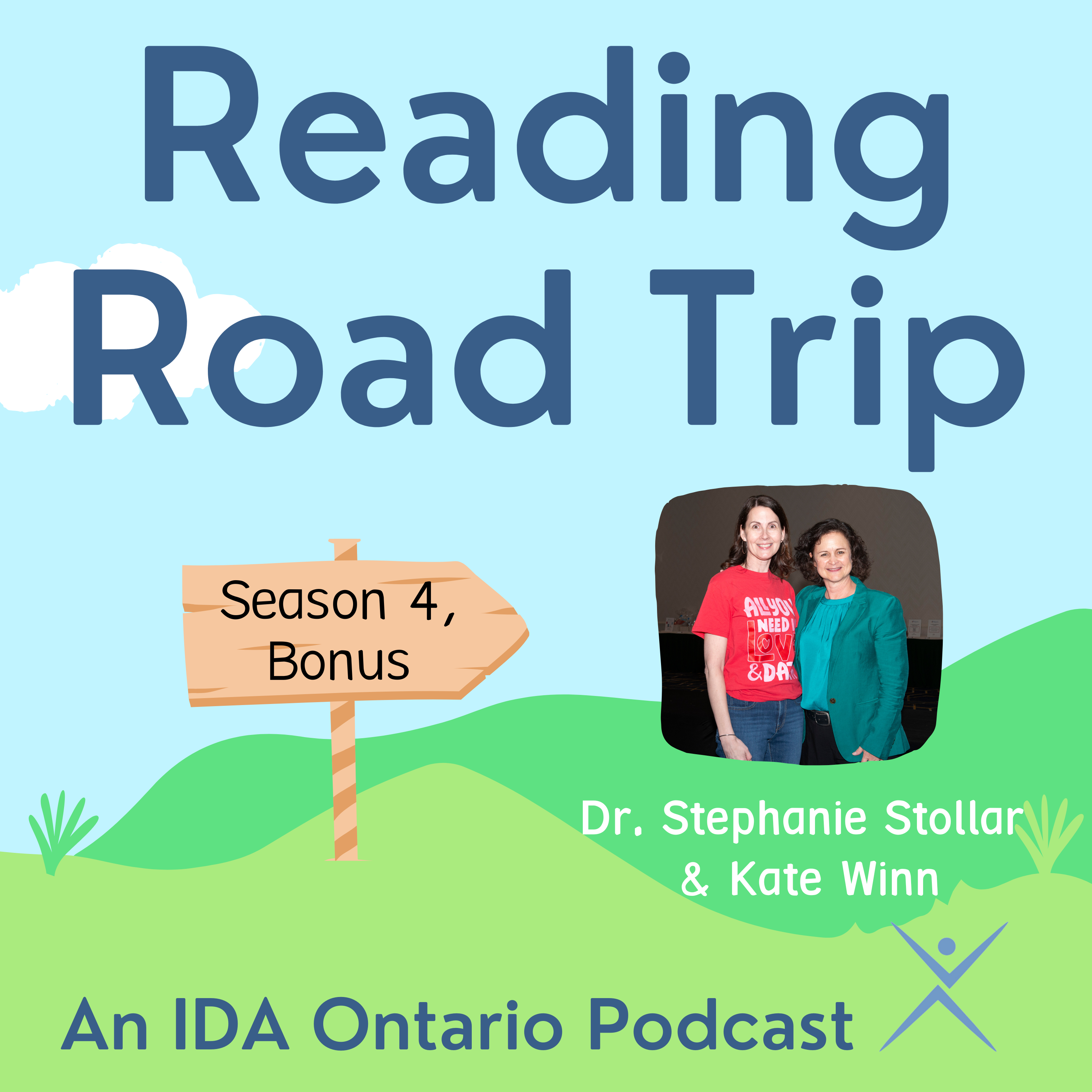
And now on with the show. And for this special episode, I am shifting from interviewer to interviewee, joined by my co-author of Reading Assessment Done Right, Dr. Stephanie Stollar, and we twisted the arm of my co producer, Dr. Una Malcolm to return to the microphone to ask the questions today.
Let's get started.
[00:02:20] Kate Winn: And here she is now. Hello, Una.
[00:02:23] Una Malcolm: Well, hello Kate. How are you?
[00:02:25] Kate Winn: I'm great. How are you?
[00:02:27] Una Malcolm: Well, excited to chat with you and your fabulous co-author today.
[00:02:31] Kate Winn: Hi Stephanie.
[00:02:33] Stephanie Stollar: Hi Kate. Hi, Una. Thanks so much for the opportunity to chat with you today.
[00:02:38] Una Malcolm: Well, I'm thinking that you are familiar names to many, but I'd love to start before we get into all the questions I have for you. I'd love to start by just both, of you introducing yourselves briefly, if that's okay. Stephanie, do you want to start?
[00:02:51] Stephanie Stollar: Sure.
I'm Stephanie Staller. I live and work in Cincinnati, Ohio. I am a school psychologist by training, and I have had a variety of roles over the years, all focused on supporting teachers to implement and use assessment to improve reading outcomes in the Multi-Tiered System of Supports framework.
I have worked as a consultant recently. I have an online subscription membership called the Reading Science Academy, and I'm even doing a little bit of work to support teacher educators to align their courses to the science of reading.
[00:03:30] Una Malcolm: Fabulous. And Kate, I know that you are probably a familiar name to many Reading Road Trip listeners, but why don't you go ahead and give everybody a bit of a review of who you are?
[00:03:41] Kate Winn: Absolutely.
[00:03:42] Kate Winn: So I have been teaching here in Ontario, Canada. I'm in my 26th year teaching now. I've taught a range of grades and subjects. I've done gifted education, French as a second language, and taught literacy from kindergarten through grade eight. And I am a member of the ONlit team, of course. I am the host and co-producer of this podcast right here and now the co-author of a book which is very exciting.
[00:04:07] Una Malcolm: It absolutely is exciting. And with that, I think we can launch into all the wonderful questions that I would love to ask you both today.
And Stephanie, I'm going to ask you to start right at the beginning. What made you want to write a book, especially a book about assessment? What was sort of the starting of all of this?
[00:04:25] Stephanie Stollar: Yeah, so across my career, assessment has played a central role in improving reading outcomes. Teachers need to know exactly where students are, where they should target their instruction, what kind of support students need, and be able to monitor progress and make adjustments over time so that students reach their goals.
In my experience, teachers don't always get good support around assessment, knowledge about assessment, or tools to use. Administrators sometimes don't make the best choices about assessment, and in many ways we've complicated assessment beyond where it needs to be. So I wanted to write a book about assessment to give teachers and administrators the tool that can help them improve reading outcomes.
[00:05:23] Una Malcolm: And you certainly had the opportunity to do this and with a fabulous co-author as well.
Kate, how did you come into the fold? Sort of, how did this co-authorship really get started?
[00:05:34] Kate Winn: Well, I'm kind of excited to share with our listeners the behind the scenes of this piece. So when I started learning about the science of reading, devoured all sorts of podcasts and articles and books as well. And I've always loved writing and hoped that sometime in my life I might write a book. And then when it came to the science of reading, there were already some great books out There like Lindsay Kemeny’s Seven Mighty Moves. I thought, well, that's the kind of information I'd love to share. And she did it better than I ever could. But then as I got into assessment and started using Acadience myself and saw what a, what a game changer, that's my big word, what a game changer it was, I started thinking, you know, this is something that there's not information out there for teachers, there's something that they need. I'd love to work on a project that could help with that.
But I knew I couldn't do it myself. I knew I had the teacher perspective, but I knew I needed somebody else and I knew who I wanted it to be, which was Stephanie. And I followed her on social media.
We had interacted a few times.
I always say I'm not sure if she really knew who I was before I actually asked her about the project, but she had kindly replied to a couple emails and DMs and things like that. And then we were both going to be keynoting at the Alaska Science of Reading symposium back in April 2024. And I had messaged her before that and said, okay, I have a proposition for you, hoping to get chatting and I can ask you about it. And she was lovely and said, okay, yeah, sounds great. And then I sat beside her for hours at that conference and did I ask her about it? No, I did not. I could not get the nerve up. And so that whole event came and went and I didn't say anything. And then May passed by and then we were into June and finally I thought, you know what, I'm just going to email her. I'm going to email her and see what she says. So it was a Saturday morning and I remember walking on my treadmill desk and finally just writing it and hitting send. And then I thought, well, you know, maybe she won't write back till it's business hours again or it might take her a while to decide. And you know, I don't know how she communicates. Within a couple of hours I got the email back from her. So enthusiastic and wonderful and sharing my desire. Obviously she'd had the same idea wanting to share this information with teachers. But just the fact that we could bring our two areas of expertise together I think makes it really special. So that's kind of how we got things rolling.
[00:07:45] Stephanie Stollar: I'm so glad that you got the nerve to ask me because it was a no-brainer, it was just an instant, I mean, I've written and rewritten parts of this book, in my mind, I don't know, a hundred times over the years. But the fact that you, as a teacher who understood the power of assessment, was reaching out to me to write about this topic, it just. It was like a gift I hadn't even asked for. I hadn't even imagined that that would be possible. So I was so grateful.
Still am.
[00:08:21] Una Malcolm: So how did this gift actually happen? Like, truthfully, logistically, writing is really hard. And writing with another person, I'm imagining, is also quite hard for both of you. Once you sort of decided that this collaboration was going to happen, how did that actually happen? In terms of writing, I think about dividing the work. I think about maintaining tone and sort of feeling across both of you as.
[00:08:45] Una Malcolm: You were writing this content so it felt consistent in tone and in scope. Stephanie, I'll start with you, but then I'll pass that over to Kate in terms of sort of how that. How that actually worked.
[00:08:56] Stephanie Stollar: Yeah, well, tone was all up to Kate because we were writing for teachers, and I'm not a teacher, and I trend towards the academic is maybe a nice way to say it.
Yeah.
So I needed Kate to reword me and say things in, like, plain English that teachers would understand and gravitate to.
But I think we were really aligned from the beginning about what we wanted included.
And the format of the Scholastic Science of Reading and Practice book series kind of dictated a little bit about the style and the scope of the work.
But we drafted an outline in our proposal, and then we sort of took the approach of divide and conquer. And not that we were looking for, like, equal distribution of labour, but just to get started, we each took the lead on certain chapters and then we would.
Well, we had a writing schedule, so we had a sequence of, you know, the order that we would draft the chapters in. And. And when the first author finished, she shared with the other. And then we made edits and we went back and forth. And if we were stumped, we would put a comment like, I want to say something about this, but I don't know what.
And honestly, it, I don't know what Kate would say, but it did not feel painful in any way to me. Like, we had a couple of places where we got stuck and we were stumped and we kind of had to scratch our heads. Like, how are we going to work through this stuff? It's not straightforward, but the way we work together I thought was, was very easy and enjoyable. So I don't know, Kate, if you would say the same.
[00:10:52] Kate Winn: No, absolutely. And, yeah, I think it's just interesting. Like listeners might be interested to know it's not like we knew each other like these deep friends for years and just knew how the other worked. Like we kind of both took a risk on this with our, our instincts thinking that we well together and it really was great. And I feel like, you know, Stephanie would write a chapter, send it to me. I'd write and send it to her. I feel like probably what I said most to her was, can you put a citation here? Because she knows the research. And then probably what she said most was, you know, can you give a teacher example or can you put this in teacher-friendly terms?
And again, that's what we think makes the book so rich, right, is having both of those pieces. Our amazing editor, Ray Coutu, I hope I said that right, also kind of helped with maintaining sort of the consistency throughout, right, because he had the vision of, of the whole book. But I do think, yeah, I do think it, it went really well and it was great just to be able to have that feedback. But I think when you think about writing a book with a partner, let's say a book takes a thousand hours to write. I have no idea. But let's just say that it's not like we split it in half and then it was 500 each because really it's more work too, because Stephanie would give input on every chapter I wrote, and then I would rewrite things and then go back to her. Plus, we would actually send it to our editor, and he would send it back to u,s and then we would both need to work on things again. So, so there's a lot, you know, a lot kind of extra maybe there when you work with a partner. But again, it just makes it all the better. I think, especially in our case, I would agree.
[00:12:17] Una Malcolm: I think it's something where having, you know, listeners, surprise. I've read the book, so I do know that sort of having the combination of both of you sort of really, I think really adds something to the content of the book itself. And thinking about, you know, by the time this episode comes out, you will be very close to publication. But you know, Stephanie, I'm just wondering as you, sort of look towards that fabulous date, what has some of sort of this early momentum felt like? What kinds of things have been coming your way as, as people learn about the book and maybe some, some people get some sneak peeks.
[00:12:51] Stephanie Stollar: Yeah, it's, it's been overwhelmingly positive.
You know, writing a book is kind of like birthing a baby. You know, there's all this like upfront work. And then you put this thing out into the world and it's out there for people to react to and comment on.
And that's a very vulnerable thing to do.
And maybe we just chose wisely. But the people who read the book early and gave us feedback, and the people who were asked by the publisher to write endorsements, have just been overwhelmingly positive. I think so many educators recognize that there's a need for this book, that there's a hole in the universe of science, of reading publications for a very straightforward, teacher-friendly, practical assessment book.
So I've just been overwhelmed by the reaction.
I know I had one particularly giddy moment in an airport lounge when Pam Kastner read the book and just, she called me straight away and was just gushing.
I mean, really over. And then I overwhelmed Kate, because as soon as I got off the phone with Pam, I was like, oh my gosh, this is going to blow up. Like, if Pam Kastner thinks that this is going to be an important book, then we have to get ready for this, because she's got her pulse on what educators think.
And I've just been delighted at a couple of conferences, at least three that I can think of for sure. People I consider to be literacy experts who had read the book stopped me, like in the hallway to tell me how much they appreciated the book. They could have stopped to talk to me about many things, but they, they talked about how important they thought the book was. And these are people who don't have to say compliments, like, they don't have to. I mean, I'm not a person that they need to suck up to, but. But they were overwhelmingly positive, and that just meant so much to me. So I'm hopeful.
You know, it's great to have positive feedback from literacy experts, but I'm hopeful that teachers find this to be a helpful tool. That's the main goal.
So as I said, the ones who we reached out to, to write endorsements, the ones who gave us feedback as we were writing, they have given us the input that I think we're on the mark. So fingers crossed.
[00:15:41] Una Malcolm: Fingers crossed, indeed. Kate, anything to add with that? Anything that's coming out of some of the early comments about your work?
[00:15:48] Kate Winn: No, I, I would say maybe just to reiterate, Stephanie said that a lot of what we're hearing is like, it fills a gap in the market. This isn't book about the same thing and just two other people rehashing it. This is like, new to frontline teachers to get this information, which is great. And I think also just hearing from people that work with diverse populations and people who work with multilingual learners and you know, like, we're, we're kind of like Stephanie said, hitting the mark apparently for, for all readers, right, which is, is really important and I think it's exciting too. We've been asked to, you know, speak at some different places. We're going to do some presentations together and, you know, keep on, keep on talking about this, which is fun, that's for sure.
[00:16:27] Una Malcolm: Well, I think one piece that really makes me smile about this, Kate, you'll remember I was on vacation in July and I believe I texted you and really proudly said that I wasn't going to read a single journal article or anything for work or anything about reading, and I was just going to read fiction, which I never, ever, ever do. It's, it's a big problem and I'm working on it. And you sort of said, oh, that's so great. I'm so happy for you. And then I think the next day you said, but you can say no to this, but would you read the book? And that sort of was the end of all “I'm only reading fiction on this vacation.”
[00:16:58] Una Malcolm: So I read your book and I think so, yeah, that was a remarkable change of pace and change of decision for me. But just to echo what you've both identified, for me, it really just stood out in terms of how clear and accessible and to the point it is and how really it, it pulls together what an educator needs to know to make good decisions around instruction and to inform action, right, recognizing that that was a really important theme that really came through the book for me in terms of assessment for instruction. Recognizing that it is instruction that we, we care the most about and we really want to optimize and prioritize, knowing that that will be what will drive good outcomes for students, for sure.
[00:17:39] Una Malcolm: So, Kate, along that line, you know, since the book hasn't hit the shelves yet, can you give listeners a bit of a sense of how it's structured, what can, how the chapters are organized?
[00:17:52] Kate Winn: Absolutely.
[00:17:53] Kate Winn: So Stephanie mentioned Pam Kastner earlier. So she wrote such a lovely foreword that you'll find at the beginning of the book. And then there's a little introduction that kind of starts with my experience going down the rabbit hole of the science of reading and evidence-based assessment. And then the first section of the book really starts with, you know, the essentials of reading assessment. So even in terms of essential reading skills, we need to assess the essential things. So what things are essential and kind of getting into like using models like the simple view of reading and things like that just to delve into what is it that we want to measure and why.
And then Stephanie, you know, kind of first authored, as we kind of called it, a chapter on the nuts and bolts of reading assessment, which to me is really what we didn't get in teachers college about all the actual stat stuff. And I mean, I think it's fair to say that it might be the newest information for teachers or maybe the densest of the chapters, but in such a good way, in a way that they'll come away thinking, I did not know that about, you know, different pieces of assessment, which I think is really important. And then, and then chapter three kind of rounds off that first section with the idea of data-driven systems, MTSS and, and all of that for, you know, we're not just talking about individual students, we want to talk about classes and schools and systems, right, so just to sort of have all of that big picture. And then with chapter four, we start going into the four types of assessment and what questions they answer, analogies, examples. So chapter four is universal screening, chapter five is diagnostic assessment, chapter six is progress monitoring, and chapter seven is outcome assessment. So lots of detail in there, examples, you know, things from my classroom, things that Stephanie's seen in her practice, pictures of some of my students, which is fun too. And then when we get to chapter eight, the final chapter, it's bringing it all together and it's using that data to inform instruction. And so lots of information in there. So it's not just, okay, here's how you, you know, screen, see you later. It's okay, once you have your screening, here's what you do and then here's how you can actually change your instruction. So we have, you know, information about the instructional hierarchy and, and all sorts of, you know, pieces that, that a lot of teachers might not be aware of because I know I certainly was not always aware of things like that. But then also just real, really specific things about if this is how a student scored, here's what you would do, and if they scored like this, here's what you would think will be really empowering for teachers to have all of that information.
[00:20:26] Una Malcolm: So with that jam-packed structure, with everything that you've sort of squeezed within this book, I'm curious if there was a chapter or two that was challenging to write or challenging to strike that tone or along that road, which part was the most challenging? I'll ask you both. But, Kate, if you could start, that would be great.
[00:20:46] Kate Winn: Sure. And I don't think Stephanie would be surprised by which chapter, I'm going to say, but it was actually, for me, it was chapter eight. Because on our plan, I was to be first author of that chapter, which really just meant first draft and then goes to the other person. And we worked back and forth on all of the chapters.
But for me, the idea of using the assessment to inform instruction, I had so many different ideas. And when you're writing a book, you need to have some structure, right? Like, the chapter actually has to have structure to it and, you know, kind of make sense and flow. And I felt like I was just all over the place, and I got so stressed about it. And the last thing I wanted was for Stephanie to think that I, you know, wasn't pulling my own weight or anything like that. And so I agonized and, you know, the expression, blood, sweat and tears. I'm not sure there was blood, but there was sweat, there were tears.
And finally I thought, you know what? Like, she's been so great. I'm just going to email her. So I emailed her and said, is there any chance you would take the first crack at this one? Because I am just floundering here. And that was another one of those emails that I. I sent and then just waited in anticipation and again got such a lovely, like, oh, of course. And you're totally pulling your own weight. And I'd be glad to take a look. And, like, the weight that lifted off my shoulders, that she kind of started it out and got that structure in place for us was.
Was huge because there's just so much to it. We actually ended up having to cut a lot of great stuff from this chapter. We had, you know, longer case studies and things that, it's really cool, they're going to be available by QR code on the Scholastic website, so you can still find them. They're still part of it, but they're just not in the print version. Like, so much we wanted to include there. But I would say for me, that would. That would have been the trickiest one. What would you say, Stephanie?
[00:22:25] Stephanie Stollar: Well, first of all, I want to say that I didn't start it, like, the way that it ended up being structured was not something I had in mind. It only came out of the struggle you were having. Like, it was the fact that you had done the draft that you were working in and you were recognizing these issues you were having in places you were stuck and it was hearing you struggle with that, that, you know, I was sort of the outsider to that, that I could look at what you were struggling with and just see a different way to organize things. So, yeah, it was definitely, definitely teamwork.
And 8 was tough because we were trying to be brief about the decisions that get made with data and how it gets applied in classes with real students and, and to just be very direct and helpful with that. So, yes, I, I mean, that's on my list, but also chapter two is on my list of struggles because that was the sort of fundamental foundations of assessment and some of the terminology that makes people just glaze over, like reliability and validity and norm-referenced and standardized and some of the terminology that, honestly, that chapter is a little bit academic and textbook-y. But I was really, I was really committed to empowering teachers with that knowledge because as Kate said earlier, you're not given that information in your teacher prep program, and yet you are members of teams. Teachers are members of teams around individual students where you're meeting with outside providers or speech language therapists or school psychologists, diagnosticians, where they are coming in with data from perhaps norm-referenced tests.
And teachers should be full participants in that. They shouldn't just be expected to smile and nod during the meeting and just greenlight everything that the other professionals say. So I just was really committed to elevating the teacher's knowledge. Not that I think anybody's going to be especially excited about chapter two, but it's, it's kind of like, I don't know, there will come a time when I think it will be a helpful resource for teachers and other educators. So maybe, and I'm okay with this. As you're reading along, you do chapter one and you see what two is about and you're like, like, I'm gonna pass that one and maybe I'll come back to it someday. I'm gonna go on to chapter three.
That is perfectly fine with me. But when you have a need for understanding some of those concepts about assessment, then I hope you'll come back to chapter two. It'll be there for you. And Kate definitely helped to make it teacher friendly and concise.
[00:25:46] Una Malcolm: I was just about to say I have, you can see the books behind me, and I think about, you know, I have many books that, you know, treat that content and I think you've done a really nice job putting that in a, in a clear and concise way. And I certainly speak to, you know, I can, I can see that being a lot of the partnership between you, but also, you know, Stephanie, you hold your own. So I wouldn't, I wouldn't explain that all the way, but I think your idea, put a little post it note and come back when you need it, might not be, might not be the worst idea.
Yeah, there's options. There's options.
[00:26:16] Una Malcolm: So on the flip side, you've identified sort of the trickiest chapters. What chapters, I'm curious, are you both most excited for your readers to get to or for your readers to get into and to have that opportunity to read?
[00:26:28] Una Malcolm: So I will start with Stephanie. I'll pivot back to you. What are you excited? Which one sort of is really making you happy that readers will be able to get?
[00:26:35] Stephanie Stollar: It's hard to pick one. It's like trying to pick your favourite child. Right.
But I'm really excited about chapter eight because it is so action-oriented and so data-based and it takes the use of assessment, I think to a deeper level, but not in a heavy way, in a very actionable, teacher-friendly and student supportive way.
So that's one that I'm really excited about. But the other one I'm excited about is probably the one Kate is going to say. So let's see.
[00:27:14] Una Malcolm: Kate, will you say, let's see.
[00:27:16] Stephanie Stollar: I'm going to wait and see.
[00:27:17] Kate Winn: Are you reading my mind already, Stephanie, did you think I was going to say chapter four, screening?
[00:27:20] Stephanie Stollar: Yes.
[00:27:21] Kate Winn: Yes, yes.
Yeah, I would pick screening just because for me that was again game changer. But that was what sort of got me launched into evidence based assessment and seeing the difference it has made for my instruction, for my students, for their, for their achievement. It's just, it's incredible and I think it was just almost fun for me to give my input on that chapter and just sort of the, the do's and don'ts for different measures and you know, all of those sorts of things because it's been fresh for me over the last few years and just because I'm really hoping, you know, this might be brand new to some people this, this sort of assessment. I'm really hoping that they'll read chapter four and think I'm going to do it. I'm going to try. I'm going to screen my students and it's just so exciting.
[00:28:07] Stephanie Stollar: Yeah, you're the perfect example of taking that initiative and learning something new and putting it in practice for the benefit of your students. So yes, I think you will inspire many teachers.
[00:28:19] Una Malcolm: Agreed. 1,000%. I still, do you remember how we met, Kate? Do you remember, do you remember the origin story for how we met. It was around screening.
[00:28:28] Kate Winn: Yeah. I had sent you a question about something Acadience related.
[00:28:32] Una Malcolm: You had Covid Easter weekend, I think, and somehow I don't know how you found me. But then you know that was that.
[00:28:41] Kate Winn: Yes. Yeah, I do remember that.
[00:28:43] Una Malcolm: All for the benefit of your students, that's for sure.
Okay, so good chapters to come, both challenging chapters and ones that are, you know, ripe with opportunity for educators to dig into screening, among others.
But thinking about it, Stephanie, I mean launch, publication time is coming soon. You know, you've sort of, you've both sort of alluded to some conferences. What, you know, what, what's coming up for both of view around this book. What's sort of starting to take shape?
[00:29:12] Stephanie Stollar: Yeah. So it's just really gratifying when you pour your heart and soul into a book like this and you're just hoping that it'll be useful to people.
It's really wonderful to see the opportunities to get the word out. So conference presentations, podcasts, webinars, opportunities to connect with educators about the content of the book. And you know, as we're recording this, it's just in pre-sale, so people are just hoping that it'll deliver and we really think it will.
The opportunity to share this information with teachers is just what is so important to me and gratifying to me. So it's a platform. It's like the way to deliver the power of assessment to classroom teachers. That's what I think of the book as is this mechanism to get this essential information in the hands of teachers. So I'm just grateful for the opportunity. I'm so glad Kate asked me.
[00:30:18] Una Malcolm: Me too.
[00:30:20] Kate Winn: Can I just throw in there speaking of the conferences, since of course, we are an IDA Ontario podcast, it has been officially announced that Stephanie and I will be speaking together at LitLearn2026 coming up this April in Toronto. So if you do not yet have your tickets for that, you are going to want to run, not walk to your laptop and get those tickets ordered because it's going to be a great conference and we're thrilled to be speaking together there.
[00:30:48] Una Malcolm: And we will put the link to registration in the show notes and actually, along the lines of International Dyslexia Association, I should also remind you both that your book is the featured book review.
[00:31:00] Una Malcolm: In the upcoming Winter issue of Perspectives on Language and Literacy. So I am co-theme editor along with the brilliant, fabulous Dr. Michelle Hosp. And I think, I guess the listeners will get a little sneak preview. But this issue is titled Data: What's Your Question, which I think is something that is very, Stephanie's giving me a thumbs up right now, which I think is very much in line with really the substance of what you've both highlighted in the book. So we both thought it would be a beautiful natural opportunity.
[00:31:30] Una Malcolm: If you've read Perspectives before, you know that every issue is closed out with a book review. And we just thought what, what a perfect choice for this issue that is so focused on the questions that we ask about students and about systems and how we answer them with different assessment tools.
[00:31:45] Una Malcolm: So good things to come across the winter and spring of 2026, that's for sure.
So just to dig in a little bit in the content, you know, Stephanie, you sort of, as I was, as I was reading through it, really, what, what really sort of came to me was, was this priority of showing how data, you know, can be used for action, instructional action for students. So I was just wondering if you could walk through what an example might be of a small or practical move that you wish a teacher or a team would adopt.
[00:32:18] Stephanie Stollar: Gosh, it's hard to pick one. Okay, this might be too small. You can, you can tell me to start over if this is too small of a point of action.
But when you're doing assessment on non word reading, and there are lots of assessments that include some measure of non word reading as an indicator of the alphabetic principle and basic decoding, the action I would encourage people to pay attention to is watching the scoring marks that tell you if the student is only reading those words sound by sound or if they are blending the letter sounds together to read the word.
I think that's such a critical like pivot point in students reading development.
And even if the assessment doesn't score it differentially for going sound by sound versus reading a whole word, the teacher can take the action of paying attention to it during the assessment or looking at the marks on the scoring form or in the computer after the assessment and using that information to decide next steps for instruction. Not just relying on the score, but looking at the behaviors behind the score and specifically on a non word reading task.
[00:33:46] Una Malcolm: I don't think that was too small of an action point at all. And I think that's a very important one, that's for sure.
[00:33:53] Una Malcolm: Kate, I will push it back to you. And I'm just thinking of timing and recognizing we're recording this in December, but mid-year screening will soon be upon your kindergarten classroom.
With this sort of on the horizon, what questions, and speaking of questions, what questions are you hoping it will answer or what are you curious about as you think to sort of this mid year screening with your kindergarten partners?
[00:34:19] Kate Winn: Well, with screening in general, we're thinking about what students or systems might be at risk, right, ro start with that.
Now I use Acadience. I know Stephanie is a fan of Acadience as well. I do want to mention in the book though, we were very careful to not just refer to the, the assessment that we were most familiar with. We do make reference to and show examples from a variety, you know, of screeners and then getting into other types of assessments too. But because I use Acadience at the beginning of year in kindergarten, we're looking at, we were looking at their letter naming fluency and then at their first sound fluency, that measure of phonemic awareness. Can they identify the first sound in a word? And so, you know, got that information and that was great to see who was at risk. Progress monitored, change instruction, progress monitored.
[00:35:03] Kate Winn: Got that.
[00:35:03] Kate Winn: That one student who wasn't at benchmark to where they needed to be. So that's great. Looking good going into middle of year. But with Acadience, they actually add a couple of measures in the middle of year, which is why it's super important to do that middle of year screening. I mean it's important for other reasons. For example, you want to have system information. So if you're not going to screen everybody in the middle of the year, for example, in Ontario, where we're only mandated that we have to screen the students who didn't meet benchmark at beginning of year, which is great. That's, that's good, that's a start. But we could be missing a lot of kids and especially with kindergarten when now we're going to do phoneme segmentation fluency. So not just isolating the first sound in a word word, but actually segmenting all of the sounds in a word or trying to. And then this is the first time they're going to connect letters and sounds with that nonsense word fluency piece. And in kindergarten it's the correct letter sounds piece that matters, you know, more than the whole words read at this point as they get started with this. But if we don't do that measure, then the rest of the year goes by and you have no idea whether your phonics is sticking because you don't know whether they have those letter sound correspondences, if they can sound words out like sound at the letters and sound at the words. And so what I'm hoping to out with my middle of year screening of course, is, are they able to segment phonemes and are, do they have those letter sound correspondences? Are they starting to blend to correctly read words? So really excited to, you know, to have that information and then have the rest of the year because of course I will do end of year screening when we get to June, but to almost have half of a year then between the middle and the end to target instruction for any student who might have looked like they were at risk. Because that's what this is all about. Taking that data, changing your instruction and changing outcomes and it works well.
[00:36:51] Una Malcolm: That's a really lovely sort of key takeaway of that really beautiful sentence you just sort of pulled together. But just sort of, as we sort of start to think about wrapping up and closing.
I'm just wondering if either of you have any key takeaways or anything that you would, any insights that you'd want listeners to hold on to as they, as they finish listening to this episode.
[00:37:16] Kate Winn: I can jump back in and just say that, you know, I didn't come up with this. I forget where I heard this line. But the idea that assessment is not just one more thing, it's the thing that's where you're going to start, that's what's going to inform your instruction and that's what's going to get you where you need to be. And I think just for teachers who are listening too, we're supposed to be all about the students and of course we are and of course this is good for them and, but as a teacher, it's been good for me too. It has absolutely made things easier for me. I have felt like, oh, I know what to assess now and now I know what to do when I have that information. Like in the book we talk about why we want to de, implement some of our past assessments and why they weren't as helpful as we thought and that sort of thing. So just the idea that it actually can make your life easier as a teacher, it can streamline your work and it can also make things so rewarding when you start seeing those colors change. Like the, you know, know getting to green being at benchmark and blue above benchmark and little less yellow, a little less red on those graphs and then even the progress monitoring when you watch those data points climb because of something you are doing because you knew exactly what to target.
It's, it's thrilling. It's, it's so exciting. And I think all of this, this whole big picture of the science of reading and evidence based assessment, it kind of renewed my passion for teaching, to be honest. And I really just hope that, that, that educators will give this a try if they haven't already.
[00:38:41] Stephanie Stollar: That's so awesome. That's, that's exactly what I was going to say.
[00:38:47] Kate Winn: Sorry.
[00:38:48] Stephanie Stollar: No, no, it's just so wonderful to hear you say it because I've experienced the power of assessment for, for decades and you just articulated what I want every teacher to experience.
You know, sometimes, sometimes seeing your student assessment data can be discouraging. And I just, I want teachers to feel empowered with the knowledge of where is this student right now?
What's the next step that I should take?
And then taking an evidence based step and watching the student grow like right in front of your eyes in black and white, seeing their learning happen.
And so that's the power to me of, of assessment that don't be discouraged by it. There is a next step that you can take. And your teaching matters. Your teaching changes lives. So that's, that's what I want teachers to understand about this book.
[00:39:51] Una Malcolm: Well, I think that just about sums it all up, that's for sure. Kate, as the podcast host expert, any final words as we wrap up? By the way, your role of podcast host is well within, I will happily relinquish it back to you. It's been lovely chatting with you both, but a podcast host I am not. So any final words to wrap this up?
[00:40:10] Kate Winn: We'll take the host hat back and put it back on. Just.
[00:40:14] Stephanie Stollar: You've done a great job, Una.
[00:40:16] Kate Winn: Yes, to say thank you, Una, for I know it does take a bit of arm twisting to get you behind the mic to do this podcast. It's hard, but that was so fun. It was really great to have you interview the two of us. So thank you to you and thank you so much to you, Stephanie. I know I will be seeing lots of you, but thank you for, for joining our listeners for this episode.
[00:40:36] Stephanie Stollar: A pleasure. Thanks for the invitation.
[00:40:38] Una Malcolm: Thanks, both of you.
[00:40:45] Kate Winn: Show notes for this episode with all the links and information you need can be found at podcast.idaontario.com and you have been listening to a special bonus episode with me, Kate Winn and Stephanie Stollar. For more on reading assessment done right, check out the review in the upcoming issue of IDA's Perspectives on Language and Literacy magazine, which Una mentioned. IDA members will be able to access it in their member portal very soon.
And now it's time for that typical end-of-the-podcast call to action.
[00:41:15] Kate Winn: If you enjoyed this episode of Reading Road Trip, we'd love it if you could rate and or review it in your podcast app, as this is extremely helpful for a podcas,t and of course, we welcome any social media love you feel inspired to spread as well. Feel free to tag IDA Ontario and me. My handle is thismomloves on Twitter and Facebook, Katethismomloves on Instagram and Kate Winn on Bluesky.
Make sure you're following the Reading Road Trip podcast. You don't miss a single episode. I'm excited to say that we will be back with a full season five this summer, and there's lots of time between now and then to catch up on anything you've missed.
We couldn't bring Reading Road Trip to you without behind-the-scenes support from Brittany Haynes and Melinda Jones at International Dyslexia Association Ontario.
I'm Kate Winn, and along with my co-producer, Dr. Una Malcolm, we hope this episode of Reading Road Trip has made your path to evidence-based literacy instruction just a little bit clearer and a lot more fun.