Episode Transcript
[00:00:05] Kate Winn: Hello to all you travelers out there on the road to evidence based literacy instruction. I'm Kate Winn classroom teacher and host of International Dyslexia Association of Ontario's podcast Reading Road Trip. Welcome to the second episode of season five.
Our work at IDA Ontario, which is a registered charity, depends on the generosity of people like you.
If you find the podcast helpful, please consider supporting our organization.
Before we get started, we would like to acknowledge that we are recording this podcast from the traditional land of the Mississauga Anishinaabe. We are grateful to live here and thank the generations of First Nations people for their care for and teachings about the Earth. We also recognize the contributions of Metis, Inuit and other Indigenous peoples in shaping our community and country.
Along with this acknowledgment and in the spirit of truth and reconciliation, we'd like to amplify the work of Indigenous artists. And today we are sharing the picture book the Trees Talk by Jennifer Scott, illustrated by Carla Joseph.
The Trees Talk is a lyrical poem that teaches children about the wisdom of the trees when our loved ones pass on to the next world. Author Jennifer Scott encourages us to sit with the trees. They carry messages from our ancestors for each of us if we just take the time to listen.
Sweeping and lush paintings by Carla Joseph move readers through a journey to learn about the relationship between our ancestors and the nature around us.
Add this title to your home or classroom library today.
And now on with the show.
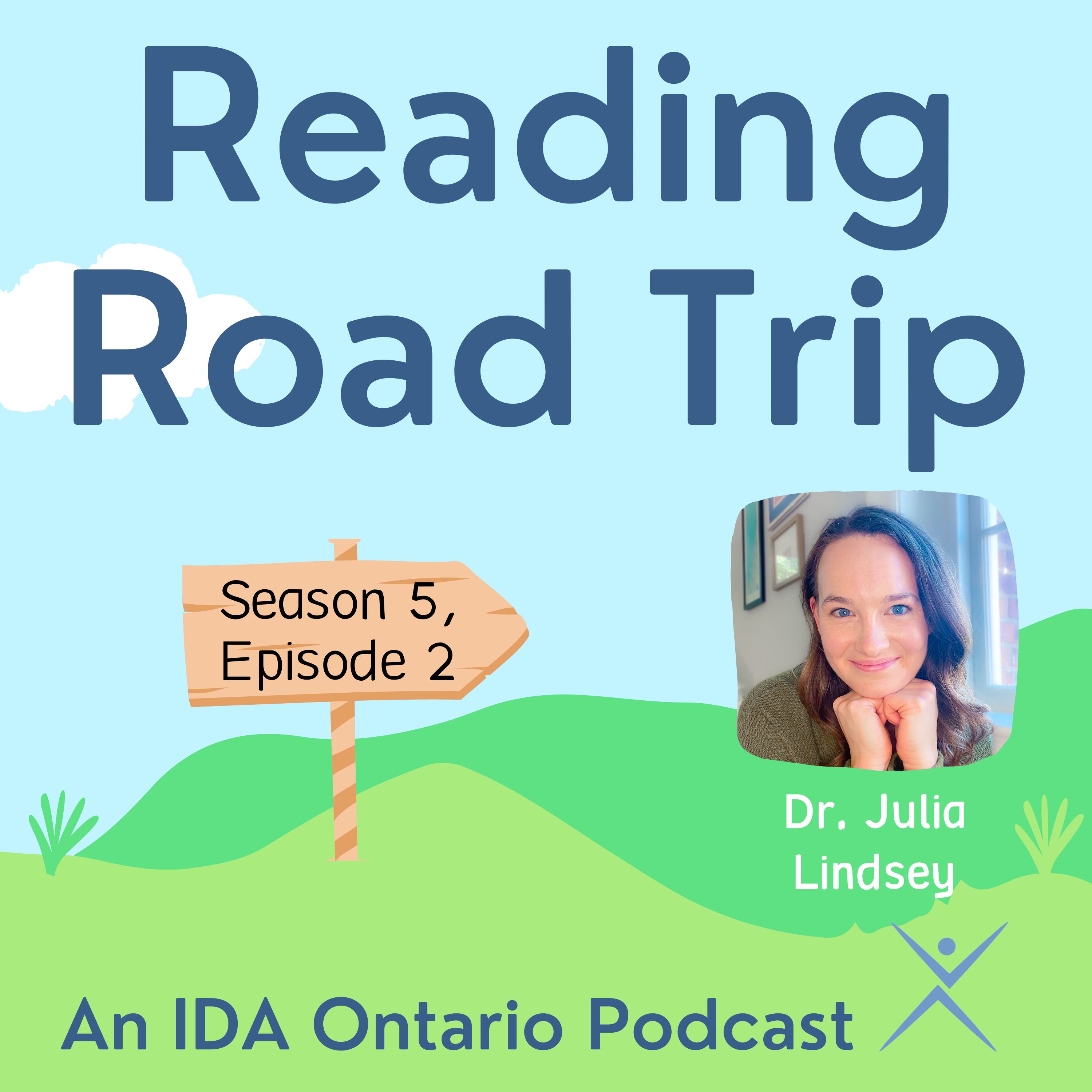
[00:01:32] Kate Winn: It is a pleasure to introduce our guest here this week on reading Road Trip, Dr. Julia Lindsey. She is a foundational literacy expert and author of two highly acclaimed books, Reading above the Fray and Small Groups Big Results, which we're going to talk about here today. She partners with districts and organizations to build teacher knowledge skills, support implementation of evidence-based practices and materials, and ensure that all students can become successful, empowered readers. She's also a sought after speaker, the creator of the Beyond Decodables tech series, and a proud former elementary school teacher. Welcome, Julia.
[00:02:07] Dr. Julia Lindsey: Thanks so much for having me. I'm thrilled to be here.
[00:02:10] Kate Winn: So excited to talk about small groups. Such a hot topic in education, especially reading education right now. And so what we thought we would do with this episode is pull out some myths and misconceptions around small group reading, reading instruction. I actually asked my social media followers if they had things to share and kind of combine some things. And I have some myths to throw at you that I'm hoping you can, you know, kind of debunk or, or talk through for our listeners. Does that sound good?
[00:02:37] Dr. Julia Lindsey: Yes, I love that. I love busting myths about literacy.
[00:02:41] Kate Winn: All right, here we go. So here is the first one I want to share. Small groups are for guided reading with leveled books. I know I've got the nice little horseshoe table at the back of my classroom. So is that what small group reading instruction is for?
[00:02:55] Dr. Julia Lindsey: Yeah, let's take this one back a little bit. And I think that we need to take it back to first of all, asking ourselves, why bother meeting with a smaller group of children than a whole class? Why are we going through all this rigmarole? Why are we doing all this stress and planning and dealing with all the management challenges?
And it should never be because it's what you've always done.
It should always be because meeting with a smaller group of kids is going to give us something different that we cannot get with that whole class.
And it's important to always recognize that meeting with a smaller group of students in almost every setting is going to come with some significant downsides, even though it can come with these big benefits. So we really want to think carefully what's going to make it worth it to meet with a smaller group of kids.
So what research really suggests and what the book talks about is this time with kids can be really transformative when it's focused on a couple things.
First, when it's super targeted towards specific instructional needs that we are identifying with clear, reliable data and that we know we can actually move with instruction, that it's focused on student practice with our explicit, immediate feedback so that kids are getting the chance to actually acquire skills correctly and get our help along the way when it's connected to and designed to bolster whole classwork. And I think this is a big shift for some folks. There shouldn't be like a separate scope and sequence and a separate whole identity about what it means to read in a small group. The work here should be towards the same goals, and that's going to actually help us get there faster.
And then of course, any instruction that we're doing in the smaller group should be based on research.
So when we take all of these things together and then we compare that to an approach like guided reading with level text, it kind of falls down in a number of these categories.
And I say this with, you know, deep respect for everybody who has used guided reading. I used guided reading in my classroom. I taught kindergarten in first grade and was required to have a one hour block. Yes, even in kindergarten where I did guided reading.
And some days it felt like that was going fine, and other days it felt like an absolute nightmare.
But now we know quite clearly from research that the guided reading approach, and I'm using general terms here, I know some folks have a different definition for what guided reading is, but the general approach where we have a level text and we're kind of guiding children through that with some kind of side mini lessons towards a little aspect of decoding or vocabulary or comprehension is not related to long term reading growth. It's kind of surprising, but there's no research that shows that that leveled progression is going to be related to other reading outcomes or even that kids read text of the same level in the same way.
So that approach is not necessarily connected to research, which, as I said, was kind of my fourth gold star of small groups. It has to be connected to research.
Another area where it's interesting to think about is this idea of, is it super targeted? And I think most of us who have done some guided reading can kind of say no. It's often not. It's often an attempt to kind of do everything. You're doing a little bit of everything around this whole big idea of all these things about reading. And when we do that, it takes.
It takes a lot longer than when we take an approach where we're able to target something very specific that that particular group of kids needs to move on. And in that way, we're able to create small group experiences that are more efficient and effective and so that we can give a lot of our attention to our whole group work and use that small group as this really targeted practice opportunity.
So overall, I would say that in this myth, the biggest thing to think about is whatever it's been for you, small group doesn't have to be that way. It can look really different if we keep this purpose front and center and we say, okay, smaller groups get me something really special. They get me this opportunity to give kids really targeted practice and lots of immediate feedback. Well, then, if that's your purpose, that actually opens up some radically different ways that you could think about what does a small group look like?
When does it happen? How long does it need to happen? Because I find that when we talk about small group instruction, for some folks, it has this almost like mythical quality. It's risen to the status of a content area. But none of us agree exactly on what that content is. And it's not. It's a grouping strategy. It's a tool. And that means that we can use that tool and we can wield it amazingly, or we can use it in a way that's actually not serving us.
But ultimately, we got to keep this purpose front and center, and that can shape all of the rest of our decision making.
[00:08:05] Kate Winn: Thank you. So just to put a Bit of a fine point on it. So if we're not going to go by levels and we're not going to say, you know, my level D kids are coming to me at this time and so on. How do we decide on the focus for each group then?
[00:08:20] Dr. Julia Lindsey: The focus for each group should be based on a set of clear, reliable data.
And I recommend starting by understanding how children are progressing in word recognition. Word recognition is far easier to kind of finely tune target than aspects of supporting comprehension, which is much more complex and multifaceted in many ways. But when we think about word recognition, we do actually have a fairly reliable progression from understanding the Alphabet and phonemic awareness, to developing earlier decoding skills and to being able to work with more multi syllabic words and developing fluency that children tend to progress throughout the early years, particularly of schooling. If we understand first where children are in that progression, then we can target where their needs are. If we say okay, this child is actually still developing decoding skills, we can then use more fine tuned assessments, maybe even from our phonics program so that we're not adding on a whole bunch of tests and say okay, they're still mastering. How do you use digraphs to read and spell words? Well, then we can use our small group instruction to target practice and explicit instruction in that particular area.
So we can use assessments that we're already using in many times. Sometimes we need to add on a little bit more to get more fine tuned. But understanding where kids are across word recognition and then if they're beyond those stages and thinking about what aspects of comprehension could we bolster to improve their knowledge building even more.
[00:09:59] Kate Winn: Great. The next myth or misconception I'd like to toss your way. All students should be in a group and they should get equal time with the teacher. What do you think about that one?
[00:10:11] Dr. Julia Lindsey: Yeah, this is a toughie because it feels like an equity issue when we aren't meeting with kids for the same amount of time. And that can feel really unfair to us or it can feel like we're not giving every kid equal opportunity. But the simple fact of the matter is the kids that have more needs, need more from us. And the actual equitable move is to make sure that everybody's getting what they need, even if it doesn't feel equal.
So this means for those kids who have more needs, we have to do everything in our power to increase the intensity of their learning experience.
So that's going to mean more time, more practice, more explicitness and more support. And all of those Things are often going to mean that we do have more small group experiences with them.
And that's because it's one of the few things that we have in a classroom where we can actually give kids that kind of intensity. And the kids who are thriving might simply need a little less from us.
I think that in general, if you are someone who really values social media small group instruction, partially because of the relationship building aspect, which we do see in research, that having some amount of small group instruction does support better relationships with students and teachers, then it's probably worth it to consider how could you meet with everybody, at least on occasion? But it might look really different. Say you're teaching second grade. You might have a group of students who are still really mastering basic decoding skills that ideally they would have mastered maybe even in a year prior.
So you might need to meet with those children almost every single day, if you can, even if it's brief, maybe about 10 or 15 minutes, where we are giving them exactly the kind of instruction they need to continue to further those skills. But you might have another group of kids who's reading at a ninth grade level already, and they're enjoying chapter books, and they are really thriving in your classroom, and. And maybe they meet as a group in a book club setting, and you meet with them for five minutes on Fridays to really check in and to have a conversation together. So it might look really different where you could still meet with some of those thriving children, but you're not going to give them the same intensity.
[00:12:26] Kate Winn: That's great. Thank you. The next myth is that you need a lot of prep work to create materials to use in small group. And I know I get a lot of questions about that, too, when I talk about different things that I've done with my class. And it's like, well, what do I buy and what are all the things that I need? I'm going to spend hours. You talk in your book about, you know, having to spend so much time prepping for all the small groups, but it's not true, is it?
[00:12:48] Dr. Julia Lindsey: No, it's really not. You really don't need all that. I have a list in the book. I think it's like, you know, what materials do I need? I really think it's maybe 30 things for 21 different routines. But the catch is that most of those things are already in your classroom. Stuff like writing paper, pencils, maybe some markers, and some you can get very easily from other sources, like Alphabet cards, which, speaking of, my absolute favorite are the Alphabet embedded mnemonics. From Omlet, they're free, they're beautiful, and they are connected to research around embedded mnemonics supporting Alphabet learning. So I always recommend those.
And if you're in the U.S. just know that the queue is a Canadian quarter. So, you know, just on the look, the basic thing here is that let's go back to those kind of big ideas that I said at the beginning. One of the big things to think about with small group instruction is how is it connected to our whole class instruction? How is it bolstering children's experience in our read aloud ela's phonics and ensuring their access to those experiences? And when we're doing that, you actually need way less materials because they already exist. If you are working on supporting comprehension with a group of students who is struggling to understand complex syntax well, the best way you can do that is by using a passage you were already going to read in ela. So you don't have to go searching for something. You don't need to buy a new program.
If we really think about how small group instruction is enmeshed as a part of this instead of kind of on its own train, if you will.
[00:14:34] Kate Winn: Great. And so in your book, you have great small group routines depending on all sorts of different student needs. Right. And so I think our readers are readers. Our listeners are really familiar with the idea of the simple view of reading and Scarborough's rope and how we've got that word reading, word recognition piece. We have that language comprehension piece. And so I'm curious if you could share, because I think a lot of us know a little bit more about if it's phonemic awareness, if it's phonics, if, you know, pieces of those things, we might have a little more idea of what to do. But you've got some routines in there that actually go into the comprehension piece as well. And so I wondered if you could share what, what a routine for working on syntax, for example, might look like with students.
[00:15:17] Dr. Julia Lindsey: Yeah, absolutely. So I think that the first thing is that when we start shifting our focus from talking about supporting decoding and fluency in small groups to supporting comprehension, we have to always take kind of a step and reorient.
And I think that many of us might have been familiar with a small group approach and comprehension that's really based on specific strategies or that sometimes ends up unintentionally feeling like a Q and a session with students where we've pulled a text that we want them to understand that's on their level, for example, and then it kind of just turns into question, answer, question, answer. And instead what the research really points to and what's really critical, not just in whole group, but also in small group work, is that when we are supporting comprehension, what we're really wanting to do is build children's knowledge.
And in a lot of the routines in the book, what I'm hoping that folks take from them is that we're building students knowledge while simultaneously trying to support their ability to navigate increasingly complex texts.
The complexity of text just goes way up throughout elementary school. And so thinking about the types of texts a fourth grader needs to interact with, there's going to be a lot of things about that text that could be difficult for a student. For example, like the syntax. They could be encountering new structures or clauses that they don't know how to navigate.
So that's kind of like background thought is to think about, well, we're really wanting to build their knowledge. And so if we take that seriously, the best way to do that is by making the deep connections to the knowledge we're already building in our ELA science and social studies instruction. And so we can take, for example, a passage from that and we can say, okay, based on what we know about these students from informal and formal assessments and looking at this text that we're about to read, what's going to be difficult in this text for them and how can I better help them access this by teaching into this arena? An alternative way might be to say, okay, I've noticed in assessment that these children are continually struggling with a particular area, and we can support that too, but kind of like two lenses that are somewhat similar.
So in terms of syntax more specifically, let's jump into that routine. First thing to know, even though I think we all know that syntax matters and there's more and more conversation about it, it's important to recognize that the instructional research on syntax is so light, it's like a centimeter deep. We need so much more research here, especially about how we can bolster children's skills. But we do know a little bit. So in the book, I walk through a routine where we go through four steps, and it's always the same four steps. You do some review, you engage in explicit instruction, you have kids practice, and then you have kids apply. And the difference I make between practice and apply, you can think of as practice as kind of a more constrained experience. And apply is in greater context.
Some folks might actually prefer to think about practice as more like a we do experience, and apply is often more of a you do experience.
So what happens in this? In this experience? Well, first off, again, you're selecting sentences with that hard syntactical element from a text you're already intending to read, or one that is connected topically to things you are already reading. This is kind of like a cheat code for life, because suddenly this group of kids that you normally think is struggling in your ELA lesson, they're going to be the rock stars, because maybe you have the chance to pre read this with them and get them access to these particularly hard sentences.
Then we'll engage in that explicit teaching about the particular syntactic element. For example, you might be teaching them more about referential pronouns, which can be really challenging for students and helping them identify to whom those are referring to. And we do that through some just explicit explanations of what these elements are, as well as think alouds. I think that think alouds are like, really wildly underappreciated.
Showing kids our metacognition is how they start to build that same ability to talk through these challenges in their own head.
Then we have kids practice in syntax. Some of the best ways we can practice or have kids combining or decomposing sentences. So understanding how these sentences fit together and what the clauses each mean individually can help them understand these more complex syntactical elements. And then finally, we put those sentences back in the larger passage and we can apply all that we practiced into that larger passage and have a brief conversation about what happened.
So we're really breaking this down. And I think in some ways that might feel strange to folks because it's like, well, now everything is all decontextualized, but we did put it back together at the end, and we made sure that we made meaning out of that. But it also, in many ways, is part of this larger meaning making experience because we're connecting it to a topic or directly to a passage that we are teaching. So it's not like just grabbing sentences at random.
[00:20:48] Kate Winn: Great.
So we've talked about, you know, not needing a lot of prep work to create the materials for the actual small group instruction. But another myth I think that's out there is that you need a lot of prep work to create activities to keep the other students busy while you're working in a small group. So the reality is, in a lot of cases, there's one adult for this classroom. Right. And so small groups so important, we want to make the time for that. But when we do that, we're also leaving the large group semi unattended. Right. And so is it really a ton of work to get ready for them to sort of be on their own, or is that a bit of a myth that we can bust?
[00:21:25] Dr. Julia Lindsey: This is the elephant in the room. This is like the question, what are those other kids doing?
So first things first.
Yes, you will have to work at helping the other kids remain focused a little bit. You are going to have to set up the structures and the management for that to occur, or else you will be banging your head against the wall all year waiting for kids to run up to you and asking you ridiculous questions the whole time. You're trying to deliver a small group experience. So, yes, it does take some effort, but it's also important to know if that research has never really investigated questions about centers versus stations versus this kind of rotation versus that. And so instead, we really want to think about this from the practical perspective.
So again, we are operating in a mode where we say, okay, small group instruction is getting us something very particular that we cannot accomplish in the whole group. It's valuable to us because of that and also because there is actually abundant research that demonstrates that when we have at least some small group instruction that is targeting specific needs inside of our whole class, we have better outcomes. So it's worth it to try and to go through kind of like the annoyance of setting some of this up. But we want to be practical about how this might look. So there's a few different ways that I'd encourage people to think about this, especially if you are not used to doing small group instruction.
So the first is to think about, okay, how could my students have a continued experience of some sort of whole group activity for 7 to 10 minutes, maybe even 15.
Again, depends on grade level after the experience kind of ends. So let's take an example of first grade phonics. First graders could be doing a phonics lesson they've just learned about, you know, the silent E. And now they could all be in partnerships doing a read and roll activity for the Next, let's say 10 minutes, where they could reasonably be expected to focus. Now, the first couple times you do this, you're not going to pull a small group. You're going to walk around the room and support everybody in working kindly in partnerships and focusing on the task at hand and completing the roll and read properly.
That is going to give you, though, over time, once everyone's used to that, about 10 minutes to pull a small group. It might sound like that would be too short, but it's not. That's actually just enough time to target specific decoding or even phonemic awareness skills, if those are what's needed in your classroom. And that is, yeah, only one group a day. But you might also think about, okay, maybe you have slightly older students, they need to do a fluency activity. Okay, everyone learns and is set up to do a particular partner reading protocol. And that gives you 15 minutes to pull a group. So instead of thinking about a singular block of time, you might think about these discrete moments where everybody else could do one specific activity that you teach the whole class to do and you can pull a small group.
The other way of thinking about this is how your work can be bolstered by the activity kids are doing. So kids could get more of what they need.
Often this is going to be best if it's like in partnerships. So if you have students who are still growing their decoding skills, you might grab activities like those from the Florida center for Reading Research.
It's all free fcrr.org where they could engage in again, particular decoding activities. They even have though games all the way up through different skills. One recently that a district I work with in Michigan that was they were playing an inferencing game that they absolutely love from FCRR. So getting kids in small groups or partnerships that are playing games, rereading decodable texts, or engaging in fluency reading, writing about reading, that's kind of our gold star for kids who are ready for that. But how do you make that more manageable? Connect it to whole class work. You're writing about the reading that you've recently done about arctic animals, because we're going to use that in service of either what we're writing in writing class or what we're researching in science.
And the last one is, of course you can use some computer assisted experiences.
I would recommend limiting the amount of time that we're expecting children to spend on screens. But there are some that have been proven in research to support literacy learning or are based on research principles. And if that's something that your school uses, that can also be a support because it does tend to keep kids attention while you're trying to pull a small group. But the overarching kind of idea here is that you might not have heard, so I'm going to call it out explicitly is it just might not be that much time. And that's something really important to keep in mind. If you're working on, say, having 20 minutes to meet with small groups, you are suddenly going to notice that getting the other kids going is very different than if you have been operating in a way where you needed kids to somehow be engaged independently for an hour.
And so we don't necessarily want to think about small group as like a super big extended long experience because that tends to not work out well for us.
And instead think about these targeted, constrained experiences and lasting long enough that we can do that instruction, but not kind of belaboring them, not having these long experiences, just to have a long experience.
[00:27:13] Kate Winn: Thank you. I'm going to ask you actually about time in a minute. But before we get to that, I do want to mention too. So we're here in Ontario and I teach kindergarten. And in any kindergarten class with more than 15 students, which most are, we have 32, there is a teacher and there's an early childhood educator. And so I feel really strongly that because we have this partnership, it frees us up, right? I mean, some people use the one instructor up, one instructor down kind of wording to phrase it. You know, like when one's with the whole group, the other can be with small group, that sort of thing. And my partner and I do that a lot. And I feel like because early intervention can happen so much more quickly than if we were teaching grade four and we're trying to close these years long gaps and you know what I mean, that's going to be a little more intensive. But when I have a student who's having trouble isolating the first sound in words, we can do these things so quickly. And so it doesn't even necessarily have to be the rest of the class is engaged in literacy. So for example, we have a play based program. So when the kids are having like free playtime, I might pull groups, they'll still get lots of playtime, that's okay. But I might be pulling them to do that. Or we have a small school and so we get time in the gym every day. And so what we do is my ECE partner teaches the gym classes. I sit out on the couch in the foyer right outside the gym in case there's an injury or there's something, you know, somebody's needed. But that's the time I use to pull students to read me their weekly decodable book that they've taken home and brought back.
So each kid misses five minutes of gym out of a week of gym periods. But that's a great time for an adult to be freed up to do that. So thinking creatively too, right? It doesn't have to be the rest of your class has to be doing literacy while you're doing your literacy Blocks and just being creative. If there is another adult that can possibly be, you know, pulled into this, this model, it can be helpful too.
[00:28:57] Dr. Julia Lindsey: Oh, I love that. Absolutely. And yes, if you are lucky enough to have someone around, I know some schools that have one kindergarten age who rotates between classes, even if it's in the afternoon, it would be easier. It would behoove you to make great use of that support and allow that person to help while you pull small groups.
And another thing to think about is, you know, math. Sometimes teachers will say, well, my kids can't do anything independently in reading yet, but they can count these blocks. They can work on this other activity. There's other things that they might be able to do. And again, I think part of it is just like, we've got to be reasonable. If you teach kindergarten, you're probably not going to have kids working independently for more than like 10 minutes. And so let's set that as what we're working on instead of thinking, oh man, if I don't have a 20 minute block, then it's not even worth it to try to do a second small group.
[00:29:58] Kate Winn: So digging a little more into that time piece. So another misconception I think that's out there is that you need to devote a lot of time to a group in order to see results. Because I think sometimes people get their data back, right? And the student might be sort of in that yellow below benchmark zone or maybe in that red, well below benchmark zone for a skill. And they automatically are thinking, oh, this is going to, they're going to need like an hour a day, every day, and I can't possibly do this. Is that, you know, really the right way to think about it?
[00:30:24] Dr. Julia Lindsey: Yeah, I think this shocks people. But actually small group instruction can be really fast. It can be really efficient and still be incredibly effective.
In the book, I emphasize this routine for small groups that's very repeatable.
That takes these four elements, Review, explicit instruction, practice and apply. But in many situations, you can think of small group instruction as often like an activity where it's mostly about student practice. So the question I always encourage folks to ask themselves is, can we ensure that this kid practices this key skill correctly?
Like, that's what I want to do. I'm getting this student in front of me who doesn't know the Alphabet. I know not just that, oh, the screener says they don't know the Alphabet, but I know I went through every single letter. And they don't specifically know G and P and L. And so I'M pulling them into a group where we are practicing those three letters and we're doing it for about seven minutes. But how many times can you practice a letter in seven minutes? A lot.
If you have, you know, just magnet tiles that you throw on the ground and then they are picking up the sound that you say you can get through an enormous amount of practice when you're doing something super tight and targeted. And that's the thing that's actually going to move kids learning is are they getting enough practice and are they practicing it correctly? And to do that they got to get your feedback.
The other thing to think about things like decodable text, they are so short. I mean seriously, most decodables are like less than 300 words. And I have personally tried to teach a long decodable lesson and I've watched people try to teach long decodable lessons.
Everybody's getting bored and somebody is on their third read and it's not really going anywhere. So don't make things take longer than they need to. We should not be sitting there and reading and reading and reading a 100 word decodable for 20 minutes. And if it's taking that long, that student wasn't ready for that task.
We should be going back and doing some previous skills. And then, you know, we get into comprehension. People often assume that going to take way longer and it probably will take a little bit longer. But if we're doing really content connected experiences and the goal is that we're increasing access to the whole group work instead of developing a brand new thing, it can often go much quicker because we already have a lot of the context built for what it is that we're doing, what we're talking about, what we're reading, rather than trying to kind of create a whole new experience that is unique to the small group.
[00:33:05] Kate Winn: Well, and I'd like to share too. And it ties perfectly into how you said. The whole point is can they practice the skill that they need to work on. Right. Just how quick sometimes these interventions can be to move a needle on our data. So I know I have had situations with like I gave the example of isolating first sounds or segmenting orally sounds in a word where a few days has been enough to take a child from being below the benchmark on a screen or two at benchmark. And just back in the spring I actually did a little intervention for some students. I had done a progress monitoring with them for nonsense word fluency and it was actually ahead of the end of year because I wanted to see how they Were coming along. So they were out benchmark. Nine of my 10 were at benchmark for middle of year.
So I didn't have to progress monitor them before end of year, But I just wanted to. And I thought, okay, their accuracy was really Kate Winn their correct letter sounds, but only three of the 10 were already ready to meet that end of year benchmark. And so I thought, okay, they've got accuracy. I don't need to drill them on what the letter sounds are. They need to be practicing, giving these sounds, blending them together to make words. And so it was the automaticity piece. And when we think about instructional hierarchy, Right. They had the accuracy. Want to work on the automaticity? So what I did was I printed off one of those, you know, roll and reads that had all the letters in there for CVC words.
And I took the kids for one minute a day and just pulled them for one minute, and we actually set the timer. When they were done, we would count together how many correct letter sounds they had. We'd record it and see how they were doing. They loved doing that. And then after a couple of them had had three sessions, most had four. One had maybe had five, and I did another problem progress monitoring forum with them, and eight of them were then at Benchmark. So basically, with an average of four minutes of intervention, Right. They had gone up because they needed that practice. And I think I was also using as they were practicing, I was kind of doing like, point, point, point, sweep with my pen, you know, like at cat, just to kind of get them into that rhythm and the pace of moving on to the next word and that sort of thing, you can't do that when you're doing a formal assessment. I didn't do it when they did the progress monitor.
But even just four minutes of that practice, just to be like, okay, yeah, I got to pick the pace up here. This is what I'm supposed to be doing. And so one kid went up actually 20 correct letter sounds higher after those four days. Right. It's not always going to be that way, of course, but again, that's where I feel like, as kindergarten educators, we have this power to Kate Winn there so early and just give them what they need to keep them on track. Right. So sometimes just that little bit can be. Can be all that you need.
[00:35:43] Dr. Julia Lindsey: Oh, I love that story. Oh, my goodness, how powerful. That's definitely the fastest I've ever heard, But I have certainly heard many stories of teachers who talk about, oh, this group of kids just couldn't understand long versus short vowel. And we spent one week, 10 minutes a day, really digging into that, using from the book, minimal pair work or using word chains. And then by the end of the week, yes, it was an informal assessment in that case, too. But, like, at the beginning of the week, they got 0 out of 10, and at the end of the week, they got 10 out of 10. So I love that because it demonstrates a couple things. One being this idea of precision. We're really. We know what we need to target, and then we do something very specific about it. We don't just kind of target reading. We don't target. In your case, like, all of decoding. It's this specific area that we want to work on, and that makes it a lot faster and a lot more flexible.
[00:36:40] Kate Winn: Another myth or misconception that's definitely floating around out there is the idea that, you know, after we've done. For most of us, it's a whole group lesson, the way we're doing it. There are, you know, variations of the ways that you can do that. But for me, it's my whole group lesson. And then after that, any small group is really intervention best done by interventionists or special education teachers, that sort of thing. A lot of. A lot of teachers kind of think that way. Can you clarify whether that's.
That's a truth or a myth?
[00:37:06] Dr. Julia Lindsey: Yeah, I mean, I hear variations of this myth all the time.
I kind of. I feel like there's a lot of feelings about, like, who's the one who should deliver intervention and when should it happen, and all these sorts of things.
And all of that is valid conversation to have about systems and about how to understand systems. But to me, here's the core thing. If a kid needs something from us in reading, then we gotta act. We gotta get that urgently to them. And in the best systems, there might be some sort of structure for an interventionist to come into your room, like, bam, bam, thank you, ma', am. Right out of nowhere and get it right done. But I think that in most cases, the classroom teacher has to be prepared to intervene basically on anything and to be able to give that targeted instruction, no matter kind of what's going on. And so kind of this idea of, like, we do whole class, and then this is sort of this intervention moment that probably happens out of our classroom. I think there's kind of three challenges with that. The first is most classrooms have lots of stuff going on.
Most classrooms do not have a group of kids who are learning the exact thing on the exact scope and sequence that you hope and so sometimes that means that the whole class is better served by even differentiating in that whole group environment, particularly in phonics.
The second is, I'd argue that every kid who's learning to decode does deserve some amount of time when he or she is getting direct feedback from the teacher. Just as you were describing with you pull kids for five minutes to listen to their decodable text reading.
And so that can't be the purview of interventionists because we cannot have every single child walk down the hall to read a decodable text to the interventionist once a week.
But the research on feedback in skill acquisition is pretty clear across all domains. And we would never think, oh, this kid who wants to be a, you know, a basketball star and is, you know, practicing their hoops every night, that they wouldn't benefit from occasionally having a coach say to them, oh no, no, no, your, you know, your fingers were, you flicked them a little too early or whatever it is that happens in basketball.
I probably should not have used that example of a sport I really don't know enough about. But we have to have a coach, a teacher with us to help us acquire these skills properly. So in that decoding phase, I do think that some small group instruction is, is for everybody and it should be differentiated to their particular abilities and needs. And the amount of time and the number of sessions will be different depending on how quickly they're mastering things. But everybody does need a little bit. And then the third reason why I think that this is not, it's not really realistic for us to think about small group instruction as the purview of intervention or as, you know, kind of this thing over there is that in most systems, again we have to respond to a whole bunch of stuff and it's going to be a lot more efficient. If you say, oh, this kid can't blend three sounds, are you going to wait and see what happens on the mid year, you know, acadiance data and then hope that there's a slot opening up in intervention for that kid? No, if we see something, we should teach something, right? And there's many things that we can do and many of them do not take that much time.
So one of the things I really wanted to do in this book was to give teachers a lot of ammunition, if you will, of if you see this, you can do something about it. You can try this. And these routines are all heavily based in research and have basically a whole lit review behind every single one so that we can say, okay, I noticed this, I can do something about it tomorrow instead of trying to wait for this system to kick in.
And no matter your role, I just. I think that we deserve to be ready to see a challenge a kid has in reading and know exactly what we can try. And so that's.
Sure. Is that intervention? Yep, maybe. But maybe it's not in the formal structure of it, but it can be a small group. Again, is that the small group that maybe you've always thought of in your head? Maybe not. But that's how we can use this idea, this tool, to better target really specific needs as they occur.
[00:41:44] Kate Winn: And the final myth or misconception that I would like to have you address is the idea that, you know, we can gather data at the start of the year, we can do it however we want. We're going to make these beautiful groups and then we're going to keep them for the year.
Is that the way to do it?
[00:42:00] Dr. Julia Lindsey: Yeah, so definitely not. We do not want to keep kids in the same group all year for a whole variety of reasons, one being related to motivation and engagement. We do know that we can have some challenges there with students who especially can identify that they're in a lower skill group. But second, kids are changing all the time. Children do not start at one place and then grow at the same pace as their peers. And so we need to be monitoring kids progress really carefully to understand how kids are progressing, where this kid is getting stuck versus that kid who's actually like exceeding all of our expectations and is suddenly flying and is in a completely different stratosphere at that point. And so these groups should be changing a lot.
And I think that that sounds really intimidating. So let me give some examples of what it could mean by a lot. So this. We'll start with the craziest example.
This is a teacher in Indiana that I know who is a maximally flexible teacher. And she has specific groups that she pulls that are in need of really a lot of support because they're far below grade level. But then beyond those groups, she also has time in her day where she watches everybody in their whole class phonics. And then she pulls the group of kids that were doing they were struggling the most in that lesson and does some additional support right then and there. So she has this kind of maximally flexible idea of I'm changing the group every single day based on what I'm noticing in that moment. Now, you don't have to do quite that level, but that's one example.
And another, more kind of common example would be using some Sort of weekly progress monitoring. Check again. This is most useful in something like the decoding phase, where we're able to say, how did kids do in phonics this week?
Who am I going to be supporting more deeply next week with more practice? Because they really, they kind of got it, but not fully. Who am I going to be supporting next week with more explicit instruction because they really didn't get it at all? Or who is going to really be moving into more application because they are in fact showing me that they're succeeding in these skills.
And then when we start thinking about comprehension again, we really want to think, can we relate this to our whole class work? This text is challenging for this group of students because it's really this odd informational structure that's hard to navigate. Okay, but our next unit where we're doing something in a narrative, well, that's maybe going to pose different difficulties for different kids. And so thinking about how we can react based on what our goal really is.
And so even if you don't do it every day, groups should be flexible based on clear progress monitoring data and your understanding of what your goals are for kids across the year and what it is that you're asking them to do.
And so I know it might sound crazy, the daily one, but I think it isn't so crazy when we think about these whole class small group alignments because you should be using the same assessments to understand how kids are doing there so that you're not needing to make up some new assessment system for your small group.
So hopefully it's just embedded in your weekly practice.
[00:45:31] Kate Winn: And I wouldn't say that I would go as far as to do it daily for sure. That's, that's a lot. But yes, like, I would for an example from my classroom, if I had five students who needed to work on phoneme segmentation fluency. And so I was pulling them as a group of five because that works for me for a few minutes a day to work on that skill. Well, if I check in in a week or two and I see, oh, two of them totally have it now, off they go.
And then I'm going to continue to take those other three, they'll get more opportunities to respond, that sort of thing. Right. Even in a smaller group there. And then when they're ready, okay, off they go. And then we'll see if they need work to work on the next skill when I assess that. But yeah, it's just the idea of not keeping kids in a group working on something they don't need to be. And then making sure you're bringing in the ones that maybe do need to work on and just that responsiveness that's. That's so important.
[00:46:16] Dr. Julia Lindsey: Yeah, yeah. And you might also think about it as like, I think a lot of us think about the group as the kids. Sometimes we could also think about it as the group is the content. So for your phoneme segmentation example, you might have five kids in it one week and then two of them are dropping out. Now you only have three. You might also have, say, a group that's dedicated to short vowels. And some of those kids might be in both groups and some kids might only be in one. And I think that instead of thinking about every Kate Winn your class is assigned to one singular group, you might also think about those needs that you're meeting and how those might look really different than you might have thought of in the past. If we're again centering, kind of meeting the need rather than centering all of these structures that we might have around what small groups should look like.
[00:47:06] Kate Winn: Like, this has been such a fascinating conversation. Thank you so much for your expertise. I highly recommend that listeners pick up small groups, big results. And if you don't already know listeners, this is from Scholastic's Science of Reading and Practice series. They've got a lot of great books in that series.
Of course, my book of Dr. Stephanie Staller is there as well. But an excellent book. Thank you for, for sharing all of this. Is there anything we haven't talked about yet, anything we missed that you want to share with listeners before we go?
[00:47:35] Dr. Julia Lindsey: Oh, gosh, I wish I had some beautiful ending anecdote to share. I think that one thing I'll say is that if you're a newer teacher or if you're newer to some of the Science of Reading understandings and it feels really overwhelming.
As much as I really believe in the power of well crafted small groups, it's okay if you really need to focus on that whole class classwork. The whole classwork is going to be the mover of the vast majority of students.
And I would just encourage you to think about how over the course of a year you could try to see, can I carve out 10 minutes to meet with kids more specifically?
But don't you know, as much as I love small group, if you are like, this is way too much and you are instead in a place where you can really make that whole class work shine, that is going to make a big difference. And you can add this in over time.
[00:48:33] Kate Winn: I love that point how you mentioned that. Because also the idea of looking at class data, If I had 20 kids who needed to work on phoneme segmentation fluency, I would not be putting them in different groups to work on phoneme segmentation fluency. Right. That could be a whole class focus and I would maximize my time to make sure that I'm doing that. We got to make sure we're looking at that frontline Tier one before we start doing supplementary things and going integration groups.
[00:48:57] Dr. Julia Lindsey: Yeah, I love that connection point. That was very. Yeah, great. And if you. I actually talk about this a little in the book when I have a little tiny bit of it dedicated straight to administrators. If we look at our class and we see, oh, everybody has this needs, you're going to be way more efficient and effective to do that with the whole class and to follow up in small group as needed. So definitely thinking about the mix of these two things and not, you know, necessarily thinking that small group is somehow up really high on a podium when it is, you know, part of a very strong instructional recipe.
[00:49:35] Kate Winn: Dr. Julia Lindsey, thank you so much for joining us for this episode of Reading Road Trip
[00:49:43] Kate Winn: Notes for this episode with all the links and information you need can be found at www.podcast.idaontario.com and you have been listening to season five episode two with Dr. Julia Lindsay.
Now it's time for that typical end of the podcast call to action. If you enjoyed this episode of Reading Road Trip, we'd love it if you could rate and or review it in your podcast app. This is super quick and can be extremely helpful for a podcast and of course we welcome any social media love you feel inspired to spread as well. Make sure you're following the Reading Road Trip podcast so you don't miss a single episode in this jam packed season. New episodes will be released on Monday mornings all summer long.
This podcast and all of IDA Ontario's work is made possible by our dedicated volunteers, including our hardworking board, wonderful staff and supporters like you. If you would like to support our work, please consider making a donation.
I'm Kate Winn and along with everyone at International Dyslexia Association Ontario. We hope this episode episode of Reading Road Trip has made your path to evidence based literacy instruction just a little bit clearer and a lot more fun.