Episode Transcript
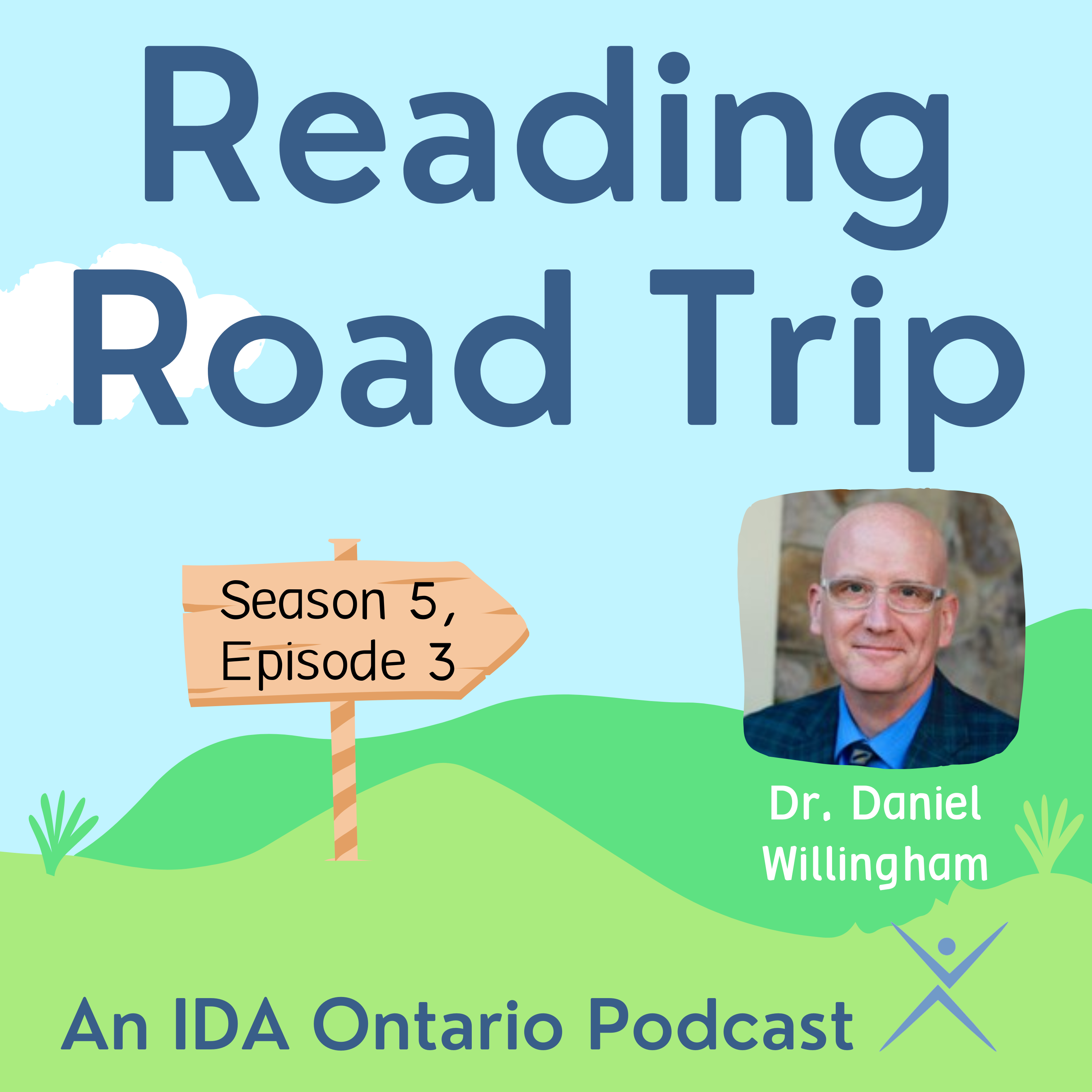
[00:00:05] Kate Winn: Hello to all you travelers out there on the road to evidence Based Literacy instruction. I'm Kate Winn classroom teacher and host of IDA Ontario podcast Reading Road Trip. Welcome to the third episode of Season five.
Our work at IDA Ontario, which is a registered charity, depends on the generosity of people like you. If you find the podcast helpful, please consider supporting our organization.
Before we get started, we would like to acknowledge that we are recording this podcast from the traditional land of the Mississauga Anishinaabe. We are grateful to live here and thank the generations of First Nations people for their care for and teachings about the Earth. We also recognize the contributions of Metis, Inuit and other Indigenous peoples in shaping our community and country.
Along with this acknowledgment and in the spirit of truth and reconciliation, we'd like to amplify the work of Indigenous artists and today we are sharing the graphic novel Minnow by Willie Pole, illustrated by Emily Graysanna Pearson Minnow keeps seeing this orca following her Ever since Minnow's gran went missing a year ago, strange things have been happening. A wild orca keeps following her along the beach. Her senses are more powerful and she might be turning into a fish. When Minnow and her new friend Celia learn that a new pipeline project in the area could have a devastating impact on the resident orcas, Minnow uses her new powers and new friendships to make waves of change and discovers that even the smallest fish can make a difference.
Add this title to your home or classroom library today.
Now on with the show.
[00:01:45] Kate Winn: It is my pleasure to introduce this week's guest here on Reading Road Trip. Daniel Willingham is a professor of psychology at the University of Virginia, where he has taught since 1992. Until about 2000. His research focused solely on the brain basis of learning and memory. Today, all of his research concerns the application of cognitive psychology to K16 education.
He is the author of several books, including the best selling why Don't Students Like School? And most recently Outsmart Your Brain, which we will be delving into today. His writing on education has appeared in 23 languages. In 2017, he was appointed by President Obama to serve as a member of the National Board for Education Sciences. So impressive biography and welcome Dr. Willingham.
[00:02:29] Dr. Daniel Willingham: Thanks. Happy to be here.
[00:02:31] Kate Winn: So before we dive into how we can outsmart our brain to maximize learning, I do want to go back in time. So the first I had ever heard of your work was when someone shared with me and asked that Cognitive Scientist column that she wrote for the American Educator Journal and it was called the Usefulness of Brief Instruction in Reading Comprehension Strategies and the word brief was italicized now. Full disclosure. This was published in the Winter 20062007 issue. It was more than a decade later by the time I read it and it was still fascinating to me. So what I'd like to do now is to just share how you concluded that piece and then I want to ask you after, if you know, pretty much 20 years later, if you think anything has changed in what you shared there.
And for those who are listening, when we're talking about strategies here in that piece, it says we're referring to things like comprehension monitoring, summarization, question answering, question generation, use of graphic organizers, story structures. Those are the sorts of things that were talked about in the piece as strategies.
And here is the quote.
Teaching reading strategies is a low cost way to give developing readers a boost, but it should be a small part of a teacher's job. Happily, students can learn them quickly and they are effective, but they appear to deliver a one time boost. Acquiring a broad vocabulary and a rich base of background knowledge will yield more substantial and longer term benefits, but doing so is more difficult and time consuming. This knowledge must be the product of years of systematic instruction as well as constant exposure exposure to high quality books, films, conversations, and so on, which provide students with incidental exposure to a great deal of new vocabulary and knowledge. So 20 years later, does that all still hold up?
[00:04:11] Dr. Daniel Willingham: It does. I would. I guess my response to that would be yes, and because I would add something, what's missing from that conclusion is that the research literature I was summarizing has a limitation that I think I did not fully appreciate. In 2006.
The research literature was on the comprehension strategies that you described. And I said in the article, these are the comprehension strategies that were examined by the National Reading Panel.
And it's also worth remembering what reading comprehension tests tend to be like, especially in elementary years.
They're pretty basic in terms of the expectations children will have to do some inferencing. But it's really about what basically happened, who, what, where, why, when, and sort of higher level analysis is not going to be part of it.
And that I think is the limitation because the of the piece that I wrote, because the conclusion that you could readily draw is that after you do, you know, I think I suggested a couple of weeks of comprehension strategy instruction for two years in elementary, like you're done. Like there's never any other comprehension instruction that would ever happen.
And that doesn't make sense.
In another piece I drew A distinction between comprehension strategy or comprehension as sort of the National Reading Panel would have it, and then what we might call working with texts. And this is where teachers are teaching children particular ways of working with texts that are especially characteristics of particular disciplines.
So the way you read text in science is not the same way that a historian is encouraged to read a text, which is not the same way you read text in English Language Arts.
So that sort of strategy instruction is very important and I think operates on very different cognitive processes than comprehension of the sort that I was talking about. And that makes up most of the comprehension strategy instruction literature.
That sort of comprehension has a whole lot in common with. With oral language comprehension.
But the types of things we want children to master as they move along in school, as they get into grade six and up, let's say, is more specialized and is not the kind of thing that you do in everyday speech and is more particular to the kinds of tasks that we assign in schools.
Does that distinction make sense?
[00:07:32] Kate Winn: Yeah, it does. Okay, thank you. I had to touch on that because that article was really, really interesting to me.
So moving on now, your wonderful book, Outsmart yout Brain, why learning is hard, and how you can make it easy. So I ordered this book when it first came out because at that point I was familiar with your work and I was devouring anything related to the science of learning. And as I read it, I found I kept switching the lenses I was using. So thinking as a teacher, and you know how teachers might share this with students. Also, as a teacher of ad, like, I provide professional development, that sort of thing. What that would mean on my end if I'm wanting my participants to learn. And then as a parent, too, because at the time, my girls were both teens, and they always love when I say, I'm reading this book. And here's this tip. They don't actually love it, but. But they do learn from it. I'm familiar with that, and I do really like the chapter structure.
So you have the content presented as tips for learners, but then a section at each end of the chapter for how that would apply to instructors as well. So. So I've picked some of the areas of the book to focus on because I think they provide us with good insights to think about both as teachers, but then perhaps in the role of learners ourselves.
So the first thing I wanted to ask you about was, as adult learners, if we are attending professional development sessions as we do, what strategies can we use to maximize our chances of remembering what we've heard?
[00:08:52] Dr. Daniel Willingham: There are two Things that I would point to.
I mean, it depends a little bit on exactly what's happening in the professional development session.
But the most important thing that you're probably. Yeah, I mean, as I'm thinking, as I'm giving the answer and I'm thinking through, like the different things that happen in pd, it really would vary depending on the particulars of what you're doing. If it's very sort of information heavy, that's a little different than if it's really a skill that you're meant to practice. I think the information variety of PD is a little more common. Would you agree with that?
[00:09:30] Kate Winn: Yes.
[00:09:31] Dr. Daniel Willingham: Yeah, I think so. Okay, so let's handle that. To remember information, it's going to sound ridiculously simple, but the really important thing you need to do is try to think about it as you are actually listening to it. Try to think about the meaning of what.
What's being communicated.
That does sound very simple. But there are a couple of challenges. The first challenge is that it may be kind of boring. It may not be all that interesting. And this is something I talk with graduate students in particular, actually more than undergraduates, because with graduate students, they're frequently asked to attend talks that aren't exactly in their area, aren't exactly relevant to them, and they don't seem. See the relevance.
And so I say, like, you know, that's. That's actually a really good challenge for you, and it's going to be great for your memory. Think about the way that you could think of this as being relevant to you. So that's.
Let me back up for a moment. What I've just described is a strategy to ensure that you think about meaning. One of the things I should have said is that one of the reasons that's so difficult is the brain doesn't really respond to the command to yourself. Okay, now I'm going to think about what this means.
Like, there's just no way to directly control that.
So instead, what you need to do is set yourself a task that is under your control that as a byproduct will lead to the kind of cognitive processing that you want. So this is one thing that you can do is think about how. How does this relate to my practice? Or if you think like this doesn't relate to my first. I mean, you know, don't be too quick to say it doesn't relate to my practice at all, because it might, like, you may say, I am a physical education instructor and this is about comprehension, strategy, instruction and reading or something, you know, you still might be able to that. That makes it more challenging. But the, the challenge is probably Kate Winn terms of really getting you thinking and really ensuring that you're thinking about what it means.
Another thing you can do is to take notes.
Taking notes is a way of making sure. I mean, students will tell you this. This is a way of making sure that you're really keeping on track, that you're keeping pace with whatever the leader of PD is talking about.
So those are, I mean, we could go into more, but those are two quick ways of trying to ensure that things stick with you.
[00:12:12] Kate Winn: I know you mentioned as well, get over your reluctance to ask questions when you're, you know, listening to a presentation or something like that. And I think for presenters it's also important if you're going to allow time for questions. One thing that I hear a lot, and I remember this all the way back from was I when I was in university, is when the professor, the presenter says, well, if there are no questions, then I guess we're all done. Or I guess you can go now. Well, then nobody wants to be that one holding up the entire group if you know, okay, we're going to be dismissed if you don't have a question. So I think you have to make sure as the presenter that you're open and allow time. And if you want to invite questions too, sure.
[00:12:47] Dr. Daniel Willingham: A long wait time. And then also, I mean, I don't make it seem, I would never say, I guess if there are no questions, we're done. I mean, I would do something like, I'm going to give you 60 seconds to write down your questions and then we'll consider some of them. And probably, probably wouldn't say this, but I wouldn't need to. Implicit in that is he may just call on someone and say, katie, what was on your mind? Right. And so then I'm really gonna, even if I was not very engaged, I'm gonna try and write down the question.
[00:13:21] Kate Winn: Yeah.
You have some great tips for how to read difficult books, including don't just read and highlight. And then later, this is a terrible plan.
So I think there are a lot of very keen book highlighters out there listening. So why isn't that the best approach? And what should we instead as we're reading these difficult books?
[00:13:40] Dr. Daniel Willingham: Yeah. So reading. I mean, and to be clear, highlighting is a bad idea if you don't know very much about the subject matter. It's not the case that highlighting is always dumb.
I don't think it's necessarily optimal, but it Makes much more sense if, for example, you're an educator and you're reading a book about teaching a topic you've got deep knowledge of. And this gets at why it's a bad idea if you're an amateur. The reason it's bad if you're an amateur is what makes you think that reading difficult content the first time through, you're understanding it well enough to highlight the parts that are truly important.
And so there's been research conducted on this where researchers have gone and looked at what students have actually highlighted and what they find is it's sort of all over the map. There's no consistency in what students are highlighting.
And the reason for that is they're all highlighting different things because they're not fully understanding it. So it's a much better idea to take notes on what you're reading.
Notes you can always update later. Another advantage of notes is a lot of times in complex reading, what I'm reading on page 45 connects to another idea that was on page 42 that's very hard to capture when you're highlighting. But when you're taking notes, obviously you can, you can do that.
[00:15:10] Kate Winn: You talk in the book as well about, or you write in the book about tips for studying for exams. So again, some of us may be still in course taking mode, taking exams ourselves, but if we teach older students, we also want to teach them these study skills and how to best study for exams.
This was one tip that I passed along to my then teen daughters as I was reading your book when you shared strategies to avoid again, and one that I was guilty of often and that I knew my daughters were too, was just rereading notes. And so again, why is this not the most helpful and what should we do instead?
[00:15:46] Dr. Daniel Willingham: Rereading notes is, is very tempting and, and an analogy I use in the book for lots of study strategies that students engage in that are not optimal. The analogy I offered is it's like doing push ups on your knees.
So suppose that you're trying to, you're going to, you've entered a push up contest and so you're trying to train and you come in and I come in and I see that you're doing push ups on your knees and I say like this is not really the best way to prepare for a push up contest. And you say, but look at, look at how fast I can do push ups and when I'm on my knees and it doesn't even feel that hard and I can do so many this way and so what's at the core of what's happening here is students are confusing performance with learning.
So doing push ups on your knees, the performance is great, but it's not a very good training exercise. And so students, for the same reason, they veer towards things that feel in the moment like they're working really well because performance is really good. And also they're not that hard because after all, who wants to work really hard if you don't need to?
And so reading over your notes is a perfect example of that. It feels like things are going great because what's happening is you're increasing familiarity. Now, familiarity is not the same thing as what memory researchers call recollection. Familiarity means your mind is able to identify, I've seen this before.
Knowing that you've seen something before doesn't necessarily mean you can say anything about it, right? This is why you may be out and about and you see a face and you're like, that person is really familiar. That doesn't mean you can say who they are, right? And so the same thing happens with students. They're reading over this content and it starts to feel more and more familiar. And they mistake that feeling of familiarity for a deeper type of knowing. They think they're going to be able to describe the principles that they're reading about, but they actually won't be able to. So that's why it's so tempting to do it. The reason it doesn't work very well gets back to what I was describing earlier when we were talking about PD and you were saying, what's the way to make this stick with you? And I said, what you want to do is you want to think about what it means.
And reading over content does not at all guarantee that you're actually going to think about the meaning of that content.
So reading over your notes is sort of a double whammy. It's not really helping you that much, but it's tricking you into thinking that it's helping a lot.
[00:18:30] Kate Winn: You mentioned a study guide as a better alternative. And so what are some ways that we can teach older students to create these study guides?
[00:18:40] Dr. Daniel Willingham: I think you really need to model it. I mean, I think it depends on the course, but for some, for like. So one of the courses that I teach here at the University of Virginia is an undergraduate course called Introduction to Cognitive Psychology.
Most of, for many of them, it's their first psychology course. For many of them, it's their first social science course.
And for anybody, you know, it's a beginner's course. So there's going to be lots of new vocabulary, unfamiliar ideas and so on.
So this course is basically a million miles wide and it's not that deep.
So what, what, what you need to master for this kind of course is a whole lot of vocabulary, a whole lot of definitions of terms, that sort of thing. So creating a study guide that is allows you to quiz yourself on these bits of information.
That's exactly what you want.
Now when it's an upper level seminar, if you're going to have to do, you know, write an assessment, that's sort of an essay test or something, testing yourself still really makes sense. But now you need to be thinking in terms of much broader themes. Right. And the format of the test also matters. So in a big introductory class a lot of times, I mean, I've got 350 students, I've Kate Winn teaching assistant. I'm not grading 350 essay tests. I've got to do multiple choice tests. Right. And they're machine graded. Well, when it's a multiple choice test, you kind of know that all four answers are going to be kind of similar. And so I really need to have the details down. I need to be sure I can distinguish between similar concepts. That's not true for an essay test. For an essay test I get to choose which details I include or exclude and what I'm really going to be graded on are themes that have been running through the marking period and how I can assemble this information into arguments.
So for that kind of test, you want to do very different studying. You want to be sure that you can identify and write coherently about those themes. And yes, you need some details to pull in and support your case, but you don't need to have mastered everything in the same level of detail.
[00:21:02] Kate Winn: What do we know about the value, if any, of cramming for tests and exams?
[00:21:08] Dr. Daniel Willingham: Yeah, so cramming, I mean every teacher has said don't cram and spread your studying out. And there's tons of evidence that, yes, that is the best thing that you can do for memory, especially if you want to remember things in the longer term.
But there's a reason, there's, there's more than one reason that students cram. One is the obvious reason that if you don't, if you're, if you're not that great at planning your time, you run out of time and then you end up, you know, trying to do the best you can with the limited time that you have before the exam. But the other reason students cram Is it kind of works. Right. They're not, they're not wrong about that. I mean, everybody has heard students say it almost sounds like a brag, man, I didn't remember anything about that content two days after I took the test. And that's what happens when you cram.
I'm very sort of upfront with my students about this, and I explain to them, look, if you are going to study for 10 hours, if you study two hours a day for five days versus studying 10 hours over one day, it's a bad example because who would study for 10 hours in one day? But you get what I mean.
[00:22:26] Kate Winn: Yeah.
[00:22:26] Dr. Daniel Willingham: You spread out your studying over time time.
You definitely will remember the content longer.
If you cram, you may be able to do pretty well, but you're going to forget it in the long term.
I. I try to emphasize, if you are in my classes, you know, Introduction to cognition class, if you're, you know, an engineer and you just had, you know, time in your schedule and this, this course seemed like kind of a lark and whatever, and you don't care. If you never remember this again, I can't really blame you. Like, engineering is your priority and it should be. Right. But if you're a psychology major, you are a fool. If you cram for my test because you're going to go on to take more advanced courses, they're going to assume you remember this because my course is a prerequisite for that.
So you need to, you know, I'm trying especially, and I think, you know, this is.
Students of high school age ought to be starting to think this way, that you are responsible for your own learning and you need to plan. And part of my job is to try and empower you in making those decisions.
[00:23:38] Kate Winn: How can we help students who have anxiety around tests specifically or even around learning in general?
[00:23:46] Dr. Daniel Willingham: Yeah, I mean, there are lots of things that we can do. I mean, one thing to do is to assure students that a little bit of test anxiety is typical.
Most people get a little bit anxious before a test, and a little bit of anxiety is actually probably helpful to you.
If you think of sort of a continuum of one end of the spectrum is, you know, so anxious you can't function at all. The other end of the spectrum is like, you're in a coma. You know, you're just not, you know, you're way too right. And so there is sort of a sweet spot, and that probably includes a little bit of anxiety because I find that I have some students who say, like, oh, I'm Anxious. And they, they talk about it as if it's a disability. And for some students it is.
But students tend to self diagnose and their self diagnosis is not always accurate. The way clinicians talk about it is. Anxiety becomes clinically significant when it's preventing you from doing things that you want to do.
And so test anxiety usually doesn't fall in that category. It starts to when you feel like it is really compromising my performance on the test. Like I know for a fact, and I've got good reason to think that I knew this content much better and then could not perform well in the test. So what, what can you advise these students to do?
You can find useful videos on YouTube for things like breathing exercises, self talk.
One of the mistakes that students make is when they deploy these strategies.
So doing something like self talk. So the really destructive thing that happens during a test with test anxiety is spiraling, where a student is anxious about this and working memory becomes overwhelmed. And it becomes overwhelmed with thoughts of what is going to happen and what does it mean if I fail this test. And the spiraling is, you start thinking, it's starting to look like I'm going to fail this test. My mind is going blank. Oh my gosh, if I fail this test, I, you know, I can't major in what I want, you know, and you just go on and on and make the problem much bigger.
The typical thing you would tell a student is you need to take a step back and think about trying. You know, I know it's really hard, but try to see this a little bit more objectively. What would you tell someone else in your situation?
What would realistically be expected if maybe you do fail the test? Does that really mean you'll never get into college and your life is ruined and so on? Okay. The mistake that people make is trying to do that self talk during the exam. You can't do it during the exam. You're too rattled.
The time to do it is about 72 hours before the exam because you can't think when you're extremely anxious. But memory still works.
So ideally what you're going to do is in that exam, when you feel yourself spiraling, you're going to be able to say, wait a minute, I went through all this two days ago and what I concluded, I did really make a fair case that even if I fail this exam, a person like me, with my record will still be able to go to college, things will still be on track. I'm okay. So that's the first thing to do is the self talk is a really good idea, but you need to do it early.
The second thing I would say, for most of my students, it varies a lot on what helps them.
So things like just getting up out of your seat, going, and having a drink of water can be a reset for a lot of my students.
Some of my students really like to wear a hoodie and feel like they're enclosed because seeing other people makes them really anxious.
I know that teachers get.
They themselves get anxious, if that's the right word. They start to feel weird about, like, what. What can I let a student do versus not let a student do? If they say, I want to do this because it makes me like, you know, I've got a.
A peacock that's a support animal, and I want to bring my peacock. My usual rule of thumb is, if it's something I would let anybody do, then absolutely it's fine.
If it's not something I would let anybody do, then I start to think about, I need to talk to the professionals in my school who are making, you know, testing students and saying what are appropriate accommodations. But, like, I'm fine with.
If everybody wanted to wear a hoodie in my class, that would be fine with me. If, you know, people at different times want to get up and drink, have a water, that's fine with me.
[00:28:57] Kate Winn: Another tip that you share in the book is get enough sleep. And I know I am a huge proponent of sleep for myself, for my children, for my students.
How does this connect to learning? Why is this a good idea?
[00:29:11] Dr. Daniel Willingham: The thing that people understand about sleep is that it compromises your performance the next day, that you feel like it's harder for me to pay attention.
Maybe if you are really in touch with who you are, you recognize my emotions are not quite as well regulated as they could be. If you don't recognize it in yourself, your parents recognize it, your friends recognize it.
What most students don't know is that it not only messes up the next day, it messes up the previous day as well.
Because one of the things that sleep does is there's a process called consolidation.
And consolidation is a process by which memories become more stable.
And even though you're asleep, this is something that your brain is doing is it is sort of tossing memories that are deemed less important and stabilizing and promoting more important memories. So things that you've learned on the previous day are not going to stick with you as well if you don't sleep.
[00:30:23] Kate Winn: Procrastination. Let's move on to that Topic now. So as educators, as listeners, there may be a lot of procrastinators out there. Again, we have students, we have our own children. We want to try to tackle this head on. So what are some ideas for those out there who tend to procrastinate?
[00:30:44] Dr. Daniel Willingham: Procrastination is one of those happy rare times where your intuition about what happens is exactly what psychologists think is happening.
Procrastination is a choice.
You see before you something that you have to do that sounds like it's not very pleasant, and then you see an alternative that looks a whole lot more pleasant. And so you choose to do the more pleasant thing and put off the less pleasant thing.
There are a couple of reasons that you would make that choice that are help us gain insight into why. Some of the standard advice about procrastination is actually pretty good advice.
But before I get to those specific strategies, I want to point something out. Conceptualizing it as a choice, I think is probably the most important thing we can do. Because what that indicates is your real goal should be to get to the point, point of making schoolwork habitual.
So if you floss your teeth every night, flossing is not a choice, right? It's a habit. And so you just somehow find yourself in the bathroom at night flossing your teeth. You don't think, should I floss tonight? Should I not floss tonight? And you can almost hear, as I say that, like, if you're thinking to yourself, should I floss? Should I not? It's like, yeah, well, if you do that sometimes you're going to decide, no, that sounds dumb. Like you should just every night floss without thinking about it, right? So that's really what your goal is with schoolwork. Now, let me point out the way students usually think about assignments, things that they're supposed to complete at home, is very much in line with that choice because they think about it sort of assignment by assignment. They think about it by task, right? And so student will go home and they'll think, okay, so what do I have reading I'm supposed to complete? Do I have a quiz coming up? And so that opens up the idea, maybe I don't have anything that I need to do. Like, it's Monday night. I do have a quiz Friday, but, like, I don't need to do that today, right? So I don't have anything sweet, so I'll do whatever I feel like doing, right? So doing it by task opens up the possibility, or the not even possibility, the inevitability of thinking about it. As a choice, the alternative is to organize work by time rather than task. So every single night from 6:30 to 7:30 or whatever it is, that's homework, right? And it's as consistent and habitual as flossing your teeth.
And so then the choice is I sit down at my desk and I think, what am I going to work on tonight?
Right. The advantage of this there, I mean, there's more than one advantage. The biggest advantage is for procrastination because now if you can get to the point where it truly is a habit, then the decision is removed and you'll never procrastinate. The other advantage is everybody has trouble estimating how long tasks are going to take. This is called the planning fallacy. This is not just students. Everybody does this and almost always we underestimate.
And so if you plan your work by time, as I've described, when there isn't anything due tomorrow, then you're working on something that's due the next day or even the day after that.
And so if you're doing this right, you will always be a little bit ahead. And so when something takes longer than you expected it was going to take, you kind of got some time in the bank. You're a little ahead of the game already and it's not going to cost you so much.
So most of the procrastination strategies you should view as how can I get to the point where my work time is habitual?
And I think a lot of the standard procrastination strategies are really helpful to make you the right choice. So for example, breaking tasks down into more manageable chunks, the reason that's a helpful strategy is when you're making the choice, one of the reasons you would choose not to do your work is you think to yourself, I'm supposed to write a 15 page paper. I've never written a paper that was longer than six pages. This is overwhelming. I have no idea how to do this. So implicit in that is if I were to try, I would fail anyway, so why would I try?
But breaking down the task into chunks that look more manageable makes it more likely that you'll say, okay, the task does not write a 15 page paper. The task is think of topics or something like that. Right? So this is relevant for teachers because this tells you you not only need to teach the strategy of breaking things down into chunks, you need to model how to break these tasks down. They're not going to know how to do this.
Right. I could go on with some others, but I've Kind of come on for a while here.
[00:35:53] Kate Winn: No, no, that's great. And it's funny, before asking the question, I was thinking, you know, well, this doesn't really apply to me because I'm not a procrastinator and, you know, I break things into chunks and I work every day and I get ahead and all of that. So, you know, I think I'm okay with that piece. But now you really have me thinking that I should be flossing.
So I've definitely taken that, that one away for, for my own perspective.
[00:36:14] Dr. Daniel Willingham: Well, I'm glad and I'm very impressed because I procrastinate all over the place.
[00:36:19] Kate Winn: A lot of these things do apply to me, but procrastination I'm pretty good with.
The last topic from the book that I want to ask you about is Staying Focused. So again, as educators, we have all of our own work we need to do. Tips for us to stay focused, but also ways to help our students, children. How can we, what kind of advice can we give to them to be able to focus on our work?
[00:36:43] Dr. Daniel Willingham: Yeah, staying focused when you're, especially when the work seems kind of boring is. I mean, this is challenging for everybody. Right? Because the challenge in focus is always, I'm doing something that I would rather not be doing.
There are a few strategies that are really empirically verified. One of the most important is taking breaks.
Taking breaks.
It feels like you are fresher and better able to resist mind wandering when you are, when you've, when you're just coming off a break. And that's. That's absolutely the case.
The, the question that often comes up is like, well, what should the proportion be of work? And then how long should my break be? What should I be doing during my break? This is something researchers have looked at closely and they've had a really hard time coming up with any consistent principles. I think the reason for that is it depends on the nature of the work that you are doing, how motivated you are to do it, and, yeah, how demanding it is.
But it's useful to know. I mean, the reason I bring that up is like, if you go on YouTube and look at videos, you will find like the Pomodoro technique, which says, you know, you should have 20 minutes on and then take a. I think it's a three minute break and it's all very regimented. If that works for you, that's great. But, you know, be aware there's not any empirical basis for that. And so I tell my students, you know, you just have to feel it out.
The one thing that I would say is useful is, and, and there's no empirical evidence on this either, by the way. But I, I offer it for your thought because I think it's probably right. I think it's important that breaks be planned because the alternative is to say, I'm going to take a break when I feel like I need a break when I'm kind of sick of it. And if you're doing that, then you're really encouraging yourself to kind of, you have to check in with yourself all the time, like, okay, am I sick of this enough that now I need a break? I think it's better to just like, work until the timer goes off.
The other thing, in terms of what to do during a break, again, no empirical evidence. I just tell my students, you should feel refreshed when you come back. You know, you should feel like ready to work.
So that's probably the best advice for mind wandering. The other way you get distracted is distractions from without.
And I think a lot of the standard advice there is quite useful.
Being in a quiet environment is probably the most important thing.
Students, a lot of times they kind of want to be social, they want to be with other people when they're studying.
And I get that. And there's, you know, there's probably some benefit in terms of motivation.
But, you know, whenever you are, whenever you're in an environment where there is movement happening, when there is sound happening, you're going to be distracted.
It's also true that not everybody has access to a quiet environment.
And so in that case, you can try, do the best you can to change the environment you do have access to. So, for example, students, the only place they can study is the kitchen table. And people are coming in and out of the kitchen and it's noisy and little siblings and so on.
So you can try to do simple things like try and move your chair so that if someone comes into the kitchen to get a snack, they're out of your field of vision. And I know it's such a small thing. It's like, you know, students say, like, I'm not going to look at my little brother. Who cares, right? It's like, I know, but momentarily you probably will. You know, just movement in the periphery of your vision will briefly distract you.
If they have sound canceling headphones, those can really help if they don't have access to that. Foam earplugs are really cheap. And in a pinch, if you feel like I, you know, it's, it's just chaos here. I need some quiet. Foam earplugs can help with that.
[00:40:56] Kate Winn: What about teachers in classrooms?
[00:40:58] Kate Winn: Can we put in our foam earplugs?
[00:40:59] Dr. Daniel Willingham: Absolutely. I'm a big booster of that idea.
[00:41:04] Kate Winn: Well, I would like to leave you with the last word. Is there anything you would like to share with listeners? Anything you're working on where they can find you?
[00:41:11] Dr. Daniel Willingham: Oh, well, I'm working on a book about critical thinking and I've been working on this book for a long time. So when I say that, people always say when's it coming out? And I have to say I don't know. But I'm very excited about that project.
And the other thing I'll mention is that I do have a website, danielwillingham.com. Anything to which I own the copyright is freely downloadable there, so there are lots of articles there.
[00:41:38] Kate Winn: Dr. Daniel Willingham, thank you so much for being here with us for this episode of Reading Road Trip.
[00:41:43] Dr. Daniel Willingham: My pleasure. Thanks for having me.
[00:41:47] Kate Winn: Show notes for this episode with all the links and information you need can be found at podcast.idaontario.com and you have been listening to season five episode three with Dr. Daniel Willingham.
Now it's time for that typical end of the podcast call to action. If you enjoyed this episode of Reading Road Trip, we'd love it if you could rate and or review it in your podcast app as this is extremely helpful for a podcast and you can do it really quickly. And of course we welcome any social media love you feel inspired to spread as well. Make sure you're following the Reading Road Trip podcast so you don't miss a single episode in this jam packed season. New episodes will be released on Monday mornings all summer long.
This podcast and all of IDA Ontario work is made possible by our dedicated volunteers including our hard working board together with our wonderful staff and supporters like you. If you'd like to support our work, please consider making a donation. You'll find the link in the show notes.
I'm Kate Winn and along with everyone at IDA Ontario, we hope this episode of Reading Road Trip has made your path to evidence based literacy instruction just a little bit clearer and a lot more fun.