[00:00:06] Kate Winn: Hello to all you travelers out there on the road to evidence based literacy instruction. I'm Kate Winn classroom teacher and host of International Dyslexia association of Ontario's podcast Reading Road Trip. Welcome to the fifth episode of Season five.
Our work at IDA Ontario, which is a registered charity, does depends on the generosity of people like you. If you find the podcast helpful, please consider supporting our organization.
Before we get started, we would like to acknowledge that we are recording this podcast from the traditional land of the Mississauga Anishinaabe. We are grateful to live here and thank the generations of First Nations people for their care for and teachings about the Earth. We also recognize the contributions of Metis, Inuit and other Indigenous peoples in shaping our community and country.
Along with this acknowledgment and in the spirit of truth and reconciliation, we'd like to amplify the work of Indigenous artists. And today we are sharing the picture book Jenny's Concrete Powwow by Shawna Lee Corbould, illustrated by Regina Alice Willman. Jenny has never been to a powwow before and would rather be home in the city with her friends. Once she arrives at the reserve and experiences all the sights, smells and sounds, she begins to feel a deep rooted connection to the community. The next day, Jenny realizes that while the city is busy and full of people, she does not feel that same connection. She spots a crow flying down the street and follows it to the park where she is inspired to find the same spark of cultural connection that she felt at the powwow within herself. Add this title to your home or classroom library today. Now on with the show.
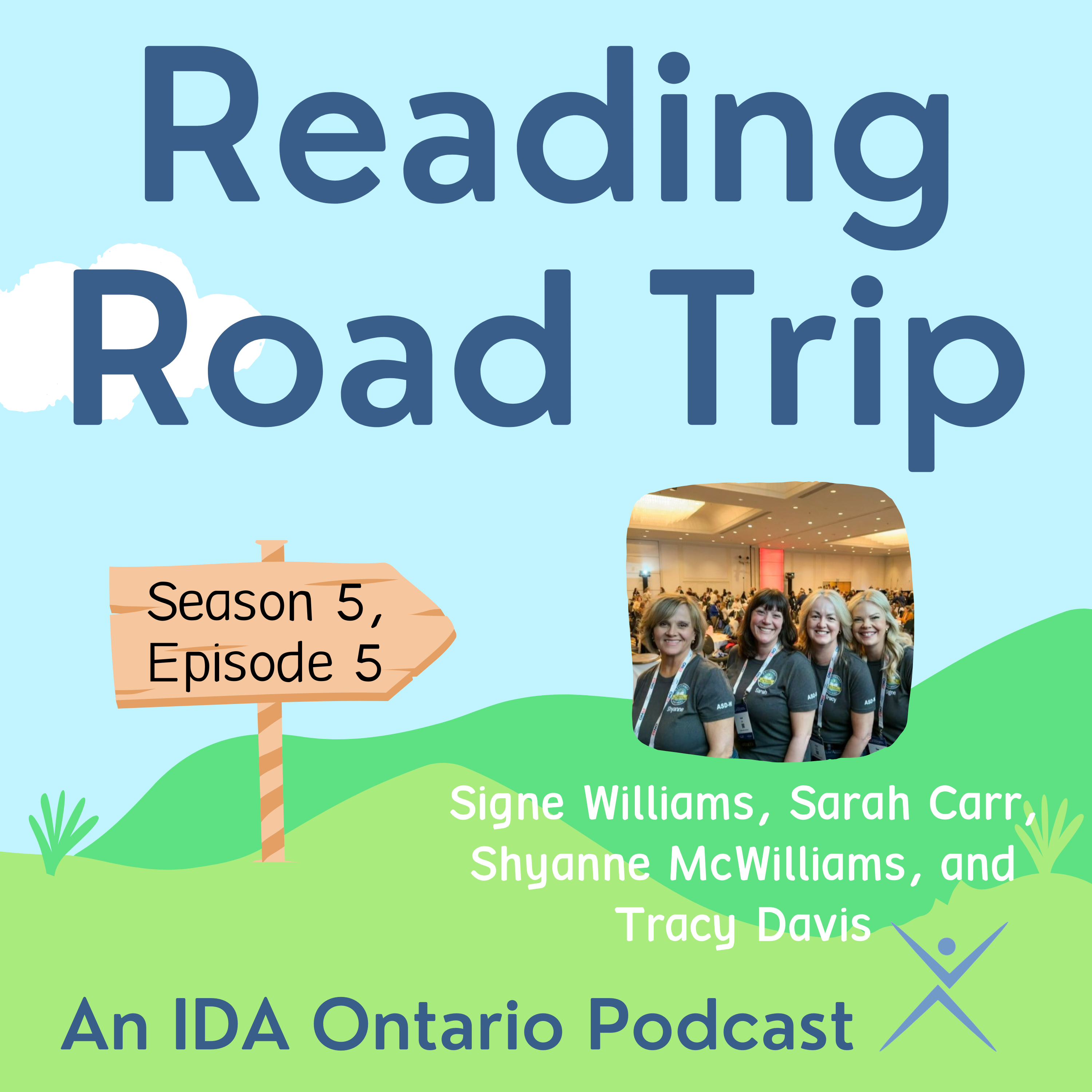
[00:01:48] Kate Winn: It is such a pleasure to introduce our guests here this week on Reading Road Trip. Not one guest, not two, not three, but four incredible educators who are joining us today from the Anglophone School District west in New Brunswick here to tell us all about some incredible things that they are doing in their work. So I will introduce you to these four ladies. First we have Signe Williams. She is the K to 5 literacy subject coordinator for for Fredericton and Oromocto in that district. Hello, Signe.
[00:02:20] Signe Williams: Hi. Thank you for having us today.
[00:02:23] Kate Winn: And next we also have three literacy leadership coaches from K to 5. So we'll say hello first to Shyanne McWilliams.
[00:02:33] Shyanne McWilliams: Hi. I'm so excited to be here today.
[00:02:36] Kate Winn: Next we have Tracy Davis. Hi Tracy.
[00:02:40] Tracy Davis: Hi there.
[00:02:42] Kate Winn: And we are also joined by Sarah Carr today. Hi Sarah.
[00:02:45] Sarah Carr: Hi, Kate. Thank you so much for having us.
[00:02:48] Kate Winn: Well, I'm really excited for this conversation and I'm going to let you all, you know, speak for yourselves in terms of the great work that you have done. The first question. I'm going to throw this one to you, Sarah. What had been done in your district to shift to an evidence based literacy approach before you decided to focus specifically on one school, Cuffman Street Elementary?
[00:03:10] Sarah Carr: Well, prior to this year's work at Cuffman Street Elementary School, our literacy team worked hard to support the rollout of a new provincial literacy curriculum. And this curriculum shifted away from theory based models of reading like three cueing towards an evidence based approach grounded in how kids actually learn how to read.
So that was really exciting for our little team of three coaches and one coordinator. And we were busy supporting 35 schools and approximately 500 educators. We were on the road a lot. We traveled from school to school to help educators unpack this new curriculum and to kind of build knowledge around what it would look like, what would the impact be in their classrooms on their daily practice. We offered lots of PL sessions, full formal sessions, and informal sessions. A popular informal one was literacy and Lattes, where we would take our little latte machine with us and make a latte for any educator who wanted to come and just chat with a literacy coach about literacy.
And we also worked really closely with academic support teachers and we worked with them around understanding assessment and what a valid and reliable assessment tool was and things like screening. What does that look like? We explored dibels, we looked at acadience, we learned about diagnostic tools, QPS and progress monitoring and how all of these assessment tools work together in that cohesive assessment system and that kind of focus on assessment and really led us into conversations about data and having professional conversations about what does this data mean? How can this data impact my instruction? How does it, how will it impact students? And how will it impact what's happening in my classroom?
So by the time Cuffman street became a focus, there was that foundation in place in the district. And the difference with Cuffman street was that it gave the team the opportunity to really go deeper with the work rather than trying to support everyone on that broader surface level.
[00:05:40] Kate Winn: Well, you know, you are speaking my language when you're talking about assessment and data, so that is wonderful. And so obviously lots going on district wide, which was wonderful. But then rather than trying to support every school equally, as you mentioned, you chose to focus intensively on one school. So, Signe, I'm wondering if you can tell us how you arrive at that decision and what made Cuffman street elementary the right place to begin this work?
[00:06:04] Signe Williams: Absolutely, Kate. Yes, Our decision to focus on one school intensively was intentional for a variety of reasons. One being the capacity of the team and such a large portfolio, as Sarah just mentioned. And secondly, because of our engagement in the work of multi tiered systems of support and literacy within our own team's professional learning.
And lastly, our team has been tracking data at the grade three level over the last three years. And we knew that something needed to change. Students were coming out of grade two without the essential skills for reading. So if nothing changes, then nothing changes. And we really had to think outside the box.
And we knew based on the track record, we needed to implement early universal screening. Waiting until grade three was far too late.
We also knew from both the research and our own experience that one time professional learning does not lead to sustained change. So if we wanted to understand whether early universal screening could truly help prevent reading failure, we needed to see what happened when a school implemented the entire process with ongoing support, as the team is going to explain in a little bit.
And Kaufman street elementary was the right place to begin because the school, school leadership and staff were willing to engage in the work and commit to the process within their school improvement plan. The school also had a variety of complex needs and we knew if the process could work there, then it could work anywhere. So by concentrating our efforts in the one school intensively, the coaches were able to learn alongside the staff, refine their approach and collect evidence about what was possible.
And we were also intentional with our planning, beginning with the end of in mind, at the forefront of how could this be scaled when, when our year concluded, we weren't interested in implementing something broadly based on assumptions. We wanted the evidence that the approach was effective, practical and sustainable before expanding it to other schools. And one of my favorite quotes this year, Kate, has been, I keep saying it over and over, is without the data, it's just an opinion. And we wanted, and we needed that data to prove that this works.
[00:08:16] Kate Winn: That's great. So in terms of the screening, of course here in Ontario, we have a mandate to screen students from year two kindergarten through grade two. But in New Brunswick, screening is not required. So this entire initiative is actually outside provincial mandates, what you have taken on. So why did you need screening data to guide this instructional work? Sarah, could you answer that for us?
[00:08:40] Sarah Carr: Sure, Kate. And I'm going to take a page right from your book, Reading Assessment Done Right Screening. We needed screening for two main purposes. As you point out in the book, valid and reliable screening helps us to identify students who are at risk. So those are students who are currently struggling. And it helps us to identify students who are predicted to struggle in the future.
And universal screening also helps us to identify those instructional systems that might not be meeting the needs of all students.
So those two really important purposes behind screening, telling us who's at risk and what systems need to be strengthened, were so important we can respond immediately with that data. And it's so powerful because it just switches us out of that reactive wait to fail kind of mindset to a more proactive and a preventative one.
So at Cuffman street, that screening data really served as the foundational first step in implementing their multi tiered systems of support. And it was like their entry point into a collaborative improvement cycle.
So even though screening isn't required, educators, it gave them a clear and a proactive way to align their instruction with the students needs. And it was just such a critical piece to beginning that work at Cuffman Street.
[00:10:18] Kate Winn: Thank you. Well, for the next few questions, I'm going to call on Shyanne and Tracy. I know you were the two coaches that were actively involved in leading the work that we're talking about right now. And so Shyanne, if I can ask you this next one, one of the biggest shifts in your work was moving from asking who needs intervention to asking what must change in tier one tomorrow. Why was that such a powerful shift?
[00:10:40] Shyanne McWilliams: Yes, that's a great question. So that shift, Kate, actually happened even before our work at Cuffman Street.
So for a lot of years, our thinking was probably similar to a lot of teachers thinking and what they believed that when students are struggling, our first thought is they need more support. And that we always thought we needed more intervention, more EA support, more resource teachers.
And actually, honestly, my work before this literacy coach role was a literacy lead in schools and my work was focused on intervention. We'd identify students that were struggling and provide additional support and then we'd send them right back to their classroom again.
So the problem was that we never really stopped to ask, why did so many students need intervention in the first place? So when I did come into this role, the coaching role, our team learned a lot more about MTSS. And we kept coming across the idea that Tier 1 instruction or strong Tier 1 instruction could affect about 80% of students and help them be on track for reading success. And that really kind of made us stop and think, what if the answer wasn't more intervention, but the answer is stronger instruction for all students.
So that really brings us to the Cuffman story. When we went to Cuffman with this in mind, and we looked at their screening data. And we did see right away that a large percentage of their kindergarten to grade two students were at risk for reading difficulties. We knew right away that we couldn't tier two our way out of that problem, that we really needed to focus on tier one instruction. There wasn't enough time or resources to provide intervention for that many students. So their screening data actually helped us identify the specific foundational skills that students were missing.
And so, together with the teachers, we focused on strengthening that core instruction. And we were able to be really intentional and explicit with their instruction and practice opportunities. And we could really respond to what the data was telling us. And it was exciting that what we actually that we saw exactly what the research suggested we would see. So as tier one got stronger, students made significant gains.
And for us, that was really powerful. And now we know intervention is important, but biggest opportunity for impact is improving instruction for every student every day. And that's where we could really see the most impact across the entire school.
[00:13:39] Kate Winn: And Shyanne, you touched on this a little bit, but when you looked at that data, what were the biggest instructional priorities that emerged for you all?
[00:13:48] Shyanne McWilliams: Well, that data actually really made our priorities clearer than we expected. So like many schools, we could have focused on a multitude of different things, but when we look closely at the screening data at the beginning, one finding really jumped out for us. It was that almost all of the grade one students that were entering grade one were entering without fluent knowledge of letter names or letter sounds. And that was a little bit of a wake up call for us, because those are some of the most foundational skills that students need in order to be successful readers.
So it told us that we couldn't really worry about any more complex reading skills. We had to go right back to the beginning and make sure that students had really mastered those essential building blocks. And so that data showed us that a lot of students were also struggling with phonemic awareness, letter sound knowledge, decoding, and automaticity with all of those skills. And because so many students were missing the same foundational skills, it was clear that this wasn't just about those few students, that this really was an instructional priority for us.
So what was really helpful was that the data itself kept us from chasing a whole bunch of different initiatives. We could get really specific because the data told us what to really look at. So we were able to say, what are the skills students need most right now? And how do we strengthen instruction around those skills? And it also not only in grade one. But it led us to an important realization about kindergarten. If the students were arriving in grade one without strong foundational skills, then we realized we needed to strengthen those skills even earlier.
And so while we were focusing on improving grade one, we also made it a focus and worked with kindergarten teachers to ensure that those students were building strong phonemic awareness, letter sound knowledge, and those skills right from the start. And yeah, the data really gave us that permission to be focused rather than trying to improve everything at once.
[00:16:13] Kate Winn: And of course, as a kindergarten teacher myself, I applaud that whole vision that you've got to go back to kindergarten. I know here in Ontario, after the right to read, they implemented a new curriculum from grade one to eight. But the kindergarten curriculum needed that updating. Right? And so a lot of grade one teachers over the past couple of years have been finding that students not necessarily ready, not meeting benchmarks, that sort of thing, because maybe, maybe the change wasn't happening in kindergarten like, like it should be. Yet now we have our new curriculum going into effect in September. So I'm hoping that then we'll have everybody on the same page in terms of kindergarten and then we'll start to see that difference in, in grade one as well. But that's very wise to think about that, that early start in terms of this instruction. Shyanne, I'm curious. Well, actually, I know some of these, but I want to see what you want to share with us or which instructional moves produce the greatest impact for students. And I know here we're going to be talking about things that don't necessarily just apply to reading, they apply to the science of learning. So what moves did you find were really good?
[00:17:16] Shyanne McWilliams: Yes, definitely. So one of the first things that we actually realized that there wasn't just one magic program or one big strategy that suddenly changed everything. The gains really came from bunch of small but really intentional instructional moves that were happening every day and consistent across classrooms.
So one of the big moves was tightening up explicit instruction in phonics. So teachers really leaned into their phonics program and started using it with more fidelity so they weren't skipping parts or rushing through. They followed it with, like I say, with more fidelity. And they were working on their pacing and keeping a brisk pace. They also got really strong at routines and transitions so that they weren't losing any instructional time. So they used their time really wisely that way.
Another important shift that we worked with the teachers on was some something simple but really powerful called space practice. So instead of thinking that practice only Happens in one large block or just in their literacy block. Teachers started to build in short, quick bursts of review throughout their day. So it was just a few minutes here and there and they'd go back over skills and so they actually stuck. So it didn't require a big overhaul of the teacher's practice, but it did make a big difference.
Also, another really important piece was teachers worked on making sure students had lots of opportunities to respond. They're really intentional about that. So they made sure students were actively participating in the lesson instead of like just a few students contributing. And the idea, I guess it's Anita Archer and Archerism, everyone does everything that really became part of their daily instruction. So instead of calling on the same students who already had it, everyone was getting repeated chances to practice and to respond.
And I think when we put all that together so that tight, explicit instruction, the fidelity to their program, using their instructional time wisely and making sure they were opportunities to respond, I think that's really what made the big difference.
And it was interesting too. Like this didn't really show up just in achievement alone. We saw engagement go up. So as kids were becoming more confident and willing to participate, the school actually saw a noticeable drop in behavioral issues as well.
So honestly, kids are able to participate and be successful. A lot of you can see everything kind of come together.
[00:20:12] Kate Winn: Oh, absolutely. So you were one of the coaches involved in this work. What did coaching look like during this process with educators?
[00:20:22] Shyanne McWilliams: Okay, well what we did was a lot of our coaching was built around continuous improvement cycle.
So we established two levels of data teams, a school wide data team that looked at the big picture and they looked at how students were doing overall and any patterns in the data and also grade level data teams. And we dug into data, classroom data with teachers in the grade level data teams and that helped to guide day to day instruction for them.
But the key piece we found was that everyone was into the data. So we all sat together and we looked at the data and we talked it through and it wasn't something that just like a few people looked at and then it told everybody else what it meant. We'd all just talk about it and what we were noticing and what it told us about student learning and then what to try next.
So we plan our instruction together. Then teachers would go and they teach it and then we come back together and look at it again and say, okay, what's working and what's not working and what do we need to adjust? And we just kept going. That cycle kept going. So we'd look at the need, look at the data we plan they would teach, and then we check up on it, and we use progress monitoring to keep a pulse on things so that we weren't guessing whether it was working or not. We could really, really look at that and know for sure.
And we were also, as coaches, we were embedded in that school in Cuffman one day a week. And so if teachers really needed help or had questions or they wanted something modeled or maybe just another set of eyes in their room, we were there for that. And I think that was really appreciated by the teachers. I think it mattered because the coaching wasn't just off to the side that we were right in the work. And like I said, that was really. The teachers really did notice that piece.
But just to be honest about how looking at the data went together, it was quite an uncomfortable process at first. So we all did sit together and look at data together. But once we got into it, the conversations really changed. So we were. We kind of moved from looking at students making assumptions about how they were doing to really having informed conversations around what students could actually do based on the data in front of us. And then things became, over time, more collaborative. Teachers were part of everything, and they started to bring their own data and. And they were starting to try things on their own, and they were able to adjust on their own.
And that's when things really shifted. They could see their instruction was working, trust was built, and there was a real belief that what they were doing in the classroom actually mattered. And once that happened, magic happened.
[00:23:38] Kate Winn: That's great. And I appreciate your honesty there, because there can be that discomfort. Right. You know, on the part of anybody who is involved in this process, coming into these conversations and. And, you know, not knowing the way that they're going to go and, and having some hard data to look at sometimes and tough decisions to make and. And it's good to hear, like, this real story so people can, you know, get the. The honest look at how it played out in a district.
I'm going to shift to Tracy now for the next few questions. Tracy is another literacy leadership coach. K to 5 in this situation. So, Tracy, in terms of the coaching, what advice would you give literacy coaches who may be listening right now, trying to support implementation, but at the same time not wanting to overwhelm teachers?
[00:24:21] Tracy Davis: Yeah, it's an important question. One piece of advice I would give literacy coaches, and I think Shyanne would agree with me, is to start small.
There's an awful lot for teachers to learn, especially when Implementing screening for the first time, as well as trying to learn about and implement new evidence based instructional practices. At Cuffman, we also introduced the hierarchy of learning and elements of explicit instruction. And I must tell you, for all fans of Anita Archer, the teachers at Cuffman can be heard in the hallways repeating, cut the fluff, teach the stuff. Anyway, we made the decision to prioritize learning in smaller chunks throughout the year rather than trying to introduce everything at once. In fact, when we asked teachers for feedback, that was one of the strongest messages they shared. Start small.
I also think it's important to begin with practices that the teachers can add to their existing instruction. Rather than asking them to completely change everything that they're doing. Look for high impact strategies that are easy to implement and produce quick results. So, for example, practices such as based retrieval practice, like Shyanne mentioned earlier, was something we tried first at Cuffman. And then after just two weeks, we really did see substantial difference in achievement. I think the numbers went from 3 out of 36 on track to 13. Do those numbers sound right to you, Shyanne?
Shyanne McWilliams: Yeah, sounds about right.
Okay. Yeah. So when the teachers saw students making progress helped to build that confidence and the momentum. And so they began to make the connection right then between their own instruction and student achievement. And that understanding is powerful because sustainable change happens when teachers experience it for themselves.
[00:26:14] Kate Winn: For sure. I have seen some of, you know, your data in terms of the growth in kindergarten and in grade one, which was really remarkable. Which outcomes were most meaningful to you, Tracy?
[00:26:28] Tracy Davis: Yeah, their growth really was remarkable. I think for me, the most meaningful outcome was seeing students make accelerated growth and then watching achievement gaps close.
There were students at Cuffman that made progress that many people might not have thought was possible, and that included multilingual learners as well. And I say that because we're often asked about what instruction MLLs need.
Seeing those students succeed and gain confidence really was incredibly rewarding. And the other outcome that really stood out was teacher growth. As teachers began strengthening their instruction and they saw the difference that it made on student learning, I think their confidence really grew tenfold. And actually two of the teachers shared with us that their passion for teaching had been reignited and that they felt more confident in their instruction today than they had over their 13 year career. And one shared that it actually saved her career.
I think ultimately the most meaningful outcome was seeing both student and teacher growth happen together. And when strong instruction is in place, students thrive, teachers feel empowered, and then I believe the entire system becomes more responsive to student needs.
There was a belief At Cuffman that students could achieve and that the classroom teachers were responsible for student success. Teachers were also talking about data daily. Actually, the literacy teacher at Cuffman described data conversations as a revolving door.
I just want to add one more thing, and that was that the most important outcomes of strengthening tier one, I think, was when we reached the point where about 80% of the students were on track.
Then everything became much clearer. We could easily identify students who generally needed support beyond Tier one. And by that, I mean that we no longer had to think about whether the students had received strong tier one instruction. We knew that they had, and so then we knew that. That what the student need was, was real.
So that allowed the school to allocate resources more effectively and ensure that the students received the right level of support. And it also meant that the number of students needing extra support was more manageable for teachers and the whole team.
[00:28:54] Kate Winn: And that is so important, right? Being able to make that number manageable when we're getting tier one. Right. And I can totally relate to, you know, what you said about some of the teachers, you know, feeling empowered and almost having their passion renewed, because that totally happened to me. I don't think I realized that my passion was at a low level or that I was aimless, since what is some of what I was doing, because I didn't know what I didn't know. And then once I did, it just sort of re energized. Like having that direction of being able to use data, target instruction, see the data grow. It's just. It's incredible. I think.
[00:29:29] Tracy Davis: Yeah. You're watching it in real time. That is exciting.
[00:29:33] Kate Winn: Very. So, Tracy, I've heard, you know, in terms of the worker group has done this quote, lifting those most at risk and stretching those at the top when it comes to tier one. So what does that mean?
[00:29:48] Tracy Davis: Well, for me, that phrase means that strong tier one instruction benefits all. Learners sometimes think that there's a misconception that focusing on foundational skills only helps students who are struggling. But what we saw in our data was actually the total opposite.
So when we looked at the students who were most at risk, many of them were actually making significant gains. And at the very same time, the students who already had been performing well continued to grow and were not being held back at all. The growth wasn't limited to one group of students. It was happening across the entire class. And so that gave us the confidence that the instruction was meeting the needs of a wide range of learners. And to me, that's what effective Tier 1 instruction should do. It should raise the floor without lowering the ceiling. It should create conditions where every student can make meaningful growth regardless of where they start. And I can tell you that at Cuffman, there were many that started at zero.
[00:30:50] Kate Winn: Yeah. And it is so important, I think, to. To clarify that misconception that it's not just about, okay, now we're just only going to target students who are, you know, below benchmark or students who are at risk or, you know, that sort of thing. And we're going to forget about the students who may be achieving, you know, at a higher level, you know, when it comes to reading, specifically some of those stronger readers. I know. Recently on the Literacy Talks podcast, Lindsay Kemeny was talking about her grade one class and talking about how, you know, even some students who may be capable of reading beyond her grade one scope and sequence, they still did participate in a lot of what she was doing in her phonics because of the spelling that they would then build and because of, you know, other key pieces. Like I find even in kindergarten, they might be reading a bit, but they don't know how to hold a pencil yet. So doing the letter formation part is still important and building fluency and that sort of thing, but where we're also making sure that all students get a chance to grow. So if a student comes in, to me, being able to read at a certain, you know, difficulty level, I want them to be growing and reading, you know, more than that by the time they leave me. So they're. They're all going to learn and they're all going to grow. But this Tier one and making sure everybody gets that foundation is just so essential.
[00:32:05] Tracy Davis: Yeah, it's that interesting piece about differentiated instruction. They're not necessarily needing something different, but it is differentiating the instruction for them. And they do, they excel. Yeah, absolutely.
[00:32:21] Kate Winn: So, Tracy, last question for you. If another district wanted to replicate this work, where would you recommend that they start?
[00:32:29] Tracy Davis: So if another district wanted to replicate this work, I would encourage them to start with a clear framework for using data to inform instructional decision making. So we really followed a continuous improvement cycle, and we found it wasn't enough to simply collect the data. The educators needed the structures and the processes that helped them to analyze it, discuss it, and use it to make instructional decisions.
And actually, we were influenced by Stephanie Staller and Sarah Brown's book MTSS for Reading Improvement, aimed at leaders, and then by yours and Stephanie's book, Kate Reading Assessment Done Right. And I wanted to share that. I devoured your book in a weekend and we. Yes, it was, it was exceptional. Yeah. And so, and so practical for teachers that we did give a copy to all of the teachers at Cuffman and so could be essential reading, I believe.
I think it's also important to build a culture of collaboration and that doesn't happen by accident. School leaders need to intentionally create opportunities for teachers to work together, to examine student data together, share practices and to problem solve. And of course, all this takes time. It doesn't happen overnight. And it can be difficult at first. Just like you had said and Shyanne had said earlier, Cuffman are still working out the logistics of creating PLCs that will run effectively.
And one last thing to know, as a district, we approach this as a whole school improvement rather than individual classroom improvement. And in our case we focused on kindergarten in grade one. It was a school wide approach.
The goal was systems change, not isolated pockets of excellence. And so when everyone's working together, we're on the same outcomes, using the same evidence, informed practices and then monitoring that process progress together. The impact can be much greater and more sustainable than a classroom at one school and another classroom at another school and so on and so forth.
[00:34:38] Kate Winn: Thank you. And Tracy, thank you for those affirming messages about our book too. When we hear that someone say practical for teachers, I'm sure wherever Stephanie is right now, she probably just felt a little chill because that always gets us so excited. That's exactly what we were looking for. So, so glad that it's, it's helpful.
Signe, I'm going to go back to you now. So your role again, K to 5 literacy subject coordinator.
What are your hopes for expanding this work to additional schools?
[00:35:06] Signe Williams: Well, it's a great question and I'm sure as many listeners can probably relate, systemic work is often shaped by budget and of course capacity and we'd all love to move faster. But we do know that means meaningful change takes that time and it takes that support.
So our hope for the upcoming school year is to build on what we learned at Cuffman street elementary and began begin expanding that work to other schools. And hot off the press just for you Kate and your listeners, is we are excited to share that Cuffman street will be positioned as a demonstration school next year.
And we're incredibly thankful to the Huffman street team and staff for considering this proposal, this idea that we had. And we're also incredibly thankful for the support of our directors at our level in helping make that possible.
So what that will do is it will give educators and school leaders that we will work alongside an opportunity to see this process in action, learn from the school's journey, and consider what implementation could look like within their own context. And that's where we're headed next. Our next step is to support a small cohort of schools through that similar process. And one of the biggest lessons from the pilot is that meaningful change doesn't come from a program. It doesn't come from an assessment tool alone, but it comes from that strong classroom teaching. And it also comes from strong leadership, which we've seen at Cuffman and have been able to experience collaborative problem solving, solving, ongoing coaching. And we're so blessed with the coaches that you've heard from today that led this work, and then, of course, the commitment to using data to guide instructional decisions. So ultimately, our hope, Kate, is to build that system where every school has the structures and capacity to identify student needs, early, respond effectively, and over time prevent reading failure before it occurs.
And we are truly through, thrilled and excited to continue this work.
[00:37:05] Kate Winn: That is very exciting. Thank you for letting us have that little tidbit of news to share on Reading Road Trip.
The last question is going to go back to Shyanne and Tracy. So how do you see Tier 2 and Tier 3 supports evolving now that that stronger Tier 1 foundation is in place?
[00:37:28] Tracy Davis: I could answer this, Shyanne, if that's okay with you?
[00:37:30] Shyanne McWilliams: Yeah, sure, go ahead.
[00:37:32] Tracy Davis: Okay. I think one of the biggest things we've learned is that you can't intervene your way out of gaps in tier one instruction. So no matter how many literacy coaches or intervention programs you add, it's just not sustainable if large numbers of students aren't succeeding in the classroom, nor is it as effective.
All tiers of instruction need aligning, and now that Kaufman has a much stronger tier one foundation in place, we see tier two and tier three supports becoming more targeted and efficient. And I believe that's already happening there. Would you agree with that?
[00:38:07] Shyanne McWilliams: Yes, I would say so for sure.
[00:38:10] Tracy Davis: Okay. And I think because more students are successful with core instruction, fewer students require additional intervention, which then allows support staff to focus their time on the students with the greatest needs.
And I think this is especially important in today's climate of limited resources and reduced funding. We do need models that are sustainable over time. And strengthening tier one, I think, is the most effective way to do that because it has the greatest impact on the greatest number of students. Tier 2 and Tier 3 will always be important, but they work best when they're built on a structure, strong tier one foundation. When core instruction is effective, intervention becomes a precision tool rather than a rescue strategy. And I'll end that.
[00:38:57] Kate Winn: Wow, that is wonderful. Before we say goodbye, did anyone have any last thought, anything you forgot to mention or that you want to throw in before the show ends?
[00:39:08] Sarah Carr: Just that we're thrilled to have had the chance to be here with you today, Kate, and thank you for thinking of us and we hope you have a great end to your school year.
[00:39:20] Kate Winn: Well, thank you so much. So this has been Signe Williams, Shyanne McWilliams, Tracy Davis and Sarah Carr from the Anglophone School District west in New Brunswick. Thank you so much ladies.
[00:39:36] Kate Winn: Show Notes for this episode with all the links and information. Information you need can be
[email protected] ontario.com and you have been listening to season 5 episode 5 with the team from Anglophone School District west in New Brunswick.
Now it's time for that typical end of the podcast call to action. If you enjoyed this episode of Reading Road Trip, we'd love it if you could rate and or review it in your podcast app as this is extremely helpful for a podcast and of course we welcome any social media love you feel inspired to spread as well. Make sure you're following the Reading Road Trip podcast so you don't miss a single episode in this jam packed season. New episodes will be released on Monday mornings all summer long.
This podcast and all of IDA Ontario work is made possible by our dedicated volunteers including our hard working board together with our wonderful staff and supporters like you. If you'd to like like to support our work, please consider making a donation. You'll find the link in the show notes.
I'm Kate Winn and along with everyone at IDA Ontario, we hope this episode of Reading Road Trip has made your path to evidence based literacy instruction just a little bit clearer and a lot more fun.