Episode Transcript
[00:00:04] Kate Winn: Hello to all you travelers out there on the road to evidence based literacy instruction. I'm Kate Winn classroom teacher and host of IDA Ontario podcast Reading Road Trip. Welcome to the seventh episode of Season five.
Our work at IDA Ontario, which is a registered charity, depends on the generosity of people like you. If you find the podcast helpful, please consider supporting our organization.
Before we get started, we would like to acknowledge that we are recording this podcast from the traditional land of the Mississauga, Anishinaabe. We are grateful to live here and thank the generations of First Nations people for their care for and teachings about the Earth. We also recognize the contributions of Metis, Inuit and other Indigenous peoples in shaping our community and country.
Along with this acknowledgment and in the spirit of truth and reconciliation, we'd like to amplify the work of Indigenous artists.
And today we are sharing the picture book Just a Walk, written by Jordan Wheeler and illustrated by Christopher Octor, which is an extra special choice as it comes to us. Recommended by Today's Episode Guests A young boy named Chuck goes for a simple walk that turns into a day of crazy adventures. Chuck encounters animals, fish and birds that lead him on a wild journey throughout their habitats.
Jordan Wheeler's whimsical rhyming will capture the young reader's attention and Chuck's hilarious predicaments will keep all ages laughing. For more, add this title to your home or classroom library today.
Now on with the show.
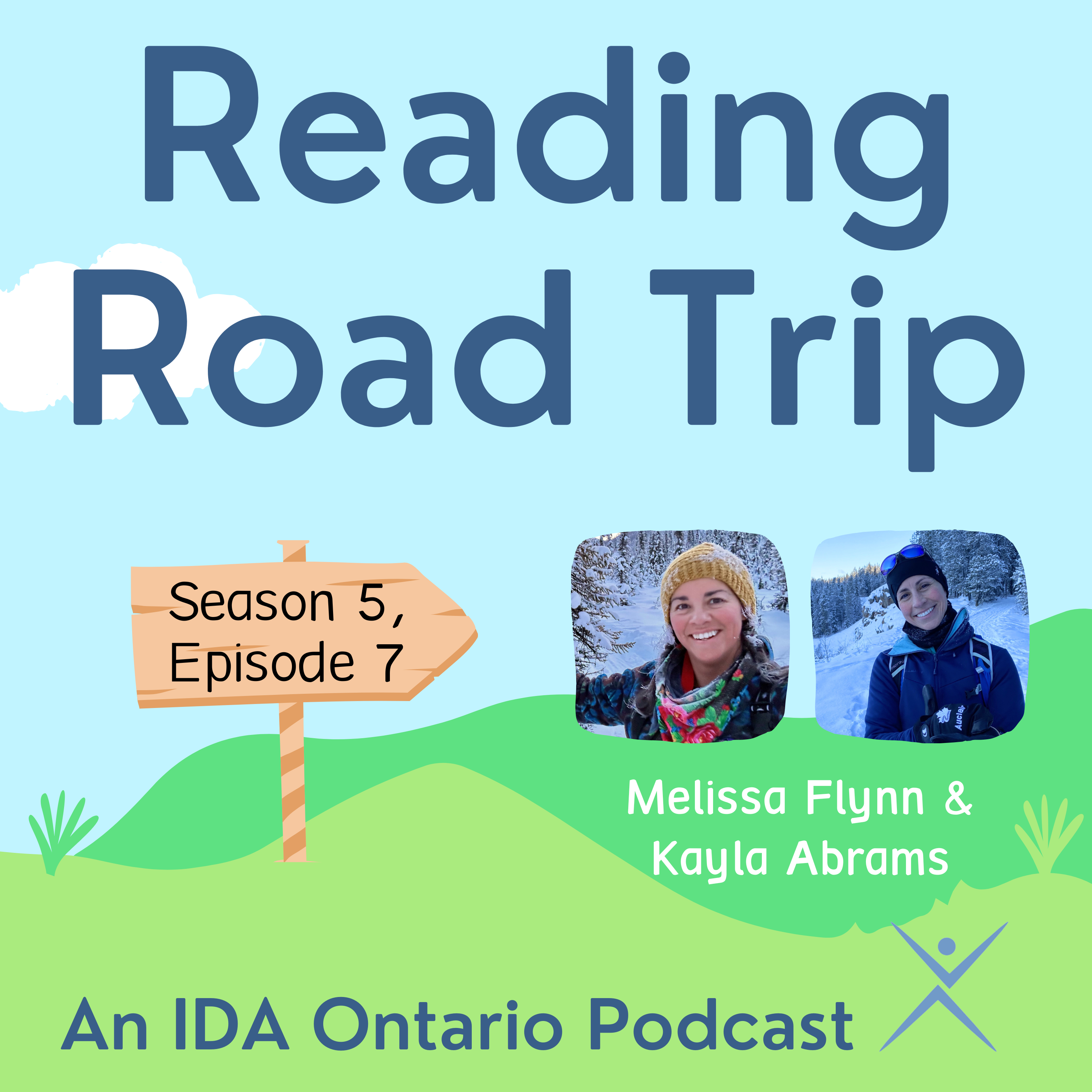
[00:01:38] Kate Winn: I'm so excited to introduce our guests here this week on Reading Road Trip. Melissa Flynn is a Tr’ondëk Hwëch’in citizen from the Yukon. She grew up fishing, hunting and berry picking with her parents, grandmother and aunties. Melissa has worked in education in the Yukon for the last 14 years as a Han Language teacher, Vice Principal and now is the Executive Director of the newly formed First Nations School Board. Melissa has the honor of working with Yukon learners, families, First Nations governments and school teams, delivering an enriched learning experience that is embedded in local culture and worldview. And she is here with her colleague Kayla Abrams. So, originally from Toronto, Kayla moved to the north for a year almost 20 years ago. During this time she's had the privilege of visiting, learning from and supporting many communities across the Yukon and Northwest Territories in speech, language and literacy as a school based speech language pathologist and now as a literacy coach with the First Nations School Board. She also loves spending time outdoors, camping, biking and hiking, and is grateful to call the picturesque Yukon her home. Welcome Melissa and Kayla.
[00:02:44] Melissa Flynn: Kʼämänt hǫzǫ (good morning)
[00:02:46] Kate Winn: I was so excited to invite you to speak about your work with the First Nations School Board. So, Melissa, I heard you and a colleague, Megan Norris, speak, I believe two years ago at Lit Learn, or more than a year ago at Lit Learn and then this past year as well. And I know that Megan can't be with us today. She is doing some other important work on her maternity leave. So thank you so much, Kayla, for joining us. And I'm really, really thrilled to ask you all of these questions because your presentation was so fascinating to me and I think really, really important for listeners. So I'm going to jump right in with the first question. So, Melissa, many listeners may not be familiar with the First Nations Schools association and the board. Can you introduce FNSB and the communities that you serve?
[00:03:30] Melissa Flynn: Absolutely. Nihé däch’e shò tr'ìnląy we are so thrilled to be here today with you. It is always a privilege going to the IDA conference in Toronto every year and we look forward to next year's.
So the First Nations School Board was formed in 2022. So we're just about to enter into our fifth year of supporting 11 schools in the Yukon. Across Canada, most schools exist under boards under a Ministry of Education in each province and territory. And the Yukon has always been a bit unique. Under the Education act, most schools are centrally supported by a Department of Education here in Whitehorse, Yukon.
And four years ago, after many reports, many families dissatisfied with the current education system, the Chiefs Committee on Education came together. A group of chiefs in the Yukon came together and said enough is enough. We need to do something differently. And so one avenue to doing something differently was forming a board under the current ED Act. And at the time, eight schools and communities voted yes to coming onto the board. And we now support 11 across the Yukon. So we 11 schools, nine communities from all over the Yukon, we support nine First Nations governments and communities in the Yukon. We support seven different First Nations languages.
We are a public school system and so we support every single child in in the community.
And this is not just for Yukon First Nations citizens. And so we are a publicly run school under the umbrella of the First Nations Values and Worldviews. We support about 850 learners across our 11 schools. Two of our schools are here in Whitehorse. So a five, 10 minute drive away from our office.
We have one flying community way up in Old Crow above the Arctic Circle.
The remaining we drive to, but we have the fringe of the communities in the Yukon. We drive five hours to the east, we drive five hours to the northwest and we also drive five hours into central Yukon.
And so when we, when we talk about the importance of our teams being in community during this session, that's a big part of it is that our team is on the road or in a plane quite, quite often and it's a big part of our job.
And yeah, so that's, yeah, that's who we are right now. And it is. And again going into our fifth year. So it's a pretty exciting time for us.
[00:06:20] Kate Winn: Thank you for that context. And it's interesting because with my school board here in Ontario, it's probably about an hour drive from end to end, which kind of seems like a lot, but no, it's not a lot when we compare it to what you're working with.
So your Lit Learn presentation this past April references generations of reports that fueled change that you're talking about here. What were the realities you were seeing in schools that convinced you that a different approach to literacy was needed?
[00:06:49] Melissa Flynn: Report after report, like many communities, many schools and ministries across Canada, which we're finding out, we in 2009 and again in 2019, we had an Auditor General's report just had devastating results for our literacy and our numeracy results here in the Yukon, especially our Yukon First Nations learners and our rural communities. And so the Auditor General's report was very clear in where the gaps were. Unfortunately, between 2009 and 2019, the Department of Education was not able to move the bar in any direction.
And so that's, I spoke of it already. That's when the Chiefs Committee on Education came together and said enough is enough. Our communities deserve better and something different.
So we had so that was one the Auditor General's report Together Today for our Children Tomorrow is an incredible piece of work that was written and collaborated on in 1973 by First Nations leaders across the Yukon. And they went to at the time Prime Minister Trudeau and asked for a plan. And so they went. There's this really powerful moment where Elijah Smith, the head, the chief at the time time that led this, said we are not here for handouts. We are here with a plan.
And from that document, document and relationship building in 1973, we are mostly self governing First Nations in the Yukon. And so we've built a different relationship with the federal government then we have they're called modern treaties rather than what is experienced across the country in treaties that date to different times.
We had First Nations coming together. The queer report was written in the 90s and it was just asking for better partnership.
This is we have to bring in Yukon First Nations citizens to the decision making tables. And so that report was really clear. And again, in 2014, a joint education action plan was created by Yukon First Nations citizens from each government.
And so just over and over again, our Yukon First Nations citizens, our families across the Yukon were asking for. We want to see the decrease in the gap between rural and urban. We want to see our Yukon First Nations citizens and learners succeed in the education system.
As a vice principal I was, in 2017, I became the vice principal of my school in my community.
And I had the privilege and responsibility of seeing the bigger picture. And at that time, I had been the Han language teacher. We had an incredible group of educators that were really keen on cultural activities.
And so from 2008 to 2017, we had this huge cohort of students knowing what their identity was. As Tr’ondëk Hwëch’in citizens In Dawson City Yukon, we had language classes for multiple grades. We were really proud of the movements that we were making in education around culture and identity and language. We were nailing it. We were, you know, far be. We were ahead of the game.
We had incredible programming. And as the vice principal, I started looking at the larger picture and the whole picture of students in their academic success. And so all of a sudden I started observing that in grade nine, these children, these learners knew exactly their identity. They knew part of their language, they knew who they were. They were proud to be Tr’ondëk Hwëch’in citizens and community members of Dawson City. But they were disengaged in classrooms. And so why weren't they successful in a math? Like, why weren't they successful in their math class, in their social studies and in their English? Why were we seeing disengagement? And so at that time I started questioning their were missing something.
And so that's when I identified. I started questioning we were using balanced literacy, we were using reading recovery. I was like, you know, I started questioning the system. How could we do these things differently? We need to. The culture and language wasn't the whole picture. And so at that time, those are the things it was. Those are the items that kind of led to this change and for when First Nations school board was formed that we started focusing immediately on literacy.
And then, yeah, I'll pass it over to Kayla right now to talk about her experience in the Yukon as a speech and language pathologist.
[00:11:38] Kayla Abrams: Yeah. So as a speech language pathologist working in Yukon schools, I was completing assessments, I was making recommendations, I was completing phonological awareness screeners. But we were seeing the same students being flagged by teachers.
They're often coming back to school based teams and often with lots of multiple reports but continued concerns. And so there was these contradictory or competing recommendations. Given that we were in a balanced literacy framework.
The intervention model of Reading Recovery also didn't support the skills and recommendations we were. We were asking for.
Intervention was also seen as something that happens outside the classroom. It's one to one and there's not a lot of communication that was happening between the classroom teacher and that Reading Recovery teacher.
I was also seeing lots of push for ED psych assessments, but the label felt like the end of the journey. Oh, that's why they can't read versus the start of one. And the need for those learners to get even more support. So we were seeing kind of accommodations happening, but we were seeing that instruction that those students really needed.
[00:12:38] Kate Winn: One of the strongest themes in your litlearn presentation is about authentic relationships. So why was building trust and being present in communities the starting point for literacy improvement? And what did that look like in practice?
[00:12:50] Melissa Flynn: I think I'll go back to the document and the moment of Together today for our Children Tomorrow in 1973.
In that document, it states even the new changes that they are suggesting will be of little use unless these changes are made by Yukon First Nations peoples themselves. It will be the same program with the same results, an almost 100% dropout rate. And so even then they were seeing disengagement of their learners in the schools.
And so it, it was, I think that was a big piece. You'll see it in social justice, any social justice university class or anything. You read nothing about us without us. And so it just that, that piece of moving into community and having the responsibility of honoring that every single Yukon First Nations citizens, every community has a unique language, has a unique relationship with the land, has different values. And so moving in and actually authentically building a relationship with each First Nations is one of our biggest privileges and our biggest mandates here at the First Nations School Board and has led to our success so far.
I think it also, historically, in Canada and around the world, there is a dark history around education. And we can't ignore that. And so it just, I love education.
I have just, it has been an incredible journey being part of this, this world of education. And so it's a privilege to be able to be part of the change. So how do we rewrite the story of education for our families and their children? And so I think that the building the trust, listening, making sure. That everybody feels important at the table.
I think that's the biggest piece is how can we rewrite education for the families and the learners that did suffer from an education system that didn't meet their needs, that ripped them away from their families.
And so that is the piece we had to start with Trust.
[00:15:09] Kayla Abrams: And I think at the beginning. So you mentioned Megan. She was there for that first year and she traveled to community. She spent time in community, spent a week in each place really connecting with educators, with community members, hosting literacy nights, asking the question, what does literacy mean to you? And listening to those answers.
Currently, as literacy coaches, we model lessons, we observe, we provide feedback, and we facilitate professional learning. But we're also encouraged to go beyond the classroom to really get to know our learners and their families and to learn about the community.
In my previous role, I'd often feel a lot of guilt if my day wasn't spent doing, if I wasn't answering emails or if I wasn't checking something off my to do list. Now I try and take those opportunities when they're presented to me. So I put on my winter gear and join the class on a walk and chat with the learners as we stumble through the snow, or I join in on the laughter that happens at the community lunches with learners and their families.
I really feel that at FNSB we're supported in knowing that those moments aren't distractions from the work, they are the work.
[00:16:12] Kate Winn: Yeah, I think that's probably something I need to keep in mind with work too. That's a good reminder. Thank you.
Some people frame the idea of culturally affirming practice and evidence based literacy instruction as competing priorities. And I know you've talked in the presentation and even a little bit earlier today about the fact that you had a lot of great culturally affirming things going on. That's essential. But you also approach them as complementary rather than contradictory. Melissa, can you talk about that?
[00:16:40] Melissa Flynn: Absolutely.
When I get asked this question, my first response is, historically, over decades in education in Canada, the normalization of low expectations of our children is systemic racism. And so anything that normalizes any program that isn't working for our Indigenous students across Canada, for any student across Canada, it keeps us thumb on those minority groups and it is part of systemic racism. And so we have a responsibility in education to find what works.
And so that is my first answer. When I am, I'm questioned.
There are many, many fun ways of ensuring that moving to a structured literacy blocks structured literacy model.
It does not have to be rogue memorize it's not rogue memorization. It is not just sitting in the classroom in desks looking up at a teacher. I invite every family, any, any parent who is listening to this to go and visit a classroom and see how our incredible educators across Canada are dynamically bringing in structured literacy into their classrooms.
Was there anything else, Kayla?
[00:18:06] Kayla Abrams: I think that. I think you nailed everything on there.
[00:18:08] Melissa Flynn: Okay.
[00:18:10] Kate Winn: No, that's wonderful. No, I just think that idea of the complementary practice is so important.
When you began implementing structured literacy elements like universal screening, UFI foundations as a phonics program, and releasing writers for writing as well as intervention systems, what were the biggest successes and biggest challenges in bringing educators along on that journey, which I know for many would be very new? Kayla, could you start with that one?
[00:18:34] Melissa Flynn: Yeah.
[00:18:34] Kayla Abrams: So I think our biggest successes were definitely that clarity and consistency across schools. Early on, the message that was heard was from teachers was, please just tell us what to use and support us in using it. And that really helped to shape the path of the journey.
For example, UFLA was mandated for all primary classrooms. And then that gave each grade then knows what their learners are coming into the year with and what they need for the following year.
It also meant there was common language across the different grades that we could provide focus, training and support.
And also we're noticing that educators could collaborate and share ideas within their own school team. And it also really helped us to make sure that we were using resources that aligned with our literacy plan.
I think another big success with just being flexible we're asking for, we're listening to feedback and we're adjusting on what we've heard.
For example, we've discontinued assessments, we've re looked at resources if they have been. If they're not meeting the needs of our learners or educators.
I think another really neat success is we've been asked to present at our teacher education program, winter in the Yukon. So I think it's a really neat affirmation of the value of our work. And we're also supporting literacy knowledge. And these new teachers can take that knowledge with them to support their learners even if they don't come to an FNSB school.
[00:19:57] Melissa Flynn: I think it's. Change is hard. And so I think people really, you know, we've listened. We've all listened to the podcast, sold a story.
I think it's. It was really hard for educators to swallow that the balanced literacy approach and the reading recovery that they had invested decades in wasn't meeting the needs of our kids.
And so I Challenge everybody.
I support everybody in just putting your adult ego aside and making learners centered decisions. And it's, you know, being able to admit that you are wrong takes. It's a really, it's a brave space.
It's not easy for people.
And so being able to just, oh, we made a mistake and you know, apologize or not. But we are now we're moving towards a different path because we care about the learners and we're moving forward in a way that is meeting their needs.
Some of the challenges of making these changes in the Yukon, in rural communities in the north, staff turnover is a reality.
And so constantly we have this incredible literacy team here at the First Nations School Board that moves out and ensures that new teachers have the right PD when it's needed high support at the beginning of their journey with the First Nations School Board. So I think that turnover is one of the challenges.
Trust in a new way. We had to invite people to walk this path with us.
And so it's listening. So we just had this incredible, we coached our literacy coaches and how do you come alongside in a respectful way? How do you enter into those circular reciprocal conversations where people feel heard?
So I think those are, that's how we laid out mandates. And so we came in really strong.
We are making this change. We have high expectations of you as teachers, learning assistants, teachers and EAs and principals, but we also come with really high support. And so that moving in that piece was really important right now for me,
[00:22:15] Kate Winn: reading assessment is very much a passion. And I know you talk about the idea of collecting the whole story story and assessing skills rather than levels. So how did screening and assessment data help move conversations from assumptions to actions?
[00:22:30] Melissa Flynn: Melissa yes, we talked about at the beginning of this podcast, so there was lots of reports. So the Auditor General's reports, families asking for something different. And so we, you know, I was not a literacy expert. I was not a speech and language pathologist. I just knew that our learners needed something different. And so that was when that beautiful relationship we spoke about. Megan Norris at the beginning of this, Kayla was at the Department of Education working as a speech and language pathologist. We just had these brilliant people come together at the time and I had to reach out to the experts.
And so we needed to know exactly where our children were and our learners were in the system. And so I think that was a really strong piece of our literacy plan at the very beginning was that whole story.
I knew families knew the Auditor General's report knew that our children weren't learning how to read But I didn't know how to go about doing it. And so the science of reading, breaking out the skills of reading into five pillars was a really important piece of that. And so that baseline information, no one could argue with that. Once we had the baseline information that our children were struggling, we knew exactly where in their reading skills that they were struggling. And that's when we went in with the decodable books UFLI the skills that they needed and where they needed the support we had. There was lots of evidence around. We have low attendance starting in grade four, when children need to be able to read to learn. And so the attendance level drops once you hit grade four, intermediate and higher. In the Yukon, we had just astronomical levels of EA allocation requests. And so we had, we had one school of about 150 kids asking for 40 EAs a year just because there were a high volume needed for reader scribes. And so when you have this system that is very like is backwards when you just have so many kids demanding space, psych assessments, EAs for reader scribes, there was the system needed to change. And so we just like that Tier 3 support. There was such a high demand on Tier 3 support because every child that wasn't learning how to read was being just plunked up into this tier three need. And so the system was strained.
[00:25:03] Kayla Abrams: Yeah. So as mentioned Melissa mentioned, we did lots of. There was lots of screening and assessment data that was collected, and that helped to gain a clearer picture of where the students were in their reading skills, so their strengths, the needs and the gaps to address. And so instead of relying on what we thought we knew, or, sorry, what we thought students knew, we could have conversations grounded in the evidence, and then we could ask the questions. This is where we are, this is where we need to go. And then how do we get there?
[00:25:28] Kate Winn: That's great. A significant part of your work involved transparent communication with families. What have you learned about discussing literacy data, intervention plans and student progress in ways that build trust and partnership?
[00:25:41] Melissa Flynn: Melissa, I think this is an important piece. It's a theme of the chat today is authentic relationships that trust building. How are we rewriting our story in education?
And that is bringing the families along with us, not hiding data, not, you know, parent. There were so many parents in the Yukon that were getting to their learners were getting to grade 12, and that's when they found out that they were leaving grade 12 with a leaving certificate or an evergreen, and they weren't graduating with a dogwood. And so it was just, I think it's a very common story.
Learners were just pushed through grade by grade. Don't worry, they'll eventually get it.
They're reading at a lowing, a lower reading level.
But don't worry, we believe in them. They'll understand, maybe through osmosis.
So it re, you know, the silent reading blocks. Everybody listening today knows exactly the strategies that were used and the rhetoric that was told to families.
And so transparent communication is immediately. At the beginning of the First Nations school board, when we did the initial baseline data, we ensured that we had everything prepped to send letters home to the families. And lots of teachers were really nervous about this. We talked about this, you know, challenging and supporting the adults in the room and the adults in the conversation. To put their ego aside, Teachers were terrified of sending the data home to their. To families because it wasn't great. And so across the First Nations school board schools, we had really low scores, which we knew this wasn't new information.
And so immediately, every single assessment that is done, families get a letter and the results home about their child. We now do this for literacy and numeracy. Any data that we collect, we send home to the families.
And so then it's able to start the conversation. It's able to just give the families the tools they need to ask the right questions to ensure that the school team is staying accountable to their learner. And so it was, yeah, it's giving the parents and the families the tools they need to ask the right questions to move in and have respectful conversations where they, they know exactly. My child looks like they're struggling with decoding. What are you doing about this?
[00:28:27] Kayla Abrams: Yeah, so really empowering families and allowing them to be advocates as well, instead
[00:28:31] Melissa Flynn: of being in the dark was really important. Yeah. Building trust.
[00:28:35] Kate Winn: And I think that school accountability piece is important too. I know I always say to teachers, you don't call with bad news without a plan.
So, I mean, the facts are the facts, the data is the data, but it's not just, yeah, sorry to let you know, did the screener and your kid's well below benchmark. Have a nice day. You know, it's always like. And here's what we're going to do about it. So that, yeah, that's great.
[00:28:53] Melissa Flynn: How you mentioned the accountability, the accountability piece. And we have, it's been a really, like, interesting journey. And every year we're improving and we're, we're seeing different trends as we move through our literacy plan, moving into our fifth year. And our letters now are very. This is, this is exactly where your child is at. And this is the plan. Your child is moving into Tier 2 support. And this is what it's going to look like in small group instruction. Your child needs. Tier three is going to be one on one.
And so there's always this communication of what the school team is, how the school team is going to support your learner.
[00:29:31] Kate Winn: That's perfect.
[00:29:33] Kate Winn: When we think about cultivating strong readers, the ultimate goal is for them to be able to read and understand anything out there in the wide world of texts. So in terms of assessment materials or reading materials, we don't want to limit them, but there are appropriate times to take advantage of more localized literacy resources. And you've done some neat things with that. Could you share examples of how communities influence the materials, examples, stories, or instructional practices that are used in your classrooms?
[00:29:58] Melissa Flynn: I think it's really important. Our ultimate goal is that we are supporting learners and community members to be the very best community members of the Selkirk First Nations in Pelly Crossing, for example.
And so it's a big wide world out there. But our ultimate goal is how do we support in the development of those children and in each community to ensure that they are the, you know, contributing members of the society. They have the skills to go and fulfill any dream that they want.
Living on the land, being at a negotiation table, being at, you know, advocating for the right things, moving into meaningful employment in their communities, traveling out to university or whatever their hearts desires.
And so we've done this in many different ways. So it's. Yeah, bringing in First Nations and Indigenous values must move beyond changing a storybook from a raccoon to a beaver. It has to move beyond just translating Robert Munsch into a First Nations language. You need to get into the heart of what the, the values and the worldview and the culture and the experience is to a child who lives on the traditional territory of the Vuntut Gwitchin in Old Crow. And so we've.
So this journey has been really community driven. It's been an honor to move in. We got permission from the UFLI group out of Florida right away. Four years ago at ida, our team approached them and we've been in a really lovely relationship with them ever since. We just chatted with them a week ago.
And so it, we've, we've done it in chunks.
So we've now worked with three different communities in the Yukon to, to localize the UFLI passages. So the decodable passages in the UFLI lessons, we've been given permission and Gone out and worked with local community members, local elders, in being able to write decodable books that are relevant to the learners and as they start reading. So we've done this in two different ways. And so we have. The UFLI project is very time consuming. It is at the speed of each community. We have a contractor who does this.
And so she moves into community, she spends time. Like Kayla said, it's walking with the learners, it's going in, having tea with elders, it's participating in community lunches and in ceremony.
And so it's. And then, and then that's reflected into the stories.
The second way we're doing it is faster. So we're giving multiple examples to the listeners today that this is. Can be done in different ways with different levels of resources, with different level of funding. And so the second way we work with learn different out of Ontario and we have them northernizing oral reading fluency assessments. And so it's. That's another way that we're doing it. So children are seeing in the decodable passages, relevant passages to their community.
And they're also seeing in the assessment process, they're seeing stories that are relevant to them as northern kids. Yeah.
[00:33:35] Kayla Abrams: That way they can connect to the text, the text, their own experiences, their background, their knowledge and their interests.
And then they can spend less energy trying to understand the topic and more energy focusing on accurate and fluent reading. And then as we do that assessment tool, we know that it's. We're getting a more accurate picture of their actual skills and fluency.
I think one thing I just want to mention was with the decodable passages that Melissa and Megan had, lots of requests to share what has been created in community.
[00:34:03] Melissa Flynn: I think that's an important piece too. Thanks, Kayla.
People line up to chat with us after the idea keynote speaking and the sessions that we have done and asked for copies of the decodable books. And so I challenge every listener here today that you have the privilege of living on a territory of an Indigenous group in Canada. And they have a rich culture, they have rich values that are different from us here in the Yukon. And so I tell everybody that the passages that we're creating with the Vuntut Gwitchin citizens up in Old Crow are not going to be relevant to anybody in Winnipeg because it's a completely. It's a different land, which has led to a different language, which has led to different values and cultures in how the people of that area interacted with each other and the land. And so it is a privilege doing this work and it's important for each area, each school to really respect and honor the territory that their school sits on and the people that come from that land.
[00:35:11] Kate Winn: Thank you for that addition.
Many listeners I know are trying to create change across, you know, maybe it's a school or maybe it is a board, a district. Looking back, what leadership decisions do you think had the greatest impact on sustaining improvement rather than just creating another short lived initiative? Melissa, what do you think?
[00:35:29] Melissa Flynn: Oh, we've thought about this a lot.
We call it the magic of the literacy plan. And so it's, I happen to, to say that it's been difficult to recreate the magic of the literacy plan in numeracy, for example. And so there was this. Yeah, the, the, the pieces that came together. We've been really, all of us have been trying to, to come up with what were, what were those that list that led us down this path.
I think we've talked about it already. I think that baseline data was very clear. We picked assessment tools that were vague. We picked assessment tools that are used nationally and internationally and that are standardized. And so once those assessments were collected and reported on and sitting in a piece of paper, no one in leadership could argue with it. So I think that was probably a really big first piece in doing this work.
So then we showed people just like our parent letter, we showed people the data which was not great in the Yukon, the reading levels and then we had a plan. And so we had very thoughtfully gone out and researched the best.
We had researched the assessments and then we researched what programs are out there that are going to support with what our kids need. And so that's when we, we found UFLI and now looking at other programs as we, as we grow as a system we made once the leadership. So once the Chiefs Committee on Education and the Minister both approved this plan, we just started moving forward. I think it was really important that we mandated and so as having the privilege and responsibility of being the executive director for this board, I was able to start communicating out.
This is the data that we are getting in. We are going to make a change and it is mandatory.
And so with a mandatory change it's not just a top down decision.
We had the data to prove it. So we had a learner centered decision and then we created it. We didn't, it wasn't rocket science and it certainly wasn't our idea first, but we created high support for this high expectation.
And so right away we had teachers, we have this expectation that you change your programming, that you administer these, these assessments but we also have a team of literacy coaches around you to support you in modeling, in asking questions, in coming in and making sure that you never feel alone in this change.
Building capacity. The literacy team or myself cannot be.
We described the vastness of the Yukon and where we support. So there was no way that we could be moving around and ensuring this high education expectation was being met. So we moved in, we started supporting principals in their instructional leadership. So how do we decrease the noise and the responsibility day to day of the principal to ensure that they are fulfilling their instructional leadership expectations in the school? And so how do we take operations off their plate? How do we, you know, how do we take the housing piece off their plate? You know, everything else that comes at a principal every day, how do we make sure that we, that we're taking those things off the list? We encourage. So in that instructional leadership piece, we encourage conversation between principals and teachers.
At the very beginning we went in and started having conversations with principals and teachers. Some of the principals had absolutely no idea what literacy programs that their teachers were using. So that that overarching, you know, very common phrase of teacher autonomy had gone extreme. And so the principals had no idea the programs that were being used had no idea that what, you know, what the assessments, the reading levels were. And so just like bringing it back, bringing it back home, that it is the principal's responsibility to ensure that the teachers are meeting expectations.
The principal is the one that needs to be walking around and in the classrooms, you know, on the daily, making sure that the, the lessons are being taught.
And so I think those are the pieces that, and then that trust building. And so then we've talked about it many times today already, that trust building with families that for decades. And we have to, you know, we have to sit with it that for decades still to this day when there's mistrust in the education system. And so, you know, yes, we've moved past residential school, yes, we've moved past that history and we, you know, every single person in the buildings care about children.
And now, and we can certainly a shout out to all the educators, but if a child's needs aren't being met, then that leads to mistrust in the system. And so that transparent communication with family, making sure that they're at the center of the decision making as well for their learners and for their children. I think that was a really important piece too.
[00:40:40] Kate Winn: There's a powerful Kate Winn your presentation describing students who doubled their reading rate, which obviously that data, the stats are Important, but while also gaining confidence and engagement. So what changes are you seeing in learners today that tell you that this work is making a difference?
[00:40:58] Melissa Flynn: We are slowly. Yeah, it's exciting to. Now moving into our fifth year, we're starting to see an increase in attendance. So the literacy plan focused initially on grade one to Grade three. And so in the first three years that was our main focus. Let's just get that those primary classrooms really solid in that Tier 1 instruction, we certainly have expanded now that those learners are moving up into intermediate. We certainly provided different levels of support across the board.
And so as that first cohort moves into intermediate, we are seeing an increase in attendance.
We know that attendance in intermediate classrooms decreases as learners don't see themselves as good learners. And that largely has been found. You know, a student can't read when they get to grade four, their interest in education, seeing themselves as a learner, decreases.
And so we're seeing the increase in attendance, which is exciting.
We've seen a reduction in EA requests. And so we no longer have principals and lats scrambling to ask for every single resource they can to just cover things like reader scribes.
We are flipping that stack, which I've talked about already. And so we're calming, we're decreasing the noise. We have very high support for Tier one in the classroom, which means our Tier three is decreasing in the number getting down to the two learners that actually need Tier three support. And so those learners are now getting the support that they deserve because our Tier one is so strong that that high percentage of students needs are being met in Tier one.
I just had the privilege of being in Old Crow. I went up for the graduation ceremony, which is a really important moment. We had the highest number of grads so far up in Old Crow.
And so it was a time to celebrate. And one of the days was the kindergarten graduation and the school leaving. So that was the end celebration and the awards.
And I've been up to the year end celebration in Old Crow for the last four years.
And the pride that I saw in the students this year brought tears to my eyes.
So it was the students came in, they were all dressed up, the families and community was surrounding them in the gymnasium. The kindergartens had their little grad hats on.
Every class received awards. They were all cheering and chanting for each other over the age groups. And so that pride of being a learner, pride of their school, we're seeing that increase. And so that was a really important moment just to be able to observe that we're seeing this Increase in engagement, this increase in their identity, identity as learners, their increase in their pride as being learners in their community. So it was a pretty exciting moment to see.
[00:44:17] Kate Winn: And I think that can help motivate the educators and the leaders as well too. When you see that, then you want to keep doing what you're doing. And yeah, that ball is rolling now, which is great. And I love a couple of points you made. I mean the point about getting tier one. Right. And then how that can relieve the system because there will be students who need intensive support.
But when it's that small number, then that's. That makes it manageable. Right. So I love that point. And then also your point about attendance because I always find it interesting when I see, you know, boards or districts coming up with, you know, sort of attendance plans and, and it's kind of that social emotional piece or it's logistical kind of stuff. But they don't even factor in student achievement as a contributing factor to attendance. Right. And I've heard so many, you know, like studies and, and different stories from different places where when you're getting that student achievement up, kids want to be there more than they did before.
[00:45:09] Melissa Flynn: Absolutely. So that's. Yeah, that's a really important piece and that's the whole story. Conversation that has been threaded through today is it's the whole picture. It's not just about land and language and identity. It's beyond the traditional territory acknowledgment. When we're talking about the truth and reconciliation and calls to action. It's about going deeper. And so attendance isn't just about prizes at the end of the year for attendance records. It's not just about those small initiatives. It's about those learners seeing themselves being successful. And so it's that whole picture that's important and it's important to make sure that we're seeing it all.
Yeah.
[00:45:51] Kate Winn: I just love your story. As you move into the next phase of your literacy plan, what are you hoping for to see?
[00:46:00] Melissa Flynn: I think initially it's we, we talk a lot about and pride ourselves on making learner centered decisions. And I think telling our literacy story, it did feel very top down at the very beginning. So yes, we collected data but then that mandated program, mandated assessments felt very top down in the community. And it. Which is neat. Which was needed at the time. We needed this massive change to move away from balanced literacy and reading recovery is the only intervention to reading. So that massive change needed to happen.
As we move into our fifth year, we're starting to fully understand Our data, we're starting to fully understand the learners in our schools. And so our initiatives at the First Nations School Board are now truly learner centered. And so we have incredible teams at the start school level collecting this data.
They know their children the best, they know the children and the learners in their classrooms. They know their community.
And so with community committees, community members who help govern their schools, really comprehensive school growth plans are created. Our team, including our literacy team, then looks and works at, with the, with the school teams on that school growth plan and then our initiatives and our plans at FNSB. As a, as a group, the programs that we choose, the professional development that we lean into support with is all driven by those school growth plans. So it's like flipping. So it's. Yeah, no less top down decisions. And really the, all of our decisions are made from the data we're collecting and what we're hearing from each community.
[00:47:46] Kayla Abrams: Yeah. So as Melissa mentioned, we're really making shifts this year based on our data.
We have three mandated universal screening periods throughout the year and that data is getting back to schools almost instantly. So as our literacy plan continues, we're seeing, as we just mentioned, that the patterns, the patterns in the data with good core instruction, we're able to determine those that really need the additional support and where that support's needed.
As a whole, we're noticing that big shifts have been, have been made in decoding at the word level, the text level. But many of our students continue to need support and fluency and we know that leads to comprehension. So we're modifying our literacy plan, we're modifying our professional development and our resources with the goal of teachers having more information and tools to really support their fluency instruction.
It's really neat to see our school staff getting excited about the literacy data. I had a teacher recently email me just how pumped she, she was super pumped to learn about her data. And I was like, this is exciting.
We're being invited to support data conversations, to review the data, to brainstorm ways to support.
We had lots at the end of the last school year. We already invited to many at the beginning of the next school year. So the data is not just being collected, it's being used as a tool for collaboration and for problem solving.
And in these conversations, we're really trying to support the shift in not just meeting students where they're at, but working with schools to find ways to accelerate their growth to where they need to be.
And I want to really just take this opportunity, Kate, to just do a shout out to your book Reading assessment done right with Stephanie Stoller, we hosted a book club this past spring. We plan to host another one this school year. It just really speaks to the importance of not just gathering the data, but using the data to make informed decisions. And all the burning questions that you address are ones that we've had or that many of our educators have had as well. So thank you.
[00:49:30] Kate Winn: That's so nice to hear. Thank you very much. And I was just thinking as you were talking, talking, you mentioned somebody being excited about their data and I thought, yay, another data nerd. That's so wonderful.
[00:49:38] Kayla Abrams: Data nerds unite.
[00:49:41] Kate Winn: Well, we reached the end of our conversation but is there anything that we haven't talked about yet? Anything else you want readers to know before we say goodbye? I think we just readers listeners. I mean we're talking about a book Readers on my mind. Anything you want listeners to know before
[00:49:53] Kayla Abrams: we say we just have lots of thank yous to many of the other organizations and advocates and supports. We've had lots of partners with us along this journey. Una and Alicia at Dyslexia Canada, IDA Ontario and the Literacy and Learning Conference. We've had so many aha moments.
The center for Literacy in Edmonton who helped us with the PD as we started this journey, we hosted the Evergreen School Division. They came up to the Yukon and we had the privilege of sharing and learning lots with them.
Learned different for supporting us in developing understanding our screening tools and and all those people that are creating podcasts and books and resources. We listen, we learn from teacher friendly resources like ONlit to synthesizing our knowledge about the science of learning with Nathaniel Swain. We really appreciate all those resources that are out there and I think, you know we have a lot of educators that will be listening to this podcast, a lot of families.
I think it just you have always been right and I think that's just an important message it to I just want to shout out all the time to all the families that it was never your fault. It was never your fault that your children didn't know how to read. It had nothing to do with how much you were reading to them at home. It was the adults in the education system that just needed to shift and the solutions are out there, the resources are there for this shift to happen.
For those educators and leaders that may be listening, I just like be brave. This is a brave space. Change is exciting and it's exhausting but it just you know just encouraging everybody that to really put the learners at the center push egos aside, build those authentic relationships and communities and the learners are going to benefit and we are going to change the trajectory of our learners lives in Canada. And that is so exciting. Exciting.
[00:51:49] Kate Winn: It really is. And I think that should be a new motto for this whole thing. Change is exciting and exhausting.
I think all of the listeners can agree with that. So Melissa Flynn, Kayla Abrams, thank you so much for being here with us for this episode of Reading Road Trip.
[00:52:11] Kate Winn: Show. Notes for this episode with all the links and information you need can be found at podcast IDA Ontario ontario.com and you have been listening to season five episode seven with Melissa Flynn and Kayla Abrams from First Nations School Board in the Yukon.
Now it's time for that typical end of the podcast call to action. If you enjoyed this episode of Reading Road Trip, we'd love it if you could rate and or review it in your podcast app as this is extremely helpful for a podcast and of course we welcome any social media love you feel inspired to spread. As well.
Make sure you're following the Reading Road Trip podcast so you don't miss a single episode in this jam packed season. New episodes will be released on Monday mornings all summer long.
This podcast and all of IDA Ontario work is made possible by our dedicated volunteers including our hard working board together with our wonderful staff and supporters like you. If you'd like to support our work, please consider making a donation. You'll find the link in the show notes.
I'm Kate Winn and along with everyone at IDA Ontario, we hope this episode of Reading Road Trip has made your path to evidence based literacy instruction just a little bit clearer and a lot more fun.