Episode Transcript
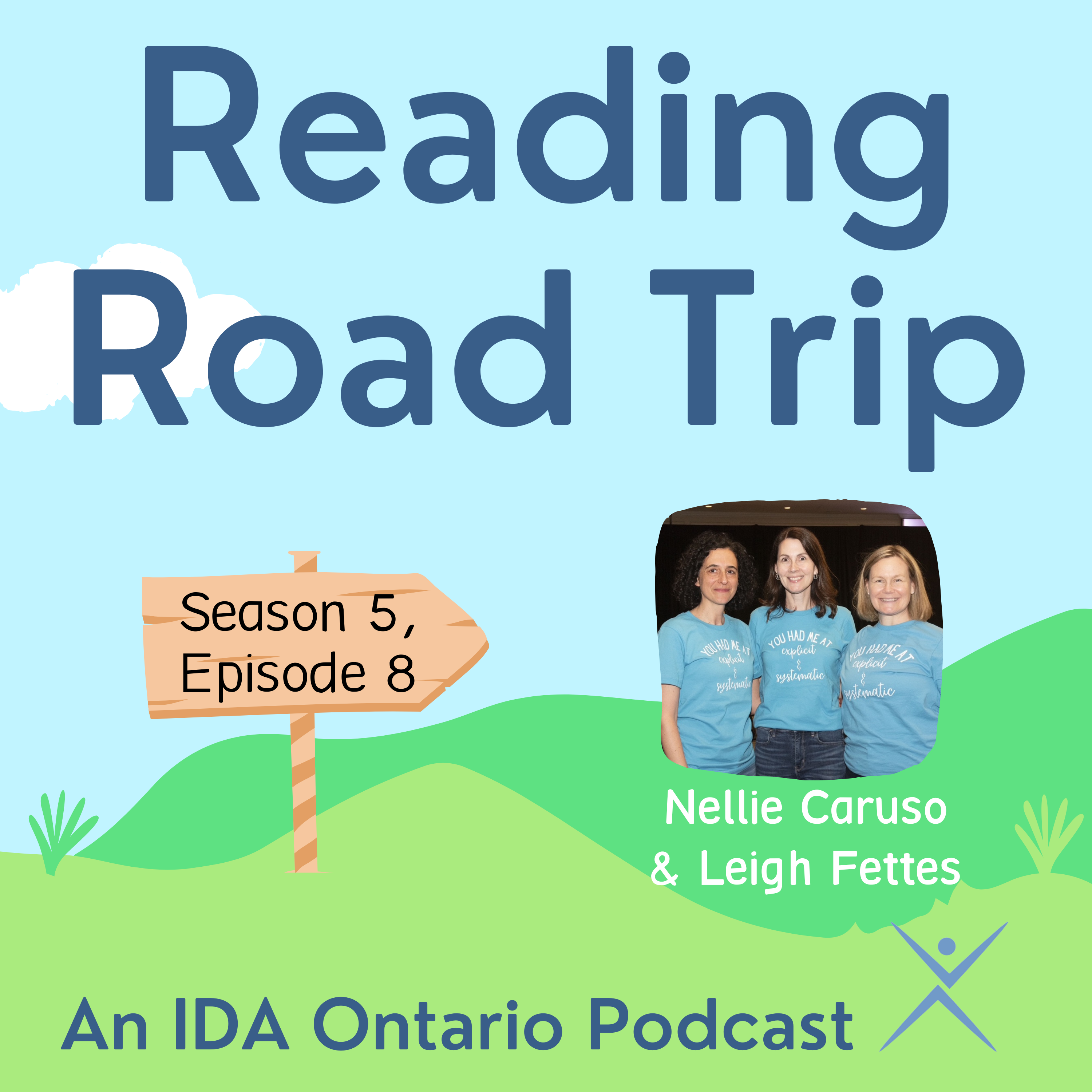
[00:00:05] Kate Winn: Hello to all you travelers out there on the road to Evidence Based Literacy Instruction. I'm Kate Winn classroom teacher and host of IDA Ontario podcast Reading Road Trip. Welcome to the eighth episode of Season five.
Our work at IDA Ontario, which is a registered charity, depends on the generosity of people like you. If you find the podcast helpful, please consider supporting our organization.
Before we get started, we would like to acknowledge that we are recording this podcast from the traditional land of the Mississauga, Anishinaabe. We are grateful to live here and thank the generations of First Nations people for their care for and teachings about the Earth. We also recognize the contributions of Metis, Inuit and other Indigenous peoples in shaping our community and country.
Along with this acknowledgment and in the spirit of truth and reconciliation, we'd like to amplify the work of Indigenous artists and today we are sharing the picture book the Cedar Mother by Brett D. Hewson illustrated by Natasha Donovan Step outside to explore the hidden mysteries of the cedar tree life cycle in this beautifully illustrated, engaging non fiction book for young scientists.
Meet Knox Sim Gan, the Cedar Mother whose life cycle spans centuries and whose roots anchor the landscape. The Cedar Mother plays a vital role in the ecosystem, offering shelter for birds in her strong limbs, providing refuge for small creatures beneath her bark, and healing the Gitkasan with a medicinal tea made from her soft green leaves. She also creates the very oxygen that all land dwelling creatures need to breathe. Delve into the remarkable story of the Western Red Cedar as you learn how she nourishes herself through an unexpected connection to salmon and the secret web of life that thrives beneath the ground and how at the end of her life, she leaves a final gift for the Gitkasan. This book invites young readers to discover the life of a tree that is much more than meets the eye, offering lessons in interconnectedness and in wisdom passed down through generations.
Add this title to your home or classroom library today.
Now on with the show.
[00:02:12] Kate Winn: I am absolutely thrilled to introduce our guests here this week on Reading Road Trip. So along for the ride we have two of my literacy BFFs. We have Leigh Fettes and Nellie Caruso for an episode all about classroom ideas and the state of education and literacy, tips and resources and all sorts of things that educators can take and use in their classrooms. Right away. Welcome Leigh. Welcome Nellie.
[00:02:40] Leigh Fettes: Thanks Kate. It's great to be here.
[00:02:42] Nellie Caruso: Thank you Kate. This is so exciting. Thanks for having us.
[00:02:46] Kate Winn: The first thing I want to do is just give you each a couple of minutes just to kind of share your own literacy stories and maybe if you remember kind of how we all connected. Nellie, we'll start with you.
[00:02:57] Nellie Caruso: Okay. Well, I've been teaching for quite a while. I think I'm going into my 27th year. And I've always been kind of literacy obsessed. And you know, I used to think back in the early days that I knew what I was doing and I was pretty good at it. I was a literacy coach for a while in my first board, which was the York Region District School Board.
Um, and you know, and I even worked with colleagues and delivered PD on how to, you know, implement effective reading instruction and do running records and look at pictures and guess the word and things like that.
And then currently now I work at the TDSB. So I've been a primary junior teacher for my entire career and I really go on this journey and took a deep dive through a personal connection. So after suspecting that my daughter had issues learning to read and just kind of knowing in my gut that something wasn't quite right, I actually met Una Malcolm, who I was introduced through. I was introduced to Una through a mutual good friend. And it was because of chatting about my daughter that I ended up being introduced to universal screening. So I did some universal screening training, specifically Acadience, and then realized and decided pretty quickly that this was something that I probably needed to start to implement with my own students before it was mandated by the ministry here in Ontario. So it was pretty clear to me early on the power of being able to find out right away using some objective data who in my class might be at risk so that I could then intervene and make some really important instructional decisions. So because of that screening and trying to educate myself and build awareness, I think it was back in 2022, actually, after the release of the Right to Read report here in Ontario, that Una connected the three of us by asking us to participate in a three part series for the IDA called Becoming a Literacy Leader. And we had never met at that point. I think the rest is history and we've continued to work together since, so. So that was, yeah, that was the start of an incredible journey that I. And a deep dive that I have not been able to come out of. So lots of courses, training, conferences, working with ONlit.
And I think for me, and I probably speak for all three of us, that there's no stopping. We feel like it's an obligation and we really believe that we need to keep. Keep going.
[00:05:37] Kate Winn: That's great. Thank you for sharing that introduction. How about you, Leigh?
[00:05:42] Leigh Fettes: Sure. So my name is Leigh, obviously, and I work at Trillium Lakelands District School Board. I live in the Muskoka area.
And I remember being really puzzled by some of the data at the time. Of course it was. We called it data, but it wasn't really the data that we talk about today.
How many of my students were struggling with reading. And this was back when I taught grade three French immersion. And I remember being asked to place on those tiered triangles, and I had more students in the yellow and red than I did in the green. And I remember being really puzzled by that because I was doing all this stuff and I thought, like Nellie, I knew what I was doing and I was doing a good job. I did small groups.
However, of course, we know now that I was grouping them by level as opposed to by the skills they needed.
But I had a lot of students that were struggling to read in grade three and later in grade four, which made accessing content in science and social stud so much more challenging. And so as the students get older in the grades, it just becomes so much harder to do all of the work that's expected of them, some of that more complex writing and the reading and the demands of reading. So it was really puzzling to me and I wanted to do something about it, but I really didn't know what.
And then it became even clearer when I started teaching grade four French immersion, because then we also teach and introduce core English. And so that was the first English instruction that my students received.
And although we didn't have an assessment system other than anecdotal observations, we didn't do running records on them. I could tell that some of those students were struggling in English as well. And again then I really didn't know how to help them. And so, like Nellie, I took a bit of a deep dive and started wanting to see what it is I could do to support them.
I'd already taken my reading AQ, my additional qualification, and it hadn't provided me with anything concrete. But I had a friend that works with students with dyslexia in British Columbia, and she had taken some training. And so I started with that. I took an Orton Gillingham for classroom teachers training.
And then it just, you know, snowballed from there. Suddenly I just wanted to take every webinar that I could, read every book that I could, and take anything that was offered.
And so, you know, fast forward a few years and I'm just finishing up in med in reading development and instruction through Memorial University I just was so thirsty to know what I could do to help students.
And when I think back to us connecting, I was doing a book study with a colleague in our school board using Christopher Such’s Art and Science Of Teaching Primary Reading.
And we met every other week and we always had a guest speaker come and join us. And so I'd seen Una and I'd seen Alicia speak, and so I invited them and they very kindly came and spoke to our group. And then I think, Nellie, you actually came to one of those as well and guest spoke for one of those.
And so that was my connection with them. And then, of course, they connected the three of us, as Nellie mentioned, for that webinar series that we did, but then also for our first IDA presentation, which we're going to speak about, I think, in a little bit. And so, as Nellie said, the rest is history.
[00:08:58] Nellie Caruso: Yeah, exactly.
[00:08:59] Kate Winn: And it's amazing how, you know, everything all comes together. I think I may have shared on the podcast before that.
When I was writing an article for Today's Parent several years ago about literacy instruction, I was kind of just Googling people in Ontario that I might be able to use as experts. And somehow IDA Ontario came up. Alicia Smith was at that time the president. So I just sent an email to the info at. Or whatever that email address was, and then she's the one who got back to me. And then really the rest is history from there right to get to know her, to connect with the two of you now, Dr. Una, Malcolm, which is wonderful. And I think it's funny that in the more than four years that we've been doing all these things together, I can't even count 10 times that we've all been together in person. So it's amazing that with technology too, right? Using Google Slides and using Zoom and all of the things we've been able to accomplish together without actually being in person is. Is really interesting.
I think our group chat that we have is probably my most active texting group chat, which is wonderful too. And totally aside from literacy, an unrelated tip I want to share with people is, I know for a while we were doing the whole, okay, Nellie's birthday is coming up, so who wants to get Nellie's birthday gift? Okay. And then let's e transfer each other the money and then let's send something. And then last summer we decided, oh, instead of doing that, let's at a hotel in Toronto for a night and just spend that time together. Which was. Which was awesome. So that's a nice idea. For the experiences over things kind of. Kind of angle. However, this summer we could not find one night that all of us were available to do that, which kind of tells you what our schedules are like too. But it's. It's nice when we can.
[00:10:38] Leigh Fettes: Well, I was going to say that of course, even when we're together for things that are social enjoyable, I think about that time together because of course we had an agenda that we put on our TV monitor in the hotel that was obviously related to many reading topics and subjects. So, you know, even though it was supposed to be fun time together, we did a lot of chatting about reading and literacy, which we can't seem to not do when we're together.
[00:11:02] Nellie Caruso: No, a lot of nerding out.
[00:11:03] Kate Winn: That is our idea of fun.
[00:11:05] Leigh Fettes: It’s not work it’s fun.
[00:11:08] Kate Winn: That's why we're all here doing what we're doing right now.
So I think you both mentioned the Lit Learn presentations that we did. So 2023 was our 1. 2024, 2025, where all three of us presented on a topic together. And I'm just curious to know because we did three different topics, what would you ladies say was your biggest kind of takeaway from each and something that you would want to give to listeners right now in this conversation? Nellie, you want to go first?
[00:11:34] Nellie Caruso: Sure. And thanks for reminding us of the dates because it all becomes a little bit of a blur. So 2023, wow.
The first one we did was we called it Beyond Phonics. And I think that might have been, well, one of the first times we presented together live. So we're all a little bit nervous.
But I guess my takeaway or something that I'd really like to share from that presentation is we did focus on a little bit on the fluency routine of repeated reading.
And of course, we talked a lot about and shared information about how to implement it as a whole class intervention following a specific protocol. But then important to realize that we can also use this as a regular routine in our classroom when data warrants it.
But if we decide to implement that as more of a regular, let's say two times a week or three times a week or whatever works in your specific context in terms of a routine, the importance of keeping that routine super, super tight and recognizing how precious that instructional time is. So to preserve that time when we're practicing that fluency building routine, to use it to its max, I guess, and use it really so that it becomes a really powerful strategy to support that skill.
And then I would say it's really hard to choose. But the second presentation that we did, unlocking word power, was focused specifically on vocabulary.
And something that really kind of always sticks in my mind and was a bit of an aha was you know, the piece around the fact that knowing a word's meaning can also help us with accurate and fluent word decoding and word recognition. So for me, it's always thinking about that connection between the sound, the symbol and the sense so that orthographic mapping can take place and the word can become a sight word. Right. So we're able to grow that sight word bank that we have.
And as a French immersion teacher, which I think I forgot to mention in the beginning, that's a super powerful piece to keep in mind because we, and I am guilty of this, taking for granted the fact that my students in French immersion might know word meanings for Those everyday tier 1 words when they actually don't, and the importance of building that vocabulary so that it can help them access or decode a word more quickly.
And then Last, last year, 2025, we presented on the power of using data.
And so for me, when I think about that presentation, what stands out to me the most is really the power of that universal tier or our tier one instruction and how solid that needs to be and how it needs to be based in evidence because that is such a powerful protective factor and a preventative piece. And so really thinking about if we can build the capacity in teachers to be able to have a strong Tier one, we can really reduce that risk, leaving those additional resources in, you know, special education services there for those students that really, really need the support. And we're not overloading the system and diluting that support for those students.
[00:15:03] Kate Winn: Lee, how about you? What do you remember or want our Reading Road Trip listeners to know about those presentations?
[00:15:09] Leigh Fettes: Sure. So Nellie's already explained what they were and so I will share my favorite takeaway. And so like Nellie, that partner reading routine was just so valuable. And it's something that's remained a non negotiable, as Angie Hanlon calls it, in my classroom in both English and French. And so partner reading, where we use the data, and I think what was really neat was it was the first time that I really had a way to concretely use data with my whole class as opposed to looking at individual students, because we know that the power of screening data is so much more than just how to help individual students, but that it's, it can help us make bigger decisions related to our class or to a whole division. And so it allowed me to sort of consider my entire class and their needs. And there was a great need to build both fluency in regards to their accuracy and automaticity. And so we implemented partner reading after that and have not looked back. It's something that I will continue to always use in terms of getting miles on the page.
And I think the other really neat thing about that presentation was that we had asked educators to tag us as they rolled out partner reading in their own classrooms. They tried those. The number of people that did that was so exciting to see people giving it a go to the best of their abilities and working around if they didn't maybe have the data that screening provides, but really trying to make evidence based decisions to support more than individual students. Looking IDA Ontario classes for our second presentation on vocabulary, for me it was the first of all learning about tiers of words because of course I didn't know about Tier 1, Tier 2 and Tier 3 words, but the importance of teaching Tier 2 words.
Because I'd always assumed that people or students would know sort of those everyday words that are helpful, not everyday words, but words that are academic or high utility words that are useful across different content areas. I'd assume that they would know those words.
So for example, like the word process discard, of course.
And so that there was a need to teach those words and to do so using a predictable routine.
I'd always assumed, of course, that we should focus on those content related words, the tier three words that related to either social studies or science that we were learning about.
And then for the last presentation when we talk spoke about data for me, I remember us showing that slide from Dr. Holly Lane about how every minute matters in the value of time. And that time adds up whether it's being well used or if it's wasted.
So for example, two minutes a day being wasted, that ends up being an entire day of learning that is lost. And we know for some of our students that can be a make it or break it situation.
Conversely, if that time is well used to provide an additional dose of instruction to students who need it the most, it can mean a lot for those students. And so it became quite clear that time had to be really carefully spent. We know that we can't get it back once it's gone.
And it really provided that onus. I remember having my students work out if we waste five minutes in the three different learning blocks a day, what that came to at the end of a school year. And it was days of instruction, like five to six days of instruction and so it really helped my students understand why I was so tight on time and transitions.
So all of those presentations were just an incredible thing to be a part of. And of course, we were so excited to learn that next year Dr. Louisa Moats will be a key keynote speaker at the Literacy and Learning Conference. And so for us, that will be such a neat connection. I think Nellie, because we've both taken the letters training which she was a co-author of, and I, I just want to echo that, I, when I saw that news, I’m not sure I've ever been more excited. That is so, so exciting to know that she's going to be speaking at the conference next year. Yeah, just incredible. Cannot wait. Wait.
[00:19:16] Kate Winn: Yes.
[00:19:16] Kate Winn: For those of you who are listening right now, early bird tickets are available. You can register now for the 2027 IDA Ontario Lit Learn Conference. We'll have a link in the show notes to that. But the conference every year is something that is not to be missed. People come from not just Ontario, not just Canada, but people come from, you know, international countries as well because there's just so much to be, to be gleaned at this conference. So we hope to see many of you there, there. The next question I want to get to just because you both can bring great perspective to this, is I want to ask you about French immersion. And before I get to, you know, like the different kind of nuances and things to remember with that, I do want to give listeners a bit of a base here. So first of all, remembering that the science of reading is a body of research, it does not only apply to people learning to read English, it applies to, you know, alphabetic languages for sure, which would also include French. So if you are a little child in France or a little child in Quebec and you are learning to read or write in French, well, that is the science is going to apply to you as well. Now here where we are in Ontario, Canada, of course, has two official languages, English and French.
In Ontario, publicly funded schools do offer French instruction. So there is core French. I was a core French teacher for the first four years of my career, which is in a nutshell, just a little bit a day of a more basic French instruction. Let's just say that. But publicly funded schools also have the option of providing French immersion instruction, which is, you know, as immersion would suggest, a lot more French. And you both have been or are French immersion teachers. And so what I want to ask you about is, and you can kind of go anywhere you want with this, but just sort of what are the the differences between, you know, if teachers are teaching French immersion, you know, like I said, the nuances or other things to remember. What are some of the questions you often hear from French Immersion teachers that you think you might be able to clarify? You know, just anything like that would be great. And whoever wants to jump in first.
[00:21:20] Leigh Fettes: Sure, I can start that one.
And so I think one of the, you know, the most obvious things here in Ontario is that we don't have an updated French Immersion curriculum. So when they revised the English language curriculum a few years ago, it didn't happen for French immersion. However, we know that that can't stand in the way of us doing what we know to be right.
We do know much of what and how to teach to become proficient readers and writers.
And so we are very fortunate because there are a number of things that do exist to support us. So even though we don't maybe have clearly laid out curriculum expectations, we have to teach these sounds and letter sound correspondences in these grades. We have incredible programs to help us do that here in Ontario and that are available all over. So Sonograph, which I think, Nellie, you'll speak a little bit about later, we have. Have programs to help us. And I think the other piece of that is that we know how to teach things, so we know that things have to be taught systematically and explicitly. So we know that we have to explicitly teach, as Nellie mentioned, vocabulary. We can't take for granted that students will know even the most basic words. And we've learned a lot about the importance of practice and retrieval and ensuring that we do a lot of practice and retrieval of those concepts.
It can also be quite tricky because our boards aren't. We don't all have the same entry points and we don't all have the same number of minutes per day. So, for example, my board, we begin French immersion in grade one, and they actually do take English right from the get go. So we have core English from grade one on. Our math is in English as well. And so, again, there are what some people might perceive as barriers, but we can still use all the same tools. We can screen our students for risk. We can screen to see if students are responding to instruction. And all of those things help us to make really valuable decisions about how to instruct and intervene when there's the need.
[00:23:21] Nellie Caruso: I think that's great, Leigh. And I would just. I mean, the only thing I would have to add or just extend to what you just said is that, you know, yeah, we do have a lot of research out there that can inform best practice. And we also have the recommendations of the Right to Read report which was released in Ontario several years ago now. And we know that those students in our classes that are, especially those that are the most at risk don't have that luxury of time.
And you know, we don't know when a French immersion curriculum is going to come. The that could take a long time. And so it's exactly what you said. We need to do what's right and make decisions grounded in best practice, especially if we're thinking of equity for our French immersion students as well.
[00:24:15] Kate Winn: Thank you.
[00:24:16] Kate Winn: The next thing I want to ask is I'm going to get you each to share a classroom tip because I know so much about what you ladies do. Not nearly enough, but I know some of your best practices that you have have. And Nellie, I often refer people to you when they ask me about teaching phonics. So I use UFLI. There are other great programs out there, but when you have a split or a combined grade class, so for example, you have years of experience teaching a grade one, two class together. So grade ones and grade twos in the same class where the scope and sequence of course for the phonics program is different, lots of different ways this could be handled. But you have some neat ideas I hope that you could share with listeners.
[00:24:56] Leigh Fettes: Sure.
[00:24:56] Nellie Caruso: So this, you know, hopefully this is, is clear and I'm providing enough detail for it to make sense. But really.
So yes, I teach French immersion. This last year I had a 1, 2 split.
We at my school and in my class use Son-au-graphe, which is a French adaptation for UFLI. And I just want to take a moment to give a shout out to Angeline Humber and her team who are the creators of that program. And I think it's really important that they, they know that they are literally changing lives with the work that they have done. It has been a complete game changer in my classroom and, and for the students.
So this year I had eight grade ones and 12 grade twos and based on the data that I obtained at the beginning of the year, made the decision to teach two separate lessons. So the trade off there is that it, it does result in more, you know, independent practice time for the course, the corresponding grade, a group of kids that is not with me during the sonograph lesson. But I really felt it was the best decision in terms of instruction.
So it did take a lot of time and practice to get the routine down and to build the, you know, the independence that they needed in order for this to take place. There's many moving parts that needed to be figured out, but I tend to try and follow a 30, 30, 30 model.
And always kind of keeping in the back of my mind the two broad strands of Scarborough's Reading Rope. So what I'm going to talk about is the phonics piece. So really just that word recognition strand.
So one thing that was important for me and for my kiddos was to make sure to keep some consistency. So we're doing it at the same time every day. For me, that was after lunch, just because that's how my timetable worked out best.
The first 30 minutes I do, you know, they come in right after lunch and the grade ones would do their Son-au-graphe lesson. The grade twos would go to, you know, a back table and read a message that I wrote out for them telling them what to do. And eventually, you know, that didn't happen right off the bat, but eventually they became really independent with this part.
So, you know, I typically take the last few minutes of my lunch to prepare all of the materials to avoid any interruptions or glitches during the lesson.
And then I write that message for the grade twos, and I keep it as decodable as possible based on the phonics concepts that they've learned up to that point. And it also gives them a little bit of extra reading practice, saves me time explaining and builds that independence.
Then we swap. The grade twos come for their lesson, and the grade ones go off and do their independent practice after their lesson.
So I kept this pretty consistent. After the day one lesson, both grades do their cahier de song or a phonics notebook, which is an added piece that my colleague and I have added into our program.
It allows them to do handwriting practice and also gives them an opportunity to make that connection between sound, symbol, and sense. So they print a couple of lines of the grapheme while saying the letter names in the grapheme, the sound, and then the key image. So as they're handwriting, they might be saying se ash, sh, sha.
And then they draw the image and practice spelling of some heartwords. And over time, this becomes a reference tool for them. After the day two lesson, both grades practice their Son-au-graphe or UFLI decodable text and do some work with it. Those texts are kept in a folder that goes home every night so that they can practice and accumulate those miles on the page.
And there's some other work that they do with those decodable texts, such as using highlighters to identify the key sound, circling words that they don't yet know the meaning of or want to double check the meaning of and illustrating to show their comprehension. And they always know what to do if they're done early.
And then the last 30 minutes is when I do my differentiated instructions instruction in small groups.
And with this, you know, I tried a variety of practice tasks in the past. I've done centers. But in the last couple of years, I've quickly found out that to be able to work effectively with the kids in the small group, the others need to be engaged in something that is meaningful, that they can do very independently and also fairly quietly.
So the tasks might change based on changing needs. This is sometimes we're a bit of partner work comes in.
But again, I have a couple of, you know, a small handful of key activities that we go to, such as anagrams for syntax practice or phoneme grapheme mapping activities to support their phonemic awareness skills connected to print or for example, cover copy compare for practicing spelling of heart words.
So again, that independence has been really, really key. And I wear a necklace while I'm doing my small group instruction. It's a Hawaiian lei. And they know that they cannot bother me un, say a 91 1, you know. And then at other points during the day, I'm thinking about that other broad strand of Scarborough's reading rope, so that language comprehension strand and of course, reading rich read alouds while integrating science and social studies content to build knowledge and vocabulary so that, you know, when their decoding skills are where they need to be, they're able to then also have comprehension of the words and the ideas that they're reading well.
[00:30:26] Kate Winn: And I think it's interesting that your answer was certainly about phonics, but really so much was about routine and structure and expectations and all of those pieces. Right. That it's not just about, you know, what you're teaching who when. It's about the students knowing what to expect, the students following those routines, all of those things that, that need to be established right up front. And, you know, if anybody's listening and wondering, but, you know, what kind of results does she get? We are going to talk about data in a little bit, but I want to move to Lee for a teaching tip here as well. So you have spent a fair bit of time in the junior classroom, and what is the tip you'd like to share with listeners?
[00:31:06] Leigh Fettes: Sure.
So mine is related more to the language comprehension portion of Scarborough's reading rope, although I will briefly address the word recognition strand in the junior classroom. But mine is about spending time acquiring knowledge about some of the more abstract or complex, complex concepts, for example social studies, science, health and art in both English and French. So really preloading that in English before moving to solely French. So for example, a few weeks before, if I were planning out we were going to be getting a Unit on Grade 4 Science about light and sound or rocks, minerals and geological processes. And you can, you can imagine like there's some pretty complex stuff in there, frequency, amplitude, the types of rock, even the name metamorphic rock and igneous rock. And so I would pre build some knowledge in English, for example, through partner reading with some paragraph shrinking deliberately so that students had something to latch onto. When we did that work solely in French later on, and that's quite different than when I was a child, I remember everything was in French. We were not allowed to speak a single word of English.
And some of those concepts were really tricky. And so this sort of provides that bit of cognitive Velcro for students to latch onto when we start doing that work a little bit later, formally in French.
And this can also involve some oral language. So for example, showing images and using see think wonders during the English portion of our day, which is quite short, 40 minutes, or watching short videos with some prompting questions to allow students to have some oral language interactions back and forth as well.
I also want to highlight, of course related now to the word recognition portion of Scarborough's reading rope that in junior grades. So in Ontario that's grades four to six. We of course will have some students who do have gaps in their foundational reading skills and we know that those exist for some students all the way through their, their schooling. And we do have to try to address that and I will say aggressively to try to close those gaps and it is doable. And again, going back to what you just mentioned there, Kate, the idea of routines and the importance of having structures and so you know, you can fit in a 15 minute power routine with kids in which if you're done, if it does it done every day and it's moves from a phoneme to text, there are absolutely gains to be made with students and we'll speak in a few minutes about data. But that was a piece of what helped some of my more struggling readers to move was to a, have really good information on their intention, like the skills that they needed to close or the gaps that needed to be closed and specific, specific skills and then really tackling those.
Again, I will say aggressively, maybe that's not the right word, but because we can't have students moving through the system falling further and further behind every year. That is our moral imperative. I think you've said, Nellie, that we have to try to close gaps and it is doable. It just takes hard work and knowing what it is that you're trying to
[00:34:13] Kate Winn: tackle, I don't think there's anything wrong with the word aggressive in that context whatsoever. And Leigh, you are actually currently working in a system level role and I know we have listeners who may be, you know, reading coaches or they might be border district interventionists, they might be consultants, they might be district principals or even superintendents who oversee literacy. So kind of with that systems lens, what are some ideas you want to share?
[00:34:40] Leigh Fettes: Sure I think I'll start off by speaking about the importance of the decision making being based in evidence. And so we've all seen Dr. Reid Lyons quote: “When you're working on something that's so critical to a life, to a child's life, belief systems don't cut it, evidence cuts it.” And we, we preface almost all learning that we do within our system with that, that quote. And I will say that that happens in both literacy related professional development, but also even math. I remember that being used in some of our math PD because we have to look to what the evidence tells us about what's effective and right as opposed to what we've always done or what we spent money on or what we feel is right or what brings the joy. It really is about making decisions based on evidence. And that is something that we do.
And I also, you know, that that idea of balancing that sense of urgency and that moral imperative of ensuring that our students are proficient readers and writers, that they have the literacy skills that they need with ensuring that educators across our system are being provided with what they need to do this important work. That idea of cohesion, otherwise you end up with pockets of people doing really great work and people not able to do that work. And that idea that, that's an inequity. So some students, students will be getting really great instruction and other students aren't. And so cohesion is incredibly important. And you both know that sometimes I've been impatient in the past and working at or in this particular role has really shown me that idea of.
And I think you have it somewhere further down, Nellie. But it takes time. But we, we have to balance that idea of the urgency. There is a sense of urgency with the patient to get it right.
One thing that I've really enjoyed is that we've also focused a lot on the science of Learning and explicit instruction. So, for example, the design and delivery of our instruction and one of our biggest focuses has been how to increase the number of times that students get the opportunities to respond. And this is something that we do when we deliver professional development. We actually have educators and administrators, educators responding chorally and having engaged in discussions with partners in a structured way like we would want to have in our classrooms.
And I think the last thing that I'll mention is the coaching. And so when we deliver pd, you know, broadly, we know that it takes more to make that professional development and learning stick with educators. And so we provide some really great support to administrators that what to look for is how can I ensure that my educators are doing certain things with fidelity checklists so that when they're following up with educators, they have specific look for us.
And we have great coaches in our buildings that provide that on the ground training and the follow through that is necessary to move from that broad PD session to here's what it actually looks like day to day in my classroom with my students, students, so that it sticks and it does what we intend it to do.
[00:37:50] Kate Winn: Thank you. Leigh and Nellie, you are currently a classroom teacher, as am I. And while of course we could just close our doors and do what we need to do in our rooms, I think classroom teachers do have a really important role to play in the system and even in, you know, envisioning what the system should look like and can look like. What would you add to Leigh's comments?
[00:38:10] Nellie Caruso: I agree with everything Leigh said. And, you know, one piece that stood out to me last year when we were at the IDA conference was the presentation by the two presenters from the First Nations School Board.
And they made a comment about the fact that in their system they are really committed to high expectations for their educators with high levels of support. And I think that that is huge. Right. I think that if we build that capacity in teachers, not just about the what of this, you know, the what of structured literacy and the science of reading, I think we've done some good work where that's concerned. But also the how.
So I think that might be still a missing piece. And it by the how I'm thinking of things in terms of the science of learning and explicit instruction. I'm thinking about the incredible Anita Archer and Dr. Nathaniel Swain. And I think Leigh just mentioned, you know, knowing that we have to move as quickly as we can, but as slowly as we must. And I don't know where I first heard that, but, you know, it's really that and the, the piece about building teacher knowledge for me is also so important because, yes, you know, sometimes we don't have the resources we need, and especially in French immersion, although I think that now with sonograph, that has changed significantly. But sometimes the resources and the tools are there, but teachers don't have the knowledge to be critical consumers of those resources. And I think that, that, you know, I think that's just a really important piece for everyone to be aware of.
[00:39:59] Kate Winn: Well, it would not be an episode with the three of us without talking a little bit more about data. We are all very passionate about using data to inform instruction. We may even have been given the nickname the data divas by one of our lovely literacy friends. But let's just talk a little bit more about how that looks in practice, maybe share a story or two. So, Nellie, talk to us about data.
[00:40:21] Nellie Caruso: Okay, so before I'll share a little story about my data from this past year, but before I do that, I just wanted to. To mention that I think it's really important for us all to kind of share the same terminology and have the same understanding of the four purposes of assessments so that the data we obtain from that assessment can be used in the most powerful way possible. So it's just an example that I'm thinking of is, you know, we don't need to do a diagnostic assessment on all of our students, especially if the screening tool that we're using is giving us the information that we need to be able to hit the ground running. And I know, Kate, you've talked about this in the past, like, if, you know, our phoneme segmentation fluency test gives us information about how well a child is able to segment phonemes, then we have a starting point for instruction and don't necessarily need to do a diagnostic assessment also because we know that, as a meter archer says, that magic is in the instruction. Right. So, you know, a story that I'll share about my data from this year, and something that just really stood out to me is that when I think about the Matthew effect and how those reading trajectories are set really early and remain stable unless we provide some significant intervention, and that it's easier to close that gap the earlier we provide that intervention and step in.
And that idea that the rich get richer, most of my grade ones came to me in the fall at or above benchmark, and the gains that they made from beginning to middle to end of year were incredible.
And it just speaks to the fact that they also needed that explicit systematic phonics instruction, and they still made huge gains.
And that the fact that the instruction, it really does work. So anyone that's thinking about holding back or afraid to jump in and get started, I would say just get started. Because even if I'm thinking about my grade twos, 42% of them started well below grade level.
And at the end of the year, zero were. Well, zero percent were well below grade level.
42% of my grade two started at benchmark. And at the end of the year, not all, but I was able to move and move that needle and get 75% of them to benchmark.
And it was not perfect by any means, but I would say just, you know, jump in and get going with the instruction. Use the data to drive your decision making and you'll see gains.
[00:43:11] Kate Winn: Excellent.
[00:43:11] Kate Winn: Thank you so much. And Leigh, how about you? What do you want listeners to know about data informing instruction?
[00:43:17] Leigh Fettes: So I think what Nellie mentioned, that idea that the rich get richer in the Matthew effect is so important and particularly as students move through the grades, because we know, for example, that when students struggle to read, they might just get less reading mileage.
And so that has broad consequences from their vocabulary acquisition to their knowledge acquisition. And so it is really important to try to close those gaps for us, every single possibility or opportunity that we have. And so when I think about the last year that I was a classroom teacher, which wasn't that long ago, it was only 2025, we do oral reading fluency as well, assessments of screening in grade four, French immersion as well in French and in English. And so I'm just going to quickly speak to some of my English data. But when I first screened my students using acadience in grade four at the beginning of the year, I had just 10 of my 24 students who met the benchmark for accuracy. And that has big consequences, we know, for accuracy of reading texts. And so as you can imagine, if you misread one word and it tends to be those more complex words in text, you can totally miss the meaning, the vital meaning of text. And so that accuracy was really important. And that's what we focused on because we had less than half of our class meeting benchmark.
And we did that in a variety of ways. It was quite cool. I had a wonderful volunteer in my classroom that could support some small group work and some partner work and some individual work. She was a retired classroom teacher who is so open to supporting students in the way that I asked. And so she did repeated reading with students, she did partner reading with groups. And we really Worked hard to get miles on the page. Every opportunity we had to read aloud orally and to get feedback, we seized that.
And by the middle of the year, we had 13 of the 24 students who were meeting Benchmark for accuracy and two that were very close or a few that were very close at 95 and 96% accuracy. Accuracy on their oral reading fluency assessments. And I loved asking my students because when they made those gains, and by.
I will say that we did a little bit of progress monitoring shortly after that, and we had even more students that were very close to that. That target.
And pointing out to some students who'd made incredible gains, I wanted them to see their numbers in their data. And I remember asking them, like, look at this. This growth you've made. Like, what do you think has caused that?
And bless their hearts, they said, it's all that reading that I do with Mrs. Keeble, who was our volunteer, which I thought was just a beautiful thing to recognize.
And that was certainly a very important piece of the puzzle, but also for the pride that they felt and the feeling that they felt in that text was becoming more accessible to them. And so Dada really was at the heart of all of those decisions being made, but also a way of checking to see if what I was hoping to achieve was actually happening.
[00:46:21] Kate Winn: Thank you.
[00:46:22] Kate Winn: And of course, I cannot let this question pass without throwing in a couple of little things from my kindergarten class as well. So, one is that after doing nonsense word fluency screening with kindergarten students at middle of year, I think they were all at benchmark. But I knew that by end of year, the benchmark was going to increase. And it's not just about looking to see scores like numbers. It's also looking at the. Those scoring patterns. So to look at those students and realize, okay, yeah, they pretty much have the letter sound correspondences. They've got that part. I don't need to keep, you know, harping on that when they have it. But they need to get more automatic. They need to get quicker. And so what I did throughout the spring, I had 10 year twos in my class this year, 10 kindergarten students. And I would take them for one minute a day. And I had just kind of some CVC words, real words on, you know, kind of roll and reach sheets. But I would time them for one minute, and at the beginning, I would even use my pen. So I was kind of moving them along more quickly, because if they're just kind of using their own finger and then they're sort of looking around the word sun can take several seconds to actually get out. But when Mrs. Wynn's pen is going sun, you know, tap, and they have to kind of keep the pace, they get more used to that. Right. And then we really did see benefits when it came to end of year screening. Just on that automaticity piece, communicating that to parents as well, to support at home, to parents and guardians is important. And then the other story just kind of has to do with that idea of early instruction, early intervention. So I use the Acadian Peli assessment with the year one or pre K students in Ontario. And at the beginning of year, So I had 22 students, and I think it was low 40s, like 41, 42% met the benchmark for phonological awareness. And I didn't freak out because they hadn't had instruction in yet. In that. Yet. That was okay. And so they were part of the tier one whole group phonics instruction, those year ones and year twos together. And then with that instruction, their scores skyrocketed. But because the tier one is so strong, I was actually able to get ahead of things. And in the spring, I gave them a progress monitoring form for what would be done in the fall of the next year for first sound fluency, what the year two kindergarten students have to do just to see, even a few months in advance chance. How ready are they to meet that September benchmark? Well, out of 22 kids, 20 were already above benchmark. This is five months early.
One was. Sorry. Yeah. One was at benchmark, one was below.
So I only had one kid that I needed to take and work with more intensely. And so I did that. And then when I checked in again a couple of months later, like In June, all 22 of those kids are up above benchmark for the skill that we're going to be measuring in September. So to know, and most of them will be in my class again, to know that we're starting with that so early, it just makes everything so much easier. And just having that strong tier one means there is time and space and energy for the students who truly do need strategic or intensive support in those upper tiers. So I think that's really important too.
All right. We are getting towards the end of our time here, but I know that you both have a great perspective on all the resources that are available out there and the practical things and the things that educators could really benefit from. So first, I want to mention onlit onlit.org which is a collaboration between IDA Ontario, Dyslexia Canada, funded by the Ministry of Education in Ontario to support the rollout of the new literacy language curriculum. However, this has resources that can be used and are used across the country country and in fact, around the world.
Let's go with Leigh. First, what are your favorite onlit resources to direct listeners to?
[00:50:07] Leigh Fettes: Sure. I've got two, Kate. And so the first one is there's been such excitement about releasing writers formerly think SRSD and ONLET has created litter or cycles to support that learning through literacy cycles related to content throughout all most grades. Now I think we're just missing a few grades and those cycles are incredible. So they support integrated instruction that allow students to write about things that they're learning about that are related to content areas. Those have been incredible. And I think the second one is a webinar that was done last year with back to school organizing for instruction. So it was inspired by Dr. Anita Archer's explicit Instruction Institute and it really helped educators to Kate Winn idea as they headed back to school about the nuts and bolts of ensuring that their setup was supportive of explicit instruction and their instruction was designed and delivered in an effective way.
[00:51:09] Kate Winn: Thank you, Nellie. Your favorite onlit resources.
[00:51:11] Nellie Caruso: Okay, I'm gonna have to say the two short video series. One is the real deal myth busting series and the other is just the first facts, which I think you can find well on onlit.org or the YouTube channel. And both just offer in short, accessible nuggets of information that answer that dispel misconceptions and answer questions that come up a lot like why are the measures timed and the benchmarks are too hard and things like that. So for busy, busy educators, quick nuggets of really reliable information.
[00:51:47] Kate Winn: And I would throw in that I think there are a lot of great webinars that were recorded. Things like Sean Datchuk talking about letter formation, the kindergarten drop ins we've had. There are book study videos because often people who are planning professional development within their schools or their systems, they're looking for speakers, they're looking for people to bring in. But there may be some great videos you could use for professional development within your your building or your system too. Okay. And favorite science of reading or learning or whatever, we've been talking about your favorite book or reading mater and of course I know you want to pick your friend's book reading assessment done right, but I'm making you pick something else. Leigh, what would you say?
[00:52:25] Leigh Fettes: So this is a really hard one to choose. Obviously. I'm a big fan of journals. I subscribe to and receive The Reading League Journal three times a year.
And I also love the IDA Perspectives on Language and Literacy Journals. Both of those are absolutely excellent and very accessible.
I also love the Teaching Reading Source book, that big heavy purple one that literally weighs probably five pounds. It is full of great information.
Of course, Dr. Anita Archer and her Explicit instruction book is just, you know, a must have. And finally, I work specifically with junior intermediate educators, so I love the book Shifting the Balance three to five. It says three to five. It is really supportive of junior and intermediate teachers, I think.
[00:53:10] Kate Winn: Nellie, what are some practical, valuable things that you think people should read?
[00:53:14] Nellie Caruso: Okay, here I am. Go. So I think that the Art and Science of Teaching Primary Reading by Christopher Such is probably the first one that I read and is a great introduction.
That said, I do think that the Scholastic Science of Reading series offers really easy to read, accessible, reliable information. I think they've got, I don't know, maybe six or seven in the series now and they're really manageable for running book clubs at a school level or professional development. I would like to add to that though, effective universal instruction. And it's a book about improving Tier one. Not a light read, but so, so so so good by Gibbons, Brown and Neebling. And then Leigh. I absolutely agree. Explicit instruction.
I think it should just be required reading for everyone and to, to kind of add to that one. Zach Groschen Shells Just Tell Them is another quick, easy read that's, you know, builds upon those ideas of explicit instruction and how to really implement it in your classroom.
[00:54:22] Kate Winn: Thank you. Okay, this has been such a rich conversation. Before we say goodbye, anything that we've missed that you want to share or do you want to let listeners know where they can find you? For more? Nellie, go ahead.
[00:54:34] Nellie Caruso: I would just like to say that I think when I answered one of your earlier questions and I was talking about the take from one of our IDA conference presentations, I may have said repeated reading and I meant to say partner reading. Partner reading protocol as a strategy for improving fluency. That's what I meant to say. And so I just wanted to make a correction on that.
Can also find me on X, formerly Twitter. I believe that's where you can find Leigh as well.
[00:55:04] Leigh Fettes: For sure you can find me on Twitter. Twitter or x @leighfettes. That's my handle
[00:55:10] Nellie Caruso: And mine is @NellieCaruso.
[00:55:14] Kate Winn: Okay, great. Thank you. And of course repeated reading, also an evidence based strategy for improving fluency. But we did focus on partner reading more in that presentation. Thank you, Nellie for that clarification. So thank you Nellie Caruso, Leigh Fettes for being here for this episode of Reading Road Trip. As always, I love talking about to you.
[00:55:35] Nellie Caruso: Thanks Kate thank you so much to see you Nellie Kate Nice to see you both as well. See you later.
[00:55:43] Kate Winn: Show notes for this episode with all the links and information you need can be found at www.podcast.IDAOntario.com and you have been listening to season 5 episode 8 with Nellie Caruso and Leigh Fettes.
Now it's time for that typical end of the podcast called to action. If you enjoyed this episode of Reading Road Trip, we'd love it if you could rate and or review it in your podcast app as this is extremely helpful for a podcast and of course we welcome any social media love you feel inspired to spread as well. Make sure you're following the Reading Road Trip podcast so you don't miss a single episode in this jam packed season. New episodes will be released on Monday mornings all summer long.
This podcast and all of IDA Ontario work is made possible by our dedicated volunteers including our hard working board together with our wonderful staff and supporters like you. If you'd like to support our work, please consider making a donation. You'll find the link in the show notes.
I'm Kate Winn and along with everyone at IDA Ontario, we hope this episode of Reading Road Trip has made your path to evidence based literacy instruction just a little bit clearer and a lot more fun.