Episode Transcript
[00:00:00] Kate Winn: Hello to all you travelers out there on the road to evidence Based Literacy Instruction. I'm Kate Winn classroom teacher and host of IDA Ontario podcast Reading Road Trip. Welcome to the ninth episode of Season five.
Our work at IDA Ontario, which is a registered charity, depends on the generosity of people like you. If you find the podcast helpful, please consider supporting our organization.
Before we get started, we would like to acknowledge that we are recording this podcast from the traditional land of the Mississauga Anishinaabeg. We are grateful to live here and thank the generations of First Nations people for their care for and teachings about the Earth. We also recognize the contributions of Metis, Inuit and other Indigenous peoples in shaping our community and country.
Along with this acknowledgment and in the spirit of truth and reconciliation, we'd like to amplify the work of Indigenous artists and today we are sharing the picture book the Touch of the Frog by Joseph Dan Durand, illustrated by Eleanor Atkins.
The Touch of the Frog explores the Kwantlen tradition of the first fish ceremony and the healing power of the frog. On the first fish of the year, Little Tsa’kwi’ah meets Pipa m̓ and the frog makes her tall and strong. When the Kwantlen villagers become sick with red spots and fever, Tsa’kwi’ah remembers Pipa m̓. Can the Touch of the Frog help her family and friends too?
Add this title to your home or classroom library today. And now on with the show.
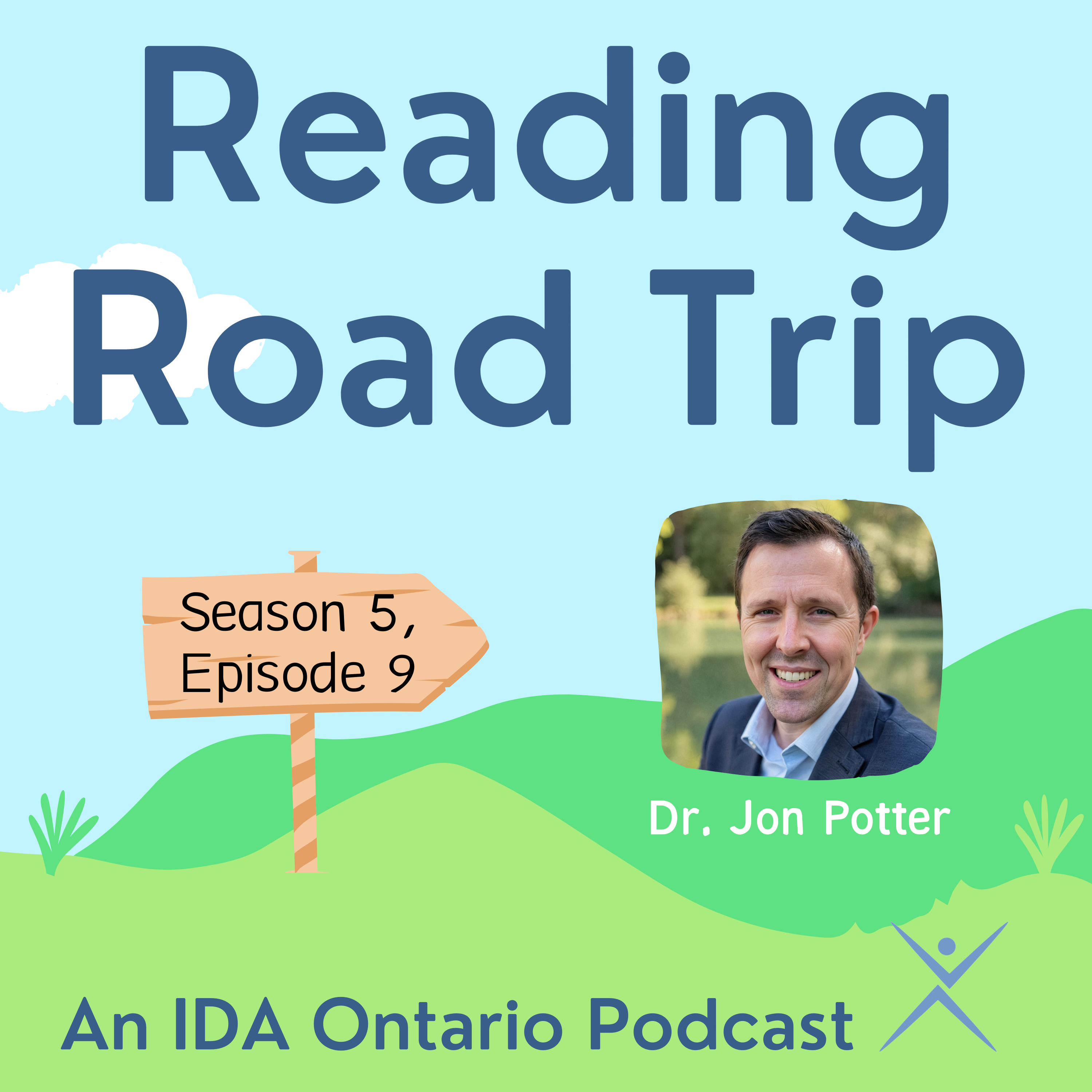
I am really excited to introduce our guest here this week on Reading Road Trip, John Potter works with education leaders and educators to strengthen instructional systems through effective use of data to design, deliver and adapt instruction intervention. His work focuses on multi tiered system of supports MTSS with particular expertise in literacy progress monitoring, database decision making and intensive intervention. Speaking My Language Here at Ayre, he provides national technical assistance through the national center on Intensive Intervention and the center on MTSS, supporting the development of professional learning practitioner resources and tools that help educators improve instructional decision making and student outcomes.
Before joining AIR, Dr. Potter led statewide implementation of MTSS for Literacy in Oregon, partnering with districts to build sustainable instructional systems through coaching, professional learning and data use. He is co author of Entangling Database Decision Making A Problem Solving Model to Enhance MTSS, which is a book that I own and love. Welcome to Reading Road Trip.
[00:02:45] Dr. Jon Potter: Yeah, thanks for having me. Glad to join the conversation today.
[00:02:51] Kate Winn: So this is such an important topic. Today we're going to talk about intervention and we're going to talk about intensifying intervention and particularly I was really interested when I First started to learn about the taxonomy of intervention intensity. Many of our listeners may never have heard of this. Could you give us some background on what it is and how it can help educators make better decisions about reading intervention?
[00:03:14] Dr. Jon Potter: Yeah, yeah, it's a, it's a mouthful, right? Taxonomy of intervention intensity. There's a, there's a lot there, but I think it's a helpful tool and framework. And so kind of the origin of it or the way that we think about it is we know that like, you know, obviously the goal is to provide really solid tier one reading instruction to all students.
But even despite, you know, the most solid evidence based reading and instruction at tier one, some kids are going to need more. And so that involves like tier two instruction and tier two supports.
And we have really great interventions for reading especially we have evidence based programs. We have a lot of great things that work really well for even tier two interventions.
But we also know that those tier two interventions, even when they're matched to student need, delivered with fidelity, they're also not going to work for all students. Right. We have some kids that are just going to need more.
And so because of that, the taxonomy was really, really originally developed as this way to think about both. How do we select interventions, how do we design interventions that are going to meet the needs of our students with the most intensive needs?
But also what I find it really helpful is when we are delivering those really solid tier one practices, Tier two evidence based reading interventions, and it's not working, what do we do next? And so the taxonomy was developed a number of years ago through the work of Doug and Lynn Fuchs, who have obviously done a ton of work around instruction, intervention assessment, some of the pioneers of curriculum based measurement.
But it's really a set of dimensions that we can think about how to intensify interventions, both at the front end, things that are going to work for students with the most intensive needs, but also think about how do we adapt things when, when they're not working. And I think it's that purpose again that I think is where it's most valuable.
Because in my work I find a lot of people are delivering some sort of reading intervention or additional help to students that need it. Now, it may not be the most evidence based research thing, but folks are trying something that's well intentioned and a lot of times like it doesn't work like we want it to and, and sometimes we just, we feel stuck, like we don't know where to go, what to, and we just fall back on what we've always done, which may work, but oftentimes is not what students need. And so the taxonomy is a really way to guide those decisions to think through. Here's some features that you can think about what to adapt, and it gives you options for how to adapt it. It's not a one size fits all that. If you're adapting this thing, this is the only way to do it. But it's a way to think about with flexibility, with the resources that you have, how can we think about different ways to adapt our interventions to intensify them when they're not working?
So we'll talk about this. I know, throughout our conversation today, but there's seven features to the taxonomy, so strength, dosage, alignment, attention to transfer, comprehensiveness, behavior support, and individualization. So it gives you all these different options about how do we think about intensifying instruction and delivering interventions that are really going to be matched to students with the most intensive needs.
[00:06:29] Kate Winn: And I do find it just so interesting. Even we will dive into the different features, but just often we'll hear things like, oh, yeah, we'll look at progress monitoring data and okay, you know, the intervention isn't working as quickly as we need. It's not as effective. Yeah, we need to intensify. And then people kind of leave the meeting going, yeah, okay, we're going to make it more intense. We're going to intensify it. Okay, what does that mean? What are we going to do? What can we try to make it more intense? Now, it seems obvious that with the word intervention right in there, this framework is going to be useful for reading interventionists and, you know, special educators, leadership teams involved in making decisions about intervention. But why is this an important tool for classroom teachers to be aware of and to understand as well? I don't want anybody thinking, oh, I'm not an interventionist. I'm going to skip to the next episode. I really think it's important for them, too. What do you think?
[00:07:15] Dr. Jon Potter: Yeah, I think, you know, the taxonomy was originally designed with students with intensive needs, students with disabilities in mind, but it is really a broader framework to think about how do we support kids across the tiers? And so thinking about, like, I think it's very applicable to thinking about, like, tier one instruction. If you're doing small group reading instruction and some of those groups are not as effective as you would like to be, how do we intensify for those groups and adapt those? I think it's perfectly useful for thinking about whole group instruction when we've got a Large group of kids that are not making progress, how do we adapt and intensify?
And so when I think about, like, the taxonomy and just the framework, it really is a way to think about the variables that we can control, that we can change to make sure kids are, you know, getting the instruction they need and they're successful. And so when I talk about this idea of the taxonomy and how we can change things to meet the needs of kids and intensify, I like to use this analogy. I use it a lot. And my colleagues who have heard me over and over, probably if they're listening to the podcast or will they'll say, not this again, but yes, because it resonates. And so I use the analogy of a goldfish. And so if we think about, like, if you go to the store, you get a goldfish, you bring it home, you. You set it up in its tank, you get some of those cute little pebbles, those multicolored colored pebbles. You get some stuff in there, you set it up, you feed it, and then you walk away and say, you come back a few days later and you check on your goldfish, and you notice that something doesn't seem right. The goldfish, like, maybe it's swimming a little sideways, maybe it's looking a little lethargic, but the goldfish doesn't seem to be doing very well. And so when that happens, we think about, like, what are the questions that we ask or the things that we think about. When we think about, why isn't that goldfish doing very well?
And we immediately think about things like the food, like, am I feeding it too much? Am I feeding it not enough?
Am I feeding it the right food?
We think about the water quality and temperature, right? Is it too hot? Is it too cold? Is the PH balance right?
You know, hopefully we figured out salt water versus fresh water before we put the fish in the tank. You know, is it clean?
All of those things. We also think about, like, maybe we have other fish in the tank that. Or that shouldn't be in there, right? Like, we don't want to put a couple beta fish together because they will not successfully live together.
And so the idea is, when we have this goldfish that's not doing well, we immediately think about all the things around the goldfish that we could change in our control that would make that goldfish thrive.
But many times in our schools, when we have kids that are not doing well, we immediately tend to jump to, well, what's wrong with that kid? Right? Like, well, this kid has a learning disability. Let's get this kid tested. All the other kids are doing well. There's something going on at home. Like we blame the student for their difficulties rather than thinking about what are the variables around the student that we could change to make that student more successful.
And really the most likely reason any of our students are experiencing difficulty in our schools is because of something we are doing or not doing that they need and not purposefully. We're not trying to harm kids, but it's challenging. We have a wide group of kids with a lot of different instructional needs and education and teaching is hard. It's always going to be hard to some extent.
Think the taxonomy helps us kind of flip this framework of rather than jumping to like, let's get the kid tested, there's something wrong with this student. Let's first take a step back and think about all the things that we can change, that we can adapt that are going to be lead to more success for the student. Because all the features of the taxonomy, these are all evidence based features. There's a ton of research that if we change these things and we deliver them with fidelity to students, students are generally going to be more successful.
[00:11:05] Kate Winn: Yeah. And it's just so interesting how you mentioned waiting to get kids tested because I think, I mean, I've been teaching 26 years and I think a lot, a lot of times we do hear that, we know that there's something happening with this child and they're not responding to our instruction, you know, the way that would be ideal. But we think that it's going to be some magical, mysterious other thing that someone's going to kind of tell us about and that we don't have any control to actually start changing up variables and doing some things, you know, that are within our power. So I think, think it's kind of an empowering taxonomy to know that there are things that we can actually start doing without having some sort of paperwork from, you know, someone official saying what's going on with the child. So I do think that's, that's important to think about.
[00:11:44] Dr. Jon Potter: Yeah. And it's, you know, an IEP and special education is not, it's not a solution. Like it's a set of resources that you can use to adapt, to intensify, to do all these things.
But it's not an answer to like, it's not a fix for, you know, the challenges that students face. And so that's what's nice about taxonomy is like, we should be thinking about these features in tier one. We should be thinking about these features in tier two, we should be thinking about these features at tier three before we identify a student with an IEP. If a student is identified as a student with a disability, we should be thinking about these features and using this process for those students as well.
As you said, it should be an empowering thing that here are some things that you can try and you can do, because I'm sure you've heard this a lot. I hear this a lot is we have teachers that say, well, I've tried everything and nothing works. And the answer to that is, well, you've tried everything that you know, but there's other things that we can do. And so sometimes it's just like teachers need ideas for, like, have you tried this? Can we try this? And, and also moving beyond just, have we tried this? But have we done this? Because there's a lot of things that we try, but for a variety of reasons, we don't have the resources, we don't have the time, we don't have the training.
We try, but we don't do them very well. And so the taxonomy kind of addresses that by thinking about what are the features that we can do really well with Fidelity.
[00:13:09] Kate Winn: Well, let's jump in to what these features are. You gave us a quick overview, but we're going to delve into each one. So the first feature is strength. What does strength mean in the context of a reading intervention?
[00:13:22] Dr. Jon Potter: Yeah, and strength is really, I think, the place that you start. I think it's more helpful when we think about how to design an intervention or select interventions that are going to be really effective for students. And so strength is another way of saying, like, what is the evidence of effectiveness of this intervention that you're using for the student that you're going to use it with? And so making sure if we're, you know, selecting programs or practices to be used with students with intensive needs, there should be some research or effect size or evidence based that it has, it has worked before and it has a high likelihood of success.
If we're going to be using something, an interbreeding intervention with our multilingual learner students. Like, is there evidence that that is helpful for multilingual learner students and not just for monolingual speaking students.
And so we want to start with something that's evidence based, that has a likelihood of working, but also recognizing, you know, not everything works for everyone. Like, we will select high quality programs, you will deliver them to your students, and it's still not going to work for everyone, but we at least want to start with those programs that have a high likelihood of success. Like if a teacher creates something or we use something that's not evidence based, it's not to say it won't work.
It can and sometimes it does, but it's not as likely to be successful as something that has an evidence base behind it. And so it's about like playing those odds. Like, I would rather use something that the odds are in my favor that are going to work because it's worked before under, you know, you know, research conditions versus something that may work. But, you know, especially for our students with intensive needs, I don't want to spend a ton of time like on things that may work rather than starting with things that have a high probability of being effective. So strength is really getting in the idea of is it evidence based? Does it have a good effect size for our students that we're going to use the intervention with?
[00:15:17] Kate Winn: And one question I hear often is, do you need or recommend different programs for the different tiers? Is there such a thing as a tier one reading program and a tier two program and a tier three program?
[00:15:31] Dr. Jon Potter: Yeah. And that's a good question. And I think like, in general, I know, you know, publishers may advertise those programs as Tier 1, Tier 2 and Tier 3, but really, you know, I don't see those programs as being a Tier 2 versus a Tier 3 program.
It's really about this idea of intensity which, which again, going back to those features of taxonomy, I've seen programs delivered at a tier 2 level where we open up the program. It's highly evidence based, it's explicit, we deliver it. I've seen that intensified to more of a Tier 3 level of support. So it's more about this idea of. The way that I think about it is Tier two is really this in the box approach, right? You have these really good programs. We deliver them with fidelity and they should work. For most of our students. Students, Tier three is, you know, we've tried the tier two or we know that the tier two is going to be insufficient for the student because they have such significant needs.
We need to customize and adapt that intervention. That doesn't mean we go off script and have to use a completely different program. That just means like we need to intensify using the features of the taxonomy in some way to make that fit their needs a little bit better. So we don't need like separate tier 2 versus tier 3 programs. You can use the same programs for
[00:16:46] Kate Winn: both of those tiers and intensify as you said, using some of the features we're talking about today. Perfect. Okay. The second feature we're going to talk about is dosage. So I know when I think of intensifying dosage, I think of, you know, adding more minutes to the session every day, that sort of thing. And I think that might be part of it. But, but what else can we, can we say about dosage?
[00:17:06] Dr. Jon Potter: Yeah, dosage is, Dosage is really, I think my favorite dimension of the taxonomy, which sounds kind of nerdy to say that I have a favorite dimension of the taxonomy. But yeah, I think it's just one that it's very easy to do. There's a lot of different ways to do it. It is highly underutilized, but it has a large effect on positive student outcomes. And so dosage is really about this idea of opportunities to respond or otrs.
So how many opportunities respond do students get? And that really is just the idea of like, like repetitions, practice, how many opportunities they get to do something, to say something, to write something, to respond to a question, to demonstrate their learning paired with corrective feedback. It's not just like we're throwing out questions and having students do things. If they're doing them incorrectly, we want to use corrective feedback with that.
But dosage is about getting those repetitions, which is, it's a fundamental tenet of learning. Right. Like this idea of like, we get better at things that we get the chance to practice, to do, to get feedback on over time. And the more that we practice something, the better we tend to get at it if we're practicing it correctly.
So dosage is about how we increase those opportunities to respond, those practice opportunities.
Because we know, like for some kids, you know, three to five opportunities respond, they'll see something, they'll be able to do it three to five times. They've got it like that's transferred from short term to long term memory. They remember it for many of our kids, like it's going to take more. And for some of our kids, our most kids with the most intensive needs, you're talking dozens, if not hundreds of more times, opportunities respond that they need to practice something until they can really get that in their long term memory.
So as you mentioned, one way to increase dosage is to increase minutes, because if we get more minutes, then theoretically we should be able to provide more opportunities to respond.
But minutes in and of itself is not an increase in dosage.
More time and instruction where kids are not getting a lot of opportunities to respond is not going to Be helpful. If I have a 30 minute intervention period and kids get four or five opportunities to do something, write something, say something and I double that, I give them another 30 minutes. Great. They get another four or five opportunities respond, that's not going to be fairly robust. And so I use the analogy, I'll preface this by saying I use a lot of analogies, but I like to for this one, I like to think of an analogy of exercise. If I go to the gym 30 minutes a day because it's good for my health and that's what I should be doing. But if when I go to the gym, I don't actually really exercise that much, maybe I walk a little bit, I watch the tv, I text on my phone, I do all those things and I decide, well, it's not working well, let's just spend an hour at the gym instead. But I don't actually change what I'm doing while I'm there. 30 minutes isn't really going to super help me. So it's more about the quality and the number of opportunities respond the dosage. So thinking about, you know, how do we increase kids like choral responses, individual responses, partner responses, written responses, that's why like dosage, because there's a variety of different ways to do this to engage kids.
It's also one of those features that is free, right? Like you don't have to buy a program to increase dosage. It's an easy way to just like build in more repetitions and responses within to an existing program.
You don't even need more time to do it. Like we can do that within the time that we have. Like if we have 30 minute intervention period, how do we increase the dosage, increase the pacing to get kids more practice opportunities.
But I also think as we think about dosage, we want to think about not just within that intervention period, intensifying and adapting, but how do we get kids more dosage and opportunities respond across their day? So it's that idea. We know the research around mass practice versus spaced practice. We want kids to have practice across the day, not just cram like a bunch of opportunities respond into a 30 minutes and then rest of the day we're going to do whatever we have always done.
I think we've all experienced that if we're trying to study for a test the night before and we cram all the studying in the night before, it's not the best way to do it. We want to space our practice over time so we're getting to learn the content over time. Rather than putting that all in a short amount of time. So minutes can help that for sure. But there's a wide variety of finding opportunities to respond both within an intervention period as well as outside of the intervention period.
[00:21:44] Kate Winn: Thank you for clarifying that. I think that's really important because even as you said, it doesn't have to cost more. Because I think a lot of times when I've talked to people, they think, well, three sessions a week isn't cutting it. I'm going to have to go up to five sessions a week. Well, where am I finding the time in my schedule to make that five sessions a week? But you could increase the opportunities to respond in those three sessions and that could still be intensifying your intervention to make a difference.
[00:22:08] Dr. Jon Potter: Yeah, absolutely.
[00:22:10] Kate Winn: Great. Okay. The taxonomy also emphasizes alignment. So what does it mean for an intervention to be aligned with a student's needs? And could you maybe give an example of an intervention that might look aligned? We might think it is, but it might be missing the mark. What does that look like?
[00:22:25] Dr. Jon Potter: Yeah, alignment really gets at this idea is are we teaching the skills that the student really needs the most? So are we teaching what they really need? Currently, it also means are we not spending time, a ton of time, teaching things that they don't need because they've already mastered?
We want to intensify instruction. We want to move kids forward. We also don't want to slow walk them through skills that they already have and know.
Especially within literacy, we think about like phonemic awareness. Like sometimes we have a tendency to really overemphasize the that like oral only phonemic awareness activities. When like kids got it, let's get them into letters, let's get them into text as quickly as possible.
So teach what they need, making sure that we're not teaching what they don't need. Also making sure that we're aligning with grade level content and keeping that in mind that kids are getting access to those skills as well. And so when we think about alignment, I think alignment is a great place often to start. When we think about the taxonomy, to really make sure that we are honed in on teaching the right skills.
Because again, as we think about if we're not teaching the right skills, if we're teaching something that is way too hard for students, or if we're teaching something that they already have, increasing something like dosage is probably not going to be the thing that we need to do because you're just doing more practice on things they don't need.
And so for Reading on a broad level, it's making sure that we're teaching interventions that are focused on the specific areas that students need. So one thing I see commonly, especially as kids get older, is we know.
You know, kids take state tests, they take computer adaptive tests, they take a lot of assessments that measure reading comprehension.
And reading comprehension is an outcome like that's the goal for all students. We want them to comprehend, but if students can't comprehend on those assessments, there's a wide range of why they may not be able to comprehend. And many students can't comprehend simply because they can't really accurately and fluently decode the text on the page or read it with automaticity. So they're struggling to decode every word. They're not doing that fluently. They don't have any cognitive energy left to comprehend or. Or focus on those things. And so rather than saying, I want to teach these kids an intervention in inferencing or summarizing or all of these comprehension strands that we focus on, that's not going to be incredibly aligned to what they need. Because if kids can't decode the words, they can't do that fluently and with automaticity. If they don't have the oral language and vocabulary to understand the words on the page, teaching those comprehension strands are not going to give you the impact that you want. And so alignment is really about, first and foremost, making sure, you know, do kids need work on basic phonics? Is it advanced phonics? Do they need letter sounds? Are there certain patterns that they need more? Like, we need to work on our controlled vowels, they need vowel blends, they need to work on multisyllabic words.
But making sure we have some level of assessment that maps on what are the skills the kids have. So I don't spend a ton of time on those. And then what are the skill kids need so I can target my instruction specifically to the skills that they need. I think the other piece we also want to incorporate or think about when we think about alignment is when I think about our multilingual learner students, again, who may have some foundational skill needs, we also don't want to miss the fact that many of those students also need or language vocabulary support as well. So while we may align our intervention to those more foundational decoding, phonemic awareness activities, we don't want to lose sight of, yes, they need that. But how do we layer in vocabulary and or language support? Because if we're not doing that, we're not incredibly aligned to the comprehensive needs that they have. We're really just teaching one strand of the reading rope rather than kind of being a little bit more comprehensive and aligning to the needs of those kids.
[00:26:24] Kate Winn: Yeah, and you are again, speaking my language when we talk about using our assessment data in order to inform instruction. So I mean, we always talk about that universal screener, see who's at risk and then your diagnostic assessment to figure out what actual instruction does the child need next. So we're going to use our assessment data to help us with our alignment.
Another dimension of the taxonomy is attention to transfer, and that one might be less familiar to many educators, including myself. So what does transfer mean in this context? Text.
[00:26:56] Dr. Jon Potter: Yeah, attention, transfer, I think is one that is challenging for folks, but it's, it's very important. So another way to think about it is basically how do we help kids generalize the skills that they're learning and help them apply them across contexts. Because many times intervention, what we're doing is we're teaching skills over here in this one setting, but we expect the kids will use those skills across their settings. Settings. And so it's a bit counterintuitive, but I like to think, I tell people, like, the goal for education is not for your students to be successful inside your classroom. The goal is for kids to be successful outside of your classroom.
It's great that they can do like all those things in your classroom when you're there supporting them and helping them with those things. That's a first step, but that's not a long term goal. I want kids to use those skills outside. And so, so for students who have intensive needs, sometimes if we're providing 30, 45 minutes of isolated intervention time, that's not going to be enough for students because we're really only targeting a very small percentage of their day. And so we want to think about how do we teach kids and support kids to be able to take those skills and transfer them to other classes, other text, other kind of reading experiences or language experiences that they may have.
[00:28:19] Kate Winn: Have.
[00:28:19] Dr. Jon Potter: And so there's a few ways to kind of think about doing that.
Obviously it starts within an intervention. There's ways to teach kids and support kids with an intervention so they're more likely to transfer their skills.
So teaching kids how and when to use strategies across the day, teaching them routines that they can take with them is helpful. And so thinking about, you know, working on a project right now that we're working on middle school breathing intervention, you know, in teaching kids a strategy for decoding multi syllabic words. You know, we've got a four step strategy where kids, you know, circle the suffixes and prefixes, underline the vowel combinations, say each of the individual word parts or syllables on their own, and then blend the word into a whole word. And so giving kids a strategy that they can take and helping them identify when they come to a multisyllabic word, how to use that.
Because, you know, especially for middle school students as they go to science, history, biology, math, they all have multisyllabic words. And so teaching them a strategy to attack those when they're outside the classroom is going to be important.
We can also use content and materials that they will see outside of intervention within the intervention. So if we're teaching that multisyllabic word routine, let's use some of those science texts, let's use some of those history texts so they'll learn to transfer that when they see those in their class classes.
The other thing that we found successful that's often helpful is how do we provide scaffolds for kids that they can take with them out of intervention.
So for this particular project, you know, this multi syllabic word routine, we provided students with a bookmark in student friendly language that has the four steps on it about what they're supposed to do when they encounter a multisyllabic word. And the kids report it was very helpful when they came to another class, you know, when the teacher wasn't there, they could refer back to their bookmark mark. It's like, okay, this is what I'm supposed to do. I'm supposed to underline this bird, circle the suffix and prefix, underline the vowel combination, say each part and put it together. And so we can help with transfer in the intervention setting by teaching some things to help kids apply outside of the intervention.
But if we really want to help kids with attention to transfer, we also need to support kids outside of that intervention. It can't just be this 30 minutes where we change things, we teach things, and then we just leave the rest of the day the same. And so one way to help kids transfer from a broader systemic standpoint is thinking about how do we align our instructional language and our routines across the day so that kids don't go to intervention, they learn it this way. Kids go to tier one, whole group, they learn it this way. They go to small group, they learn it a different way.
We see this with, for example, phonemic awareness activities. There's lots of hand signals and arm signals to blend and segment.
And sometimes I get asked by teachers well, which one should we use? Which one is the right one? It's like, well, there's not a right or wrong one. It's just like, use a consistent one so kids don't have to figure that out from classroom to classroom. That's different.
So aligning routines is helpful.
I think also just instructional language for what we call things is helpful. Like a good example is the silent E. Like, I've been in classrooms where it's the silent E. And then in this classroom it's the boss E, in this classroom it's the sneak E. In this classroom it's the magic E. It's like, we know that's all the same, but kids may not know that's the same thing. And so let's just use like common terminology from intervention to tier one to small group across the day so kids don't have to like, you know, switch the terminology and spend all that cognitive energy trying to figure out like, you know, what it's called. They can just practice the routines and learn, learn the content. So we can align instruction routines and language.
I mentioned this with dosage, but as much as we can provide practice in those skills across the day and not just limit it to that intervention period is going to be helpful.
So thinking about things like if we know kids are working on again, silent E words, like, how do we find time in small group to make sure we're working on those as well?
Whole group, how do we find just minutes throughout the day to get them to practice those? Like, for example, if kids are lining up to go out to recess as they go out the door, like, have them do a couple words each as they go out the door. It's those dosage repetitions.
But having that dosage across contexts and across environments helps them transfer that to different classes and different texts that they're going to read. So you can do things within the intervention to help with intensify attention and transfer. But the way to really kind of get the most bang for the bullet book is that you have to coordinate across the day and make sure everyone's kind of on the same page with supporting kids with their programs and routines.
[00:33:08] Kate Winn: Excellent. Thank you. The next feature is comprehensiveness, and we exchanged a few pre show emails and you actually helped to clarify this term for me already.
What does comprehensiveness mean when we're talking about intensifying intervention?
[00:33:24] Dr. Jon Potter: Yeah, comprehensiveness is one. Like, if I had my way, I would rename it because I think a more simple way to say it is it's explicitness. It's what is the level of explicitness of our instruction?
So you know, that explicit instructional sequence of providing sufficient modeling that I do guided practice through we do.
And with the goal being independent practice for students that you do. And so again, just like dosage, we know that kids vary in how much they need. Some kids need three to five opportunities, some kids need more.
Explicitness is similar. All kids will benefit from explicit instruction. But some kids need more explicit instruction. Right? Like it doesn't work. Like we need to break it down even further for some kids. And so how do we intensify that explicit instructional sequence to make it stick for kids more?
And this is, you know, something as I think about, like how to intensify explicitness. I think the easy way to think about this is something that I remember from Anita Archer always used to say, is that intensifying explicitness is not more I do. It's not more teachers just talking at kids and modeling and modeling and modeling and modeling. It's more we do, it's more guided practice. I'm doing it as a teacher, but the students are going to do it with me as well because again, it goes back to that dosage piece. Like if we're doing more guided practice, we are modeling it, but kids are also doing it with you. So they're getting more repetitions and more opportunity to practice, practice that. And so we can increase the we do, but there's lots of different ways that you can make it more explicit, you know, using more simple, direct language.
Sometimes as teachers, we tend to over talk. We use too many words to explain something.
It's one of the reasons why a lot of good explicit instruction programs have suggested scripts or what the teacher should say. Not because they want you to read verbatim from the script, but just because this is the simplest way to convey this to a student. So we don't just keep talking at kids.
So it's like, can we break it down with more simple language?
Maybe we need to do a better job of providing immediate corrective feedback. Maybe we're not catching those errors and we need to be more explicit about, you know, we go through the I do the we do the you do. Kids get it incorrect on the you do. We provide corrective feedback and it gives you an opportunity to go back to the beginning. Nope, let me model that again. My turn. And then we go through that whole sequence again. Can also think about how we break lessons down into simpler, smaller chunks. Like some kids will need to back map even more. Like the multi syllabic word Routine. If I'm teaching you to, you know, identify vowel combinations, and that's the chunk that I'm breaking down into. If you don't know individual vowels or letter sounds like, you're going to need to back up even further. We're going to need to simplify that a little bit for you and teach some more prerequisite skills.
So I think about the explicitness. It's one of the features that I think about I mentioned earlier. I think alignment is a good place to start to think about, are we teaching the right things?
For me, explicitness is kind of right there with it at the very beginning. I want to make sure we're teaching the right skills and we're teaching it with the right level of explicitness. Because if we're not teaching things with explicit instruction routines, again, something like increasing dosage or time, I'm just giving you more. You do, but you may not know how to do that. So I need to make sure that I've done my job as a teacher to explicitly model that, guide you through it, so then you can build those repetitions over time to do that skill accurately again. Anita Archer always used to say, or still says, practice doesn't make perfect. Perfect. Practice makes perfect. I want kids to do it accurately over time rather than making mistakes. Because if kids just continue to make mistakes and we don't correct them, kids learn that that's not a mistake, that's the correct answer. And it gets harder to correct that if we let that go on. So. So explicitness is going to be a foundational piece of intensifying. And hopefully when you've selected an intervention program at the very beginning, you're looking at that feature of strength that you've selected, a program that has an explicit instructional sequence and explicit instructional design in it. That'd be a defining feature of pretty strong reading programs.
[00:37:46] Kate Winn: Thank you. I understand that one much better. Now, the next feature of the taxonomy is behavioral support, so we know reading difficulties don't happen in isolation. I'm thinking of pieces like motivation and engagement and self regulation. They all matter. How can interventionists focus on behavioral support without losing valuable teaching time as well?
[00:38:06] Dr. Jon Potter: Yeah, and that's where I think the taxonomy is helpful to think about this idea of how do we integrate our behavior support rather than see it as like, separate thing that we have to do?
And so how do we meet the needs, you know, all of the needs of the learners and the kids that we have, and especially as we think about our struggling readers as they get older, like they tend to develop a lot of those, you know, other behavioral or social, emotional issues, that motivation goes down, behaviors come out, confidence goes down. And so even if we're not seeing like explicit behaviors happening, we need to make sure that we're identifying, you know, not just teaching the reading piece, but really thinking about the needs of the student in a more, you know, total way. And so I think there's a variety of ways to kind of think about how we can integrate behavior support.
One of the very, you know, fundamental things to think about is just generally how do we manage instruction? That idea of classroom management, behavior management.
You know, I mentioned the explicit instructional sequence of I do, we do, you do. But as we know, like one of the first features of any explicit instruction functional sequences, we have to gain the attention of the learner. And if you can't do that, if kids aren't paying attention, you could do all the I do, we do, you do in the world. But like, they're not paying attention, they're not going to learn anything. And so how do we manage a classroom? How do we set those expectations for kids? Again, some kids are going to be okay without those clearer expectations. Many of our kids with intensive needs, they need some clear routines, clear expectations, and some motivational support. So how do we manage instruction? How do we motivate students who, you know, are doing something that is difficult and challenging for them, especially as our students get older? We know many of our middle school students and high school students, they don't want to be in a reading intervention, they don't want to be here, they want to be doing something else. And so how do we provide positive feedback? How do we engage our kids? How do we make sure that we're supporting, you know, that piece?
I also want to think about though, as we think about, you know, the interrelation between behavioral and academic support is motivation and confidence and reading skills kind of go hand in hand. And there's this, you know, back and forth in the research about like, it's what comes first, like, do we just need to motivate kids and then they'll learn to read or do we teach them to read which increases the motivation?
And generally it kind of goes both ways. But we know from research that, you know, teaching kids and building skills provides the motivation that kids often need to get going. And so we are motivated by things that we do well. And so part of the behavioral support is providing good evidence based instruction matched to students needs to help them be successful and show them that success, success and give them some Positive feedback acknowledgement from that.
I've worked with kids before that have reported like that intervention period, that 30 minute intervention period is their favorite 30 minutes of the day because it's matched their needs, they're getting their individual attention met and they're successful. And so we don't necessarily need to put together these like elaborate motivation plans and take away from the instruction. We really need to make sure that we are just engaging kids in a positive way and providing really solid, solid instruction.
The other feature, again, all these taxonomy features interact otrs providing lots of opportunities respond and pacing is a way to manage behavior.
You know, if you've got slow paced instruction, you're talking a lot as a teacher. You know, if you give students time, they're going to fill it and they're probably not going to fill it with something that you want them to fill it with. And so we want to make sure that we are have high paced instruction, not too fast. We're not just teaching for the sake of teaching, but that we're providing high paced, engaging instruction so kids have something to do within that learning kind of environment.
That all all is to say also for some of our kids, you will need to dive into a lot more depth with behavioral support. You may need an intensive functional behavior assessment. But for our kids with the most intensive needs, we may need some individualized supports that wrap onto their, their literacy instruction. But the idea is we provide those together.
We can't just, you know, address behavior, address social emotional issues in the absence of academic and reading success.
Because in the short term you may get kids that behave a little bit better and engage a little bit better. But in the long term we're not, we're doing a disservice to those kids if we still aren't like teaching them, teaching them well and holding them to high standards to build their literacy skills over time. So yeah, there's different ways to look at that behavioral piece, but I think good instruction is a good way to start that we have a good instructional sequence. You can decrease at least a lot of the minor behaviors that we see will decrease.
[00:43:08] Kate Winn: Thank you. That was excellent. So two things that popped to mind there. The first one was just that I think you were reading my mind because I was really hoping you were going to mention that kind of bidirectionality between the motivation and the reading achievement piece because I do think that's important for people to reflect on. And the other thing just popped to mind was even when we're Talking about Tier 1 literacy instruction, I know I Hear people say all the time, oh, our kindergarten kids could never do this.
And so last year, as an example, my early childhood educator partner and I would have 32 children sitting at the carpet for their explicit phonics lesson every day. And you have them with their cookie sheets, with their magnetic letters, or sometimes they have their clipboards with the dry erase, and 32 kids all doing what they were supposed to be doing. And I, I think some of it comes from. Not because these are necessarily brilliant readers right off the bat, but because of the classroom management pieces. And so I think a lot of that is really important. Like, you talked about the routines and the structure and the perky pace of the instruction, because they both fill that time if you give them the gap, like you said. So I think even when it comes to tier one, just people reflecting a little bit on some of those management pieces, that could actually end up leading to, you know, literacy lessons going better as well.
[00:44:21] Dr. Jon Potter: Yeah, and that's. That's a place I often start with a lot when we have kids that are not making progress or instruction's not going well from a basic standpoint, like, how are we managing that instruction? And it's. It goes back to, you know, kind of what you talked about. Like, are we setting expectations for kids? Are we teaching those expectations to kids? Are we reinforcing those expectations for kids?
Because you're right, like, kids can learn those routines, and kids like routines. Like, they, they like to be able to know, like, what to expect and how to engage. And so it's a matter of, are we managing classrooms and making sure that we're, you know, providing that, you know, that. That perky pace, lots of opportunities, that's going to decrease a lot of those behaviors. Yeah.
[00:45:03] Kate Winn: Okay, we have reached the final dimension of the taxonomy. So the last feature is individualization.
And it seems to me that maybe this is where all the other dimensions kind of come together. So what does true individualization look like? Like, and how can educators use their data to decide, you know, what to intensify for a particular student instead of just using the same approach for everyone?
[00:45:24] Dr. Jon Potter: Yeah. And so individualization, it is a little bit different than the other features. It really kind of ties everything together. And so here at the national center for On Intensive Intervention, we think about individualization through this process of DBI or database individualization visualization. It's kind of a core framework that we do a lot of training on, and we support folks to understand how to do that. And so there's. There's five steps to this process.
And as I talk through this, you know, I know you and a lot of your listeners will hear these steps. And many of the things that we do, it's not like groundbreaking, like these are the magic secret steps that you have to do. But the idea about how do we put these things together in a cohesive way within a framework to use data, to individualize, framework for our students. And so step one is really what we call a validated intervention program. It's that first piece about strength, having some level of program or practice that has a high likelihood of success, that is evidence based that we are going to implement for our students.
So something that is matched to their needs, something that is delivered with fidelity, that in the box kind of intervention program that we can deliver for our students. That's step one of this process.
Step two is we collect progress monitoring data.
So we don't just like wait to the next benchmarking or the end of the year to figure out if it worked. We want to know along the way so we can check in so we can adapt or make changes if we need to. So that's, you know, using, you know, curriculum based measures, early literacy measures. I think in literacy specifically, we are spoiled with a host of great progress monitoring measures that we can use for our students. All those, all those great tools are there.
And so for some kids, like, that's kind of the end of the road because we progress monitor and it's working. And so we don't need to go any further. Like, just keep doing what you're doing and hopefully like we can exit them from the intervention at some point.
But for some of our students, they're not making adequate progress and we need to intensify. And so step three of our process, the DBI process is this idea of collecting diagnostic data. So we need to figure out, it's answering that question, why is this intervention not working?
And it goes back to the features of the taxonomy. We want to understand a little bit more about what we're doing, what we're not doing.
It's again, using that analogy, the goldfish. Like, if my goldfish isn't doing well, I need to figure out, well, which of the things do I need to change in order to make that goldfish thrive? So diagnostic data is the way to deal with.
And the way that we think about diagnostic data, it's a little different than, you know, some people think about it in that, yes, traditionally we think about it as like giving a test to a student. So for literacy, that may be a phonics survey that may be looking at an error analysis, but it's somehow looking at, like, what reading skills they have, what are their strengths and what are their needs. That's a big piece of it. But it's also going beyond that to understand the context of the instruction and intervention that they're receiving to make sure that we can figure out what to change.
And so the example is like, if I have a sixth grade student, for example, that can't read a letter sound, like, doesn't even know basic letter sounds, and that student has been homeschooled or has received no school for their entire academic career, that is a very different student than a sixth grader who has the same test score, the same phonics survey pattern, who has received our instruction for six years. If we just test the learner like, they look the same, but those kids do not need the same thing. There's something different going on there. And so at that step three, that's where we talk about looking at the features of the taxonomy, thinking about, are we giving a lot of opportunities to respond? Do we even know how many we're giving? Have we been in the classroom, in the intervention, to see how kids are responding? Are we seeing behavioral issues?
Have we looked at our curriculum to make sure it matches the skills that they need, that we're not spending time on things that they don't need, and we're spending time on things that they need.
Are we looking at, like, are we teaching for transfer? Are we helping kids travel those skills outside the classroom? Are we providing explicit instruction? Have we observed and seen, like, are we doing that? I do. We do. You do.
So step three is all of those things to start to look at, well, what are the features that we may be able to adapt and intensify? So essentially, it's developing a hypothesis around, I think our students are not making progress because I've been in the classroom and we're not giving them a lot of opportunities to respond. So if we give them more opportunities respond, I would imagine that they would do better because that leads to step four, which is an intervention adaptation.
That's the intensification. So we've answered our. We've developed a question around why we think students are not making progress. And then we adapt it to kind of address that question. Again, if we think kids are not making progress because we're not teaching an explicit way, your adaptation is we need to increase the explicitness.
And so we adapt the intervention. And then the last step, step five is more progress monitoring. And so we basically see how that's working. If it's working great, continue doing what you're doing. If it's not working, we go back to step three, diagnostic data, and we try to dig a little bit deeper to figure out what, what's going on with students.
And so it's an iterative process that we continue to problem solve, we continue to collect data, to kind of figure out where kids are at, to make sure we're meeting the needs of students. And so at National Center Intensive Intervention, we have tried to provide some resources and training for people to start to think about, like, where do we start?
Because we've Talked about like 6, 7 features of the taxonomy. Like, there are a lot of variables even within each of those features that you could change.
And we have lists of things you could change. And sometimes it feels overwhelming. It's like, well, do I increase explicitness? Do I look at alignment? Do I increase opportunities, respond? And people just like, sometimes they shut down. It's like, I don't know what to do, or they just do what they've always done, done, which may not be the right thing to do.
And so I think one way that we try to give some guidance on where to start, there's not necessarily always a right or wrong answer, but the way that I think about it is going back to your progress monitoring data at the very least, and seeing what is the pattern that you're seeing with your progress monitoring that can help guide you into thinking about what your next steps are. And so, for example, you know, if you've got a kid who's making little to no progress, who is essentially flatlined and nothing seems to be working, where I would start is start with either alignment or explicitness, because either we're probably not teaching the right things, maybe it's too hard for the student, or we, they don't have the background knowledge, we need to go back a little bit, or we're just not teaching with the right level of explicitness. So that might be a good place to start, is make sure we're teaching the right things and we're teaching explicitly.
But you also have kids that make progress, but it never seems to be enough. Like they're going up on an upward trajectory, but they're not on track track to meet their goal. And they always seem to be behind.
For those students, it's a little bit different. I would start with dosage with those students because for those students, like, your intervention seems to be working, it's just not working fast enough. And so when I See a graph that's going up, but it's not on track to meet the goal.
I almost like, I want more of that intervention. I want like in some way, I want more time, more dosage, all of those things. A kid who's not making any progress, I don't want more of that. Like, that is not the right intervention. We need something different. We don't need more of it. We need something different. And so we've got some tools and resources to help people think about, like, where do you start to think about where to individualize? It's not always the right answer, as you know, like, we do things with kids that are well intentioned, based on data and sometimes it doesn't work, but at least like, it helps to figure out, like, well, let's start here, here as a first step to make sure that we're checking all our boxes and doing the things at the very foundational level that are going to be helpful for kids.
[00:53:45] Kate Winn: That's great. Now, as you've worked with schools, I'm curious to know what are the most common misconceptions about intervention intensity? Are there dimensions of the taxonomy that educators tend to overlook, misunderstand? What do you see?
[00:53:59] Dr. Jon Potter: Yeah, I think you touched on one of these very towards back at the beginning is this misconception that more time means more intense.
And that's just not the case.
Again, time is a way to increase intensity, but time in and of itself is not intensity.
And I've worked at schools before where, you know, all kids that are getting interventions, if they're not making progress, the next step is always double dose them. Let's give them two rounds of it. It's like, well again, like, if that's not the thing, it's not matched their need. It's not explicit. I don't want them getting more of that. We need to make a change in a different way. So that's a misconception that more time equals more intensity.
The next misconception. I talked about this a little bit with attention to transfer, but this idea of that when we're intensifying intervention, we see intervention as this isolated, like 30 minute, 45 minute thing that happens over here.
Sometimes the teacher's teaching it, sometimes intervention's teaching it, but it's not really like tied to the rest of what kids are getting. And so when we think about intensifying intervention, we need to intensify. For many of our kids, it needs to go beyond that intervention period. Beyond that 30 to 45 minutes. How do we intensify their small group instruction, their whole group instruction, instruction across the content areas, thinking a little bit more broader than just like changing this 30 minutes.
So that's a misconception. I see the last one, I'll say, and I've definitely been guilty of this one that I've, I've changed my thinking of.
There's this misconception that adapting more things is better.
This idea, like when we create a plan, the longer our plan is, the more pieces to it, like, it's more comprehensive, it's better.
And oftentimes the more things that are on your plan, it's the less likely that it's actually going to happen. Like, we have made plans way too complex for people, and they just don't have to happen really well.
And oftentimes the best intervention is simply the one that you're actually going to be able to implement and do really well.
And so I've come around and in my thinking and try to compel people to think about, like, simple plans, relentless implementation. Like, don't make your plans really difficult. Your plan may be as simple as, like, we need to increase opportunities to respond like, like, let's give them more individual responses, partner responses, all of those things throughout the day. Great. That's a very simple concept.
Not always simple to do. There's some coordination that needs to happen, but I don't need to give them more opportunity to respond. Change their placement in the program, train them to transfer outside of class, have the teacher do this other routine with them. It just, that's. That's going to be too much.
And I think oftentimes where we fall down is not in creating plans, it's in implementing them.
So we need to really, like, come back, follow up on the implementation piece.
And that's a piece too, as we think about, like, what we may need to adapt if a kid's not making adequate progress.
You know, even before we think about adapting something, the first step is asking the question, are we actually implementing the thing that we said we would implement? Implement? Because oftentimes we're not even doing that. And then what we do is we try an intervention, we don't implement it, and then we adapt it to something else, and then we're not going to implement that really well. Then we'll try something else, and we're not going to implement that really well.
And so we don't address the, you know, the barriers to implementation. Like, our folks don't have training, they don't have the time, they don't have the resources. Like, let's address those things, focus on simpler concepts and just like implement them really well.
I've seen entire schools focus on simple things, like increasing opportunities, respond across. Like all teachers can have a very powerful impact getting kids doing more of the talking, the doing and the writing.
And so I think simplifying things is often more helpful. Like we don't need to make things complex like, you know, do 20 different things. Let's do choose a couple things and do them really well.
[00:58:07] Kate Winn: I love that. Okay. As we have reached the end of our time together, before we say goodbye, is there anything that we haven't talked about yet that you'd like to add and could you tell listeners where to find your work as well?
[00:58:18] Dr. Jon Potter: Yeah, I'd say if you want to learn more about intensive intervention, the taxonomy Database Individualization the National center on Intensive Interventions website has a whole host of free resources. So we got modules, we've got training materials, we've got tools to help people intensify, you know, documents around the taxonomy. If you're thinking about, well, how can I, like, you know, increase opportunity to respond. We've got resources that you can use to think about specifically what that might look like, you know, resources on, you know, explicit instruction to learn more about that. But there's just a whole host of great resources out there to do this. That another great place to look the center on or sorry, the MTSS center is another place and I can give you the. The link to that is has a. Has a whole host of resources thinking about diagnostically. You know, as I mentioned, like how do we know if we have enough opportunities to respond? We have some resources you can use to collect data. We've got some checklists to look at explicit instruction, some other kind of diagnostic data. Resources that I think can be helpful for folks as they think about like building this system.
[00:59:32] Kate Winn: This has been such an important and valuable conversation. Dr. John Potter, thank you so much for being here for this episode of Reading Road Trip.
[00:59:40] Dr. Jon Potter: Yeah, thanks for having me.
[00:59:45] Kate Winn: Show notes for this episode with all the links and information you need can be found at Podcast and you have been listening to season five, episode nine with Dr. John Potter.
Now it's time for that typical end of the podcast call to action. If you enjoyed this episode of Reading Road Trip, we'd love it if you could rate and or review it in your podcast app as this is extremely helpful for a show and of course we welcome any social media. Love you feel inspired to spread as well. Make sure you're following the Reading Road Trip podcast so you don't miss a single episode. Our season finale will be released next Monday and it's a great one.
This podcast and all of IDA Ontario work is made possible by our dedicated volunteers, including our hard working board, together with our wonderful staff and supporters like you. If you'd like to support our work, please consider making a donation. You'll find the link in the show notes.
I'm Kate Winn and along with everyone at IDA Ontario, we hope this episode of Reading Road Trip has made your path to evidence based literacy instruction just a little bit clearer and a lot more fun.